
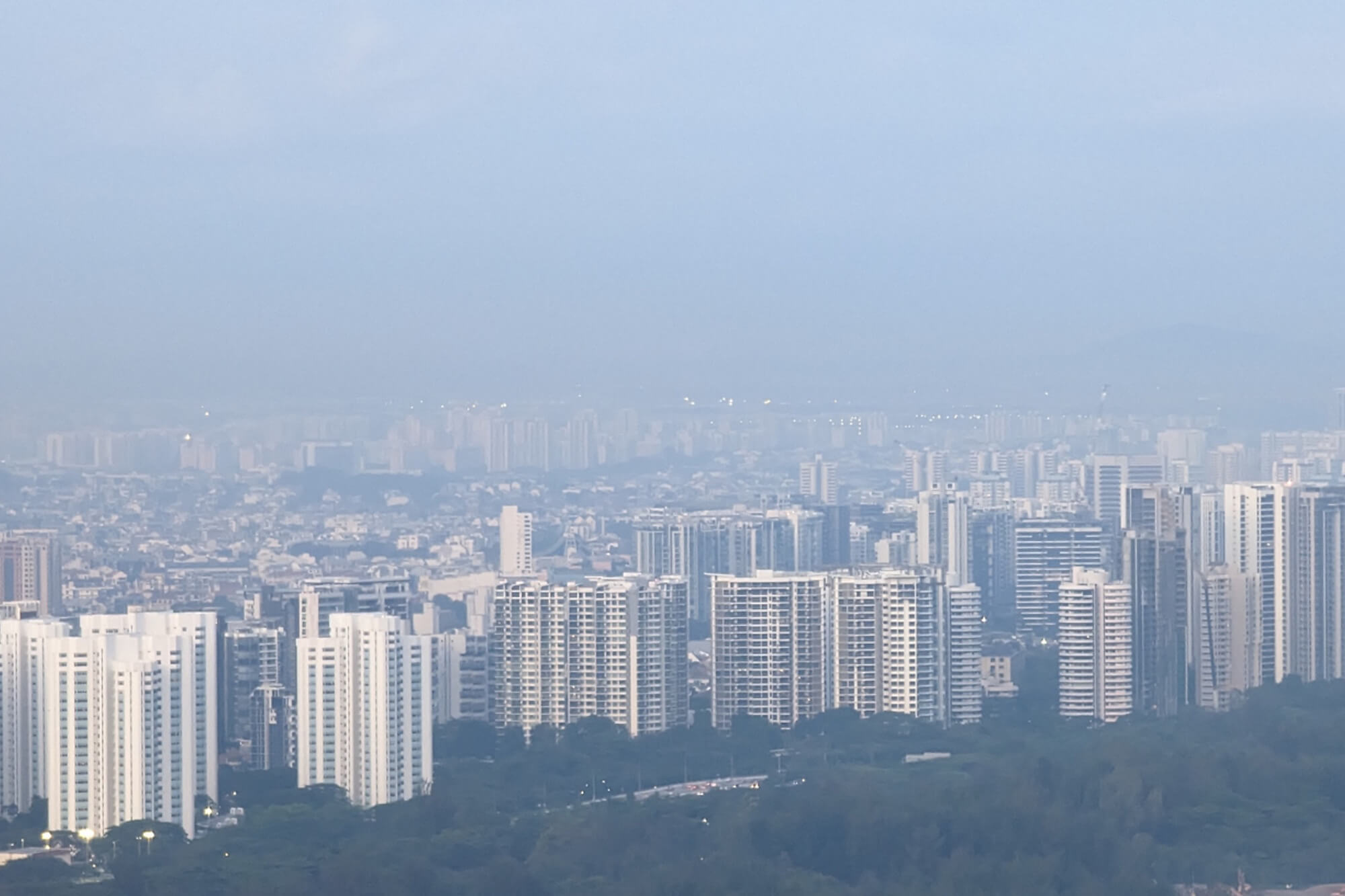
Singapore experiences the haze each year. However, its severity varies. This year, for the first time since 2019, all five regions of Singapore recorded “Unhealthy” air quality simultaneously, with readings of up to 160 on the Pollutant Standards Index (PSI) in various areas. The National Environment Agency (NEA) is forecasting the PSI to remain in the high-moderate to mid-unhealthy range during this haze season. Unsurprisingly, that has prompted many of us to think more seriously about the air quality inside our homes. Here’s a practical breakdown of what actually helps, what it costs, and how to prioritise if you are not going to spend on everything at once.
Air Purifiers: The Most Effective Investment
Air purifiers are the obvious first port of call. A True HEPA air purifier is the single most effective thing you can put inside your home during a haze episode. When we say “True HEPA filter” that means one rated H13 or above, and which captures 99.95% or more of particles down to 0.3 microns, easily covering PM2.5 and smaller. If a listing says “HEPA-type” or “HEPA-like” without specifying a grade, though, treat that as a marketing phrase with no minimum or evidence-backed standard behind it.
Another spec worth understanding in an air purifier is CADR, which stands for Clean Air Delivery Rate. This number will tell you how quickly a unit can clean the air in a given space. A rough rule: your purifier’s CADR should be at least two-thirds of the room’s square footage. So, a standard bedroom of around 120 square feet needs a CADR of at least 80. An open-plan living and dining area of 400 to 600 square feet needs a CADR of 250 to 400 or higher. Most people go wrong by buying an air purifier based on its listed room coverage area rather than its CADR.
The other practical reality for flats: one large purifier in the living room does very little for a closed bedroom down the hall. If you want meaningful protection across the whole home, you need at least two units running concurrently. On price, you can expect to pay around $130 to $200 for an entry-level bedroom unit with genuine HEPA filtration. The Xiaomi 4 Pro is a widely cited mid-range option at $200 to $400, covering up to 60 square metres with a CADR of 500m³/h and a triple-layer filter including activated carbon. For a living room or large open-plan space, the Levoit Core 600S, around $400, offers a CADR of 697m³/h and coverage of up to 147 square metres. At the premium end of the air purifier market, Dyson purifiers run from $700 to $800 but offer longer filter life, which reduces ongoing cost of ownership.
Don’t overlook filter replacement costs when comparing units because replacement filters typically range from around $50 to $100 per set and are recommended for replacement annually under normal use, though haze episodes can burn through the filter life faster. A $150 purifier with a $90 annual filter is more expensive over three years than a $300 purifier with a $50 annual filter. That ongoing (often annual) cost matters just as much as the upfront price.
Read Also: Price Guide To Air Purifiers In Singapore
Air-Conditioning: Running On Recirculate
Keeping the air-conditioning running continuously during haze helps in two ways. It keeps windows and doors closed, reducing outdoor air, and it provides some filtration through the air-con unit’s filters. The second benefit is more limited than people assume: air-con filters are designed to catch larger dust particles, not PM2.5, but the ventilation benefit of keeping the home sealed is real. The key setting is recirculation or recirculate mode. Most split-unit air-conditioners in Singapore recirculate indoor air by default, so they aren’t actively pulling in outdoor air. If you have a ducted system, check whether there is an option for fresh air intake and switch it off during haze.
Running the air-con continuously on cool mode during a haze episode costs approximately $3 to $5 per day for a standard bedroom split unit, depending on the unit’s efficiency rating and how often it cycles. Over a two-to-three-week haze episode, though, this can add $40 to $100 to your electricity bill, which is not trivial but is also not the highest cost for haze prevention.
N95 Masks: Essential For Outdoors
The one thing that costs almost nothing and is non-negotiable for outdoor exposure during a haze episode is an N95 or KN95 mask. Surgical masks don’t filter PM2.5 effectively, so you need an N95-rated mask to filter at least 95% of airborne particles. N95 masks in Singapore retail for approximately $0.50 to $2 each, depending on brand and where you buy them. If you’re going out daily during a two-week haze episode, you are looking at up to $30 for a supply of masks, assuming you use one per outing and discard them daily. Buying a box of 20 to 50 during the pre-haze period, when supply is plentiful and prices are lower, is the more forward-looking move. Once PSI crosses 100 and haze is in the news, stock on Shopee and in pharmacies gets sold out quickly.
Sealing The Gaps: Mitigating Seepage
Air purifiers clean the air inside your home, but they are fighting a constant battle against outdoor air entering through gaps. The more effectively you can slow that infiltration (or seepage), the less work the purifier has to do and the cleaner your indoor air will stay. The simplest and cheapest option is a door draft stopper placed at the bottom of your front door and any external-facing doors. They’re easy to find and cost $10 to $30 on Shopee or at DIY stores.
Self-adhesive foam weather stripping, used to seal gaps around window frames, also works, and these can run around $10 to $15 per roll and cover most standard windows. This is a half-hour job and a one-time cost of roughly $30 to $60 that meaningfully reduces air infiltration during haze season and lasts multiple years. For a more immediate fix, wet towels or rolled fabric placed at the base of doors is the zero-cost, dupe version of foam stripping. It’s less effective than a proper draft stopper but it does reduce airflow and is useful in the short term if you’re dealing with a sudden haze spike and don’t have the proper materials on hand yet.
Read Also: Price Guide To Air Conditioners In Singapore And The Maintenance Costs
Picture Of Total Cost
Putting it all together for a typical three-bedroom household, you can expect a total upfront outlay of $540 to $840. This can be made up from the following: air purifiers for the living room and main bedroom: $450 to $600, door draft stoppers and window weather stripping: $30 to $60, N95 masks for the household for a two-week episode: $20 to $80 depending on household size, and additional electricity cost from continuous air-con during the episode: $40 to $100.
Ongoing annual costs after year one are mainly filter replacements ($100 to $200) and masks during haze seasons. The purifiers and sealing materials are multi-year investments. Ideally, you’ll want to buy an air purifier before haze season, not during it, as it’s one of the most important items to have. As we’ve all seen, stocks run out, prices rise, and delivery times extend when PSI is in the headlines. However, for everything else – masks, sealing materials, the decision to keep air-con running on recirculate – costs very little and is simply a matter of doing it when the situation calls for it.


