
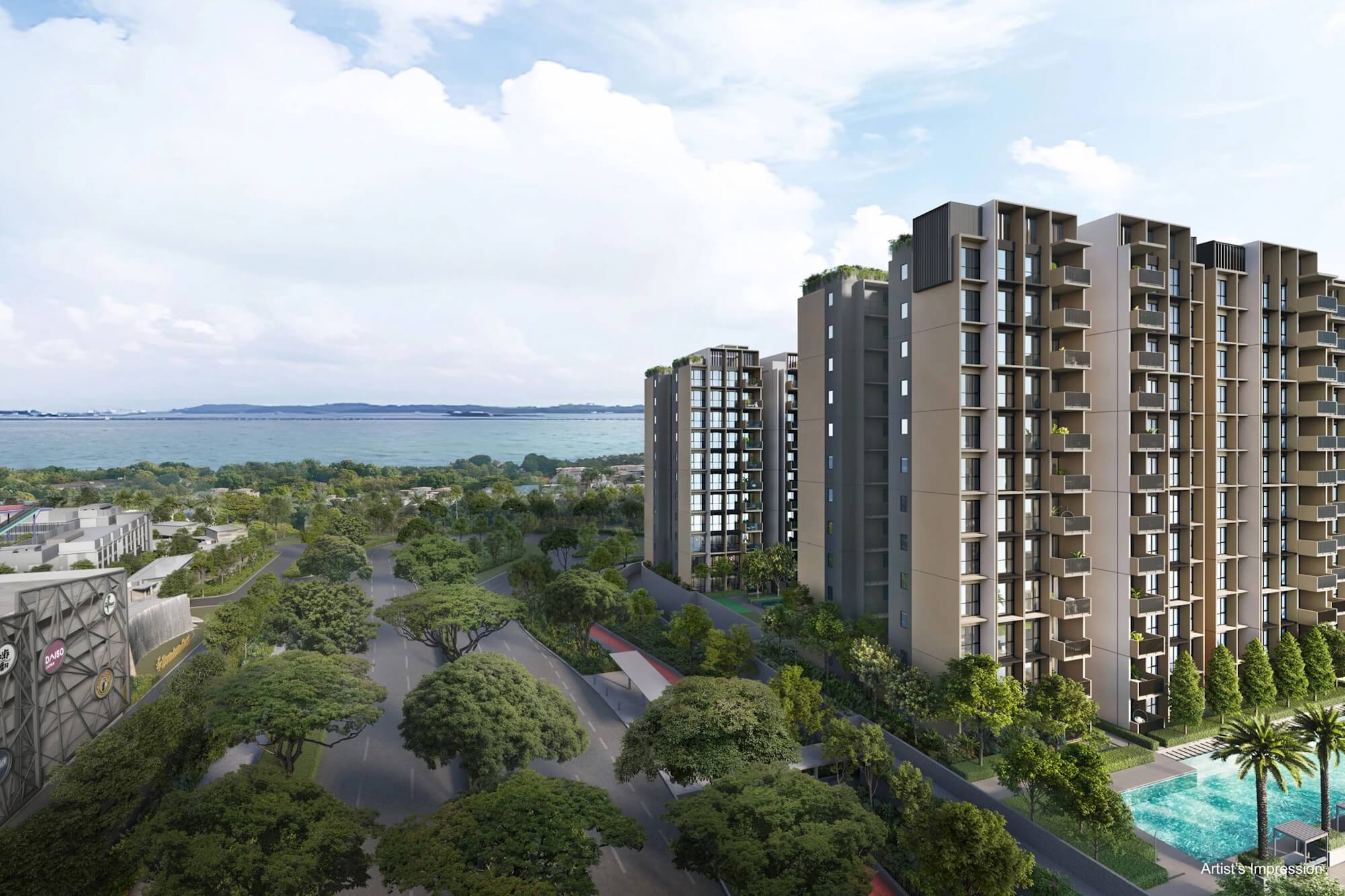
Executive Condominiums (ECs) were introduced in 1995 to provide a more affordable option for Singapore Citizens and Permanent Residents with aspirations to own private housing. ECs were meant to bridge the gap between public housing and private housing, and are developed and sold by private developers, with design features and facilities similar to private condominiums.
This is why they are priced by developers at around 20 to 30 percent lower than comparable private condominiums due to initial eligibility and ownership restrictions, such as an income ceiling and a Minimum Occupation Period (MOP).
However, there have been growing concerns about how quickly prices of new EC units were rising, and while there was no mention of a change in the income ceiling at this year’s Budget 2026 speech, the long-expected announcement finally arrived in August 2026 during the National Day Rally speech.
Read Also: Why The $16,000 EC Income Ceiling For EC May No Longer Makes Financial Sense
Among other announcements, the income ceiling to qualify for an HDB BTO unit would now be raised from $14,000 to $16,000. The income ceiling to qualify for an EC, traditionally $2,000 higher than the BTO income ceiling, was also raised from $16,000 to $18,000.
What Is The New Maximum Loan A Household Can Get From A Bank
Assuming a household hits the new income ceiling of $18,000. Based on the maximum mortgage servicing ratio (MSR) of 30%, this household is eligible for a maximum monthly repayment of $5,400.
The MSR refers to the proportion of the borrower’s gross monthly income used to repay all property loans and applies when buying an EC unit before the minimum occupation period (MOP) expires.
Based on this $5,400 value, we assume the maximum 30-year loan tenure and apply the minimum 4% stress test to determine the maximum home loan amount. This gives us a maximum property loan of $1,131,091. (Banks typically apply a much higher stress test of at least 4.65%, but for purposes of this article, we’ll go with the legal minimum of 4%.)
Based on the maximum loan-to-value (LTV) limit of 75%, the property value must be at least $1,508,121 to allow the household to borrow the maximum loan of $1,131,091.
Previously, based on the previous income ceiling of $16,000, the maximum property loan was $1,005,414, and the property value had to be at least $1,340,552.
This means that households who meet the new income ceiling can borrow up to $125,677 more than before.
Read Also: BTO Income Ceiling Is Now $16,000: What Other Housing Policies Have Changed Because Of This
From The Perspective Of The Median Price Of An EC Today
The most recent EC launches this year were Coastal Cabana in Pasir Ris, which launched in January, and Rivelle Tampines, which launched in March.
URA data for Coastal Cabana show completed sale prices ranging from $1.481 million ($1,699 psf) to $2.682 million ($1,888 psf). Currently, the median price of a Coastal Cabana EC unit is $1.796 million with a median psf of $1,794.
Completed sale prices for Rivelle Tampines range from $1.596 million ($1,808 psf) to $2.811 million ($2,040 psf). Currently, the median price of a Rivelle Tampines EC unit is $2.002 million, with a median psf of $1,934.
Clearly, these price points are way above the maximum loan amount households could qualify for, even before the income ceiling increase.
To pay the median price for a Rivelle Tampines EC unit of $2.002 million, for example, households below the $16,000 income ceiling would previously have needed at least $996,586 in cash/CPF to make up the difference, even if they qualified for the maximum loan amount.
With the new $18,000 income ceiling, paying the same median EC unit price now requires $870,909 in cash/CPF to make up the difference, assuming they qualify for the maximum home loan amount.
Read Also: Why It May Be Easier To Afford A Regular Condominium Than An EC Today
This is still a significant amount of cash and CPF, which is why property cooling measures targeted at ECs were introduced in May this year.
New EC Cooling Measures Required
The three new measures introduced in May are:
1) EC minimum occupation period would be extended from 5 years to 10 years. This means EC homeowners can sell their units only to fellow Singapore Citizens and Permanent Residents after 10 years, and to any other buyer only after 15 years.
2) Developers would not be allowed to offer the deferred payment scheme (DPS) for uncompleted EC units. This means EC homeowners must make progressive payments during construction and can no longer wait until the temporary occupation permit (TOP) date to pay the remaining amount.
3) The first-timer quota for ECs will be increased from 70% to 90%, and the priority period for first-timers will be extended from one month to two years.
One expected effect of these cooling measures is that EC developers would reduce their land bids and, therefore, their EC prices, better accommodating first-time buyers, who typically have lower purchasing power than second-time buyers.
Notably, both the new cooling measures and income ceiling would only apply to the next EC sites up for tender, which are at Canberra Drive and Admiralty Walk, and are likely only to launch in 2028. They do not apply to the five upcoming EC launches at Senja Close, Woodlands Drive 17, Sembawang Road and Miltonia Close, so it will be a while before we fully appreciate the effect of both of these housing policy changes.
Read Also: New EC Rules In Singapore: What A 10-Year MOP Means For Future Executive Condo Buyers
Top Image Credit: Coastal Cabana EC


Street Smart
Singapore Gym Membership Price Guide (2026 Edition)


