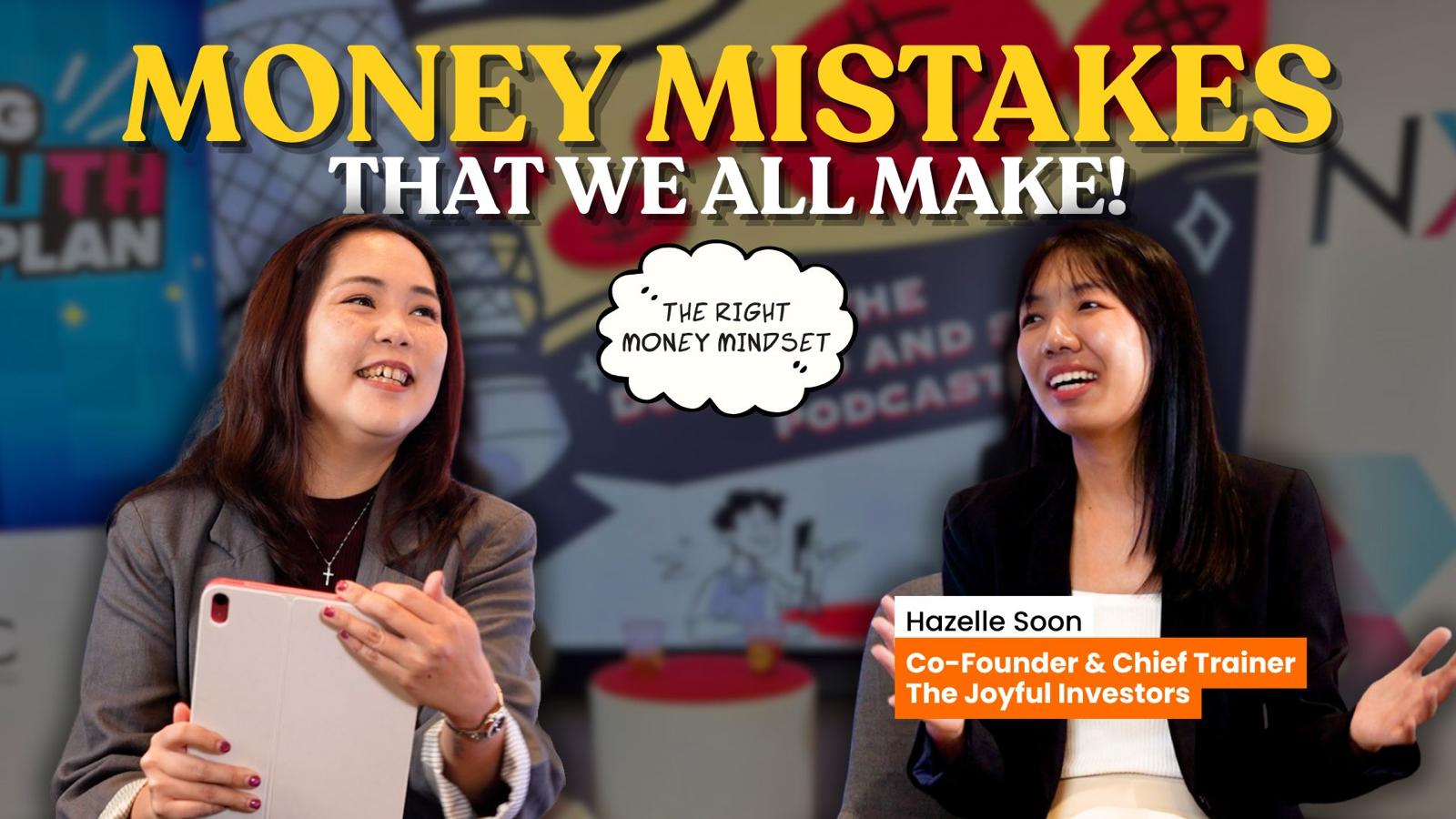
How we think about money early often shapes the choices we make later on. In this episode of the DollarsAndSense Podcast, Hazelle Soon, Co-Founder and Chief Trainer at The Joyful Investors, reflects on how young Singaporeans approach saving, spending and investing, from first paycheques to social pressure and lifestyle expectations.
Instead of rules or formulas, the conversation centres on intention, balance and long-term thinking, and why getting the mindset right early can make money decisions feel clearer over time.
Watch the full DollarsAndSense Podcast episode here:
There’s No Perfect Saving Rule
Young adults often ask how much they should save each month. Hazelle believes there is no universal “correct” percentage.
Instead, she suggests observing your spending habits, especially in the first few months of work. Understanding your essential expenses helps you decide what amount of saving feels realistic and sustainable.
As income grows, lifestyle upgrades are natural. The key is avoiding lifestyle inflation, where spending rises just as quickly as earnings, leaving little improvement in overall financial security.
Entering the workforce comes with new responsibilities. While many focus on choosing a credit card, Hazelle stresses the importance of managing it well—especially paying bills on time.
Simple habits, such as tracking due dates, help avoid debt and stress. From there, young adults can gradually work on emergency savings, basic insurance coverage and learning about investing.
There is no need to rush. Financial capability grows step by step.
Starting Small With Investing
For students, the biggest challenge is often not having much money to invest. Today, however, investing is more accessible, with low-cost platforms and smaller minimum investments.
For those already working, Hazelle suggests building around six months’ worth of emergency savings before investing more actively. Equally important is knowledge—understanding your goals before committing money.
For beginners with limited capital, exchange-traded funds (ETFs) are a practical starting point. They provide diversification and exposure to entire markets without the need to pick individual stocks.
Read Also: [2025 Edition] Complete Guide To ETF Investing in Singapore
Money Is a Tool, Not the Goal
In Hazelle’s opinion, vhasing numbers or comparing salaries can distract from what money is meant to provide choice, flexibility and freedom.
What sets financially savvy youths apart is not just knowledge, but mindset. Those who see purpose in managing money well are more likely to take action, stay disciplined and keep learning.
Money decisions rarely hinge on a single moment. They are shaped gradually, through habits, expectations and the way we think about money early on.
Getting the mindset right doesn’t eliminate mistakes but it makes them easier to recognise, learn from, and move past. And over time, that clarity matters far more than chasing the “right” number.
Read Also: How Much You Need To Earn To Live Comfortably In Singapore
Advertiser Message
Thinking Of Switching Brokers Or Consolidating Your Holdings?
Tiger Brokers is currently running a transfer-in campaign where eligible clients can receive an iPhone 17 Pro Max* when they transfer in their assets.
For SGX investors, there is also a CDP Transfer promotion with 0* commissions on Singapore stocks.
Find out more here. *T&Cs apply.