
Personal accident insurance is often one of the most overlooked parts of a Singaporean’s insurance coverage.
That’s partly because many of us already have what feels like a solid foundation — MediShield Life for hospital bills, CareShield Life for long-term care, and often additional coverage such as life insurance or critical illness plans.
On paper, this can make us feel well protected.
So it’s reasonable to ask: if we already have all these policies in place, do we really need a personal accident (PA) plan as well?
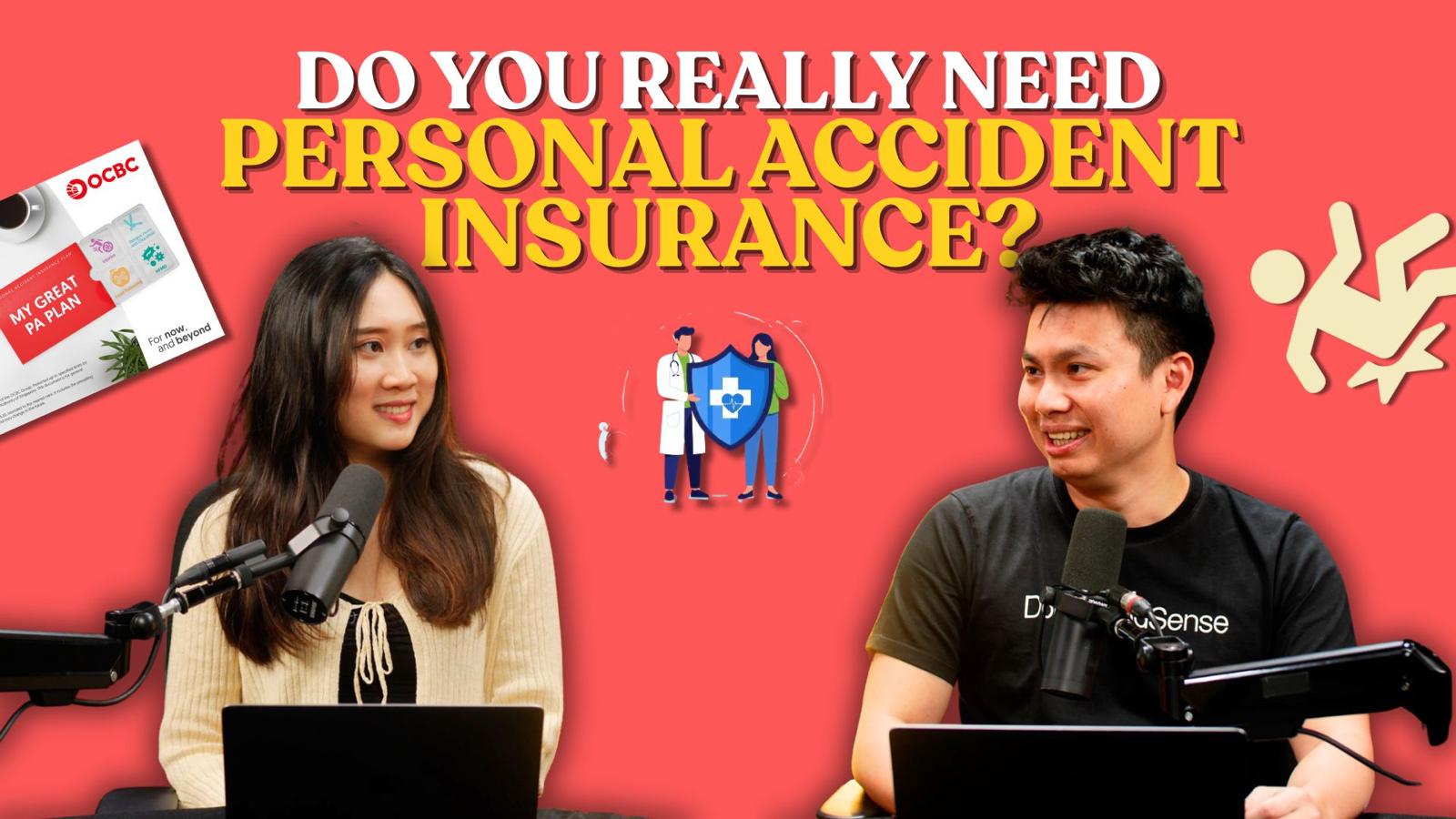
In this episode of the DollarsAndSense Podcast, our host Feng Yi and Timothy from the editorial team discuss what personal accident plans actually cover, where they fit alongside other insurance policies, and why some people find them useful.
Watch the full DollarsAndSense Podcast episode here:
Where Life Insurance And Critical Illness (CI) Plans Stop
Life insurance protects your loved ones if you pass away. Critical illness insurance pays out if you’re diagnosed with conditions like cancer or a major heart issue. These are essential plans, but they only activate in specific situations.
The problem is that many injuries don’t fall into either category.
Timothy shared how you might slip while cycling, fall down the stairs, or hurt your wrist during a casual game of badminton or pickleball. These incidents can be painful and disruptive, but they’re not life-threatening and don’t count as critical illnesses.
“Yet, you still end up paying for treatment,” Feng Yi agreed swiftly.
One common scenario discussed was an injury that doesn’t require hospitalisation.
You go to A&E to get checked, maybe get an X-ray, some medication, and a follow-up visit. Even without staying overnight, the bill can easily run into a few hundred dollars.
This is where a personal accident plan often comes in. Many PA plans are structured to reimburse outpatient medical expenses related to accidents, including A&E visits, scans, medication, and follow-up consultations. It helps cover costs that other insurance plans usually don’t touch.
When An Accident Leads To Hospitalisation
Timothy added on that some accidents are more serious. If you’re hospitalised for a day or two due to an accident, a PA plan can help in two ways. First, it may reimburse part of the hospital bill. Second, many plans provide a daily cash payout for each day you’re hospitalised.
This matters because even with MediShield Life or an Integrated Shield Plan, there is usually a co-payment. That could mean paying 10% of the bill out of pocket, which can still be a few hundred dollars.
The cash payout from a PA plan can help soften that financial hit.
Feng Yi added that one area people often overlook is recovery. After an accident, it’s common to need physiotherapy, chiropractic treatment, or even traditional Chinese medicine (TCM). These sessions aren’t cheap, especially if you need multiple visits, and they’re rarely covered by hospitalisation insurance.
Without coverage, some people delay or skip follow-up treatment simply to save money.
A personal accident plan can reimburse these recovery-related expenses, making it easier to focus on healing properly instead of worrying about costs.
When Personal Accident Plans Cover More Than Accidents
Interestingly, some PA plans also cover specific common illnesses. Timothy shared examples including food poisoning, dengue fever, and hand, foot and mouth disease. These conditions are unpleasant, disruptive, and sometimes require medical attention, even though they don’t qualify as critical illnesses.
For parents or working adults, these situations are more common than many would expect. Most personal accident plans also include accidental death benefits. This only applies if death is caused by an accident, such as a traffic incident. It does not replace life insurance, which covers death from illness or natural causes. Instead, it complements it by covering a different type of risk.
Where Personal Accident Plans Fit In
While personal accident plans won’t prevent accidents from happening, they can help soften the financial impact when everyday mishaps occur.
Plans like My Great PA Plan are designed to plug some of the common gaps discussed in this episode, from outpatient treatment and recovery costs to hospital cash payouts. Coverage starts from about $0.84 a day (around $305 a year), with benefits that include up to $1 million in accidental death coverage, medical reimbursements for accidents and specific illnesses, and daily hospital cash of $200 for up to 180 days, including care under MIC@Home.
For those looking for a simple and affordable way to strengthen their overall insurance coverage, My Great PA Plan offers a straightforward option that complements MediShield Life and Integrated Shield Plans.


