
This article was written in collaboration with DBS. All views expressed in this article are the independent opinion of DollarsAndSense.sg based on our research, and are purely for informational purposes and should not be relied upon as financial advice. DollarsAndSense.sg is not liable for any financial losses that may arise from any transactions, and readers are encouraged to conduct their own due diligence. You can view our full editorial policy here.
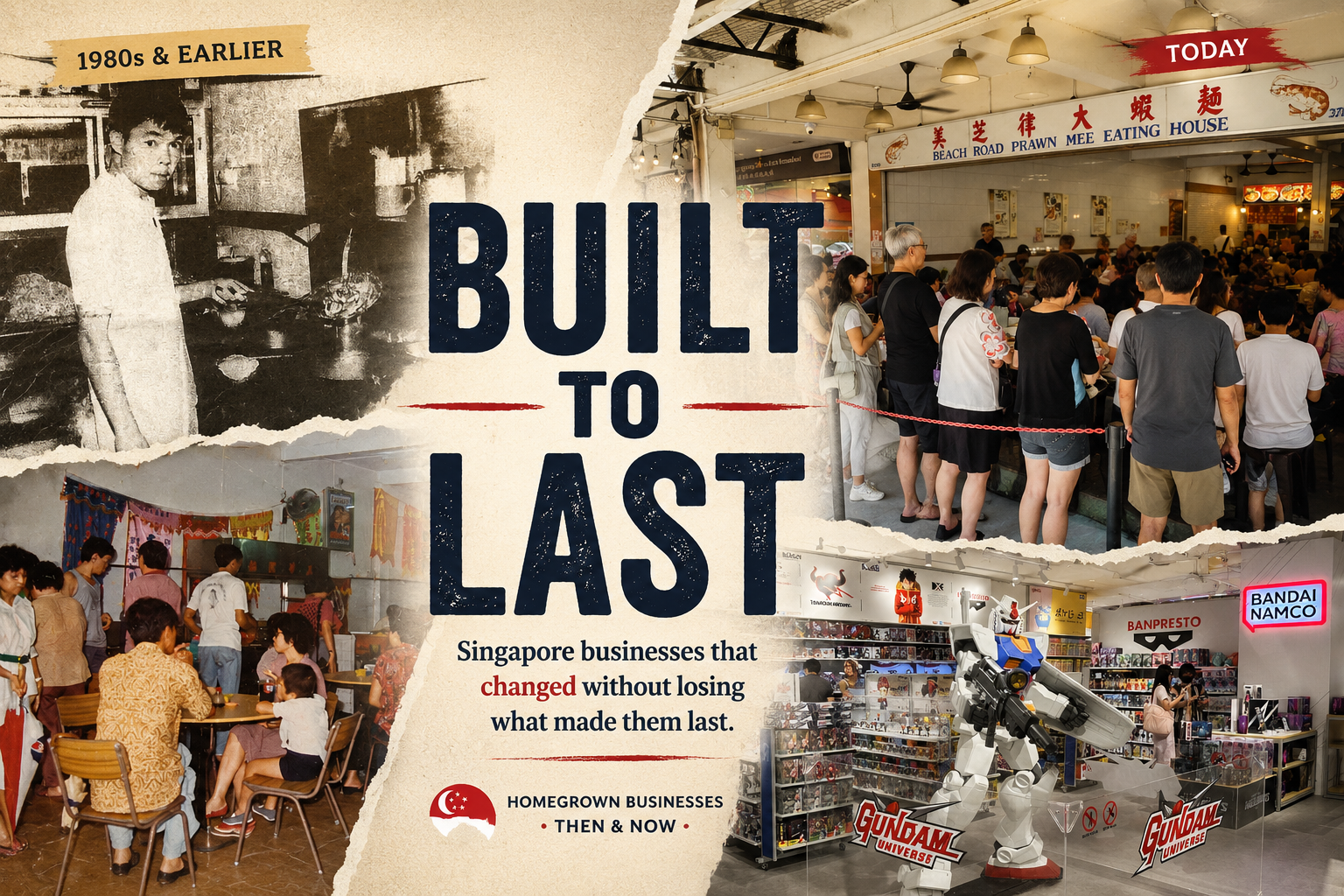
Singapore’s homegrown businesses are often celebrated for their resilience. Behind many of these enduring businesses are stories of perseverance, reinvention and a commitment to serving generations of customers.
This National Day month, we spoke with Sheng Tai Toys, Beach Road Prawn Noodle House and the Federation of Merchants’ Associations, Singapore (FMAS), about how local businesses have evolved alongside Singapore and what it takes to remain relevant through the changing times.
Sheng Tai Toys: When Relationships Were No Longer Enough
When Sheng Tai Toys was founded in 1985, relationships with suppliers and overseas importers were central to building its import and re-export business. But as the industry matured, relationships alone were no longer enough.
Tan Ee Chian, Director of Sheng Tai Toys, said suppliers increasingly began looking at sales performance, forecasts and marketing plans when deciding where to place their brands. From the late 1990s into the early 2000s, Sheng Tai lost several major product lines, while local distributors made inroads into markets the company had previously served.
By the time Tan joined the family business in 2001, the strain was showing elsewhere too. Profitability was weak, the company lacked scale, and its Malaysian operations were proving difficult to manage.
“We were fighting against a rising tide,” he recalled.
The second generation responded by changing how the business was run. Sheng Tai appointed a general manager, introduced enterprise resource planning and logistics systems, and imposed tighter financial controls and forecasting. The aim was not simply to modernise its back office, but to give the company a clearer view of its inventory, costs and performance.
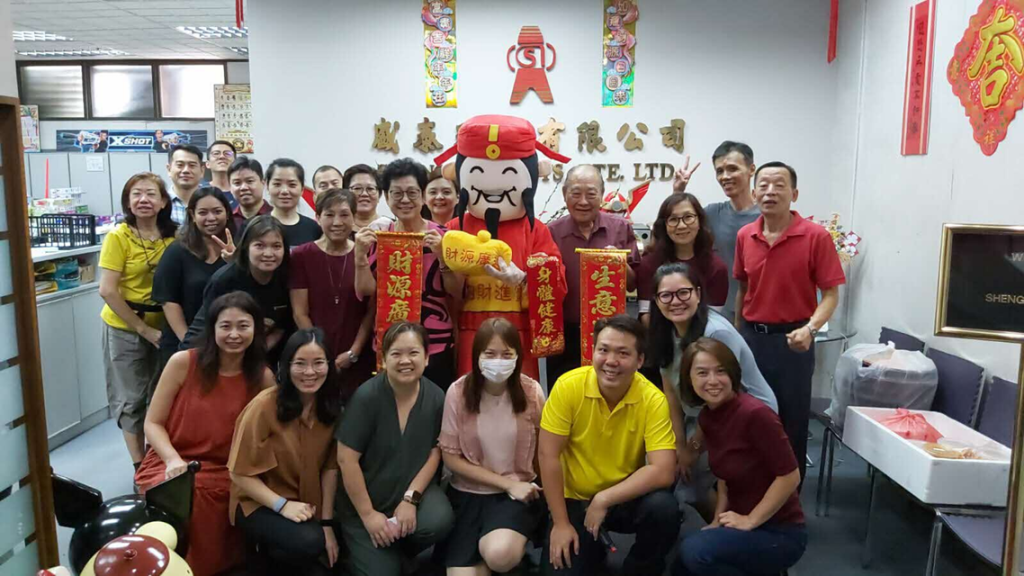
Sheng Tai Toys strengthened its management, financial controls and operating systems as the distribution business became more demanding.
Over the years, Sheng Tai has used DBS’ trade facilities, including trust receipts (TRs) and letters of credit (LCs), to support its operations. During Covid-19, DBS also extended preferential borrowing rates, which provided additional support during a particularly difficult period.
Today, Tan sees the result in a business that is broader and less dependent on any one product line. Sheng Tai has expanded beyond children’s toys into “kidult” and lifestyle products, strengthened its e-commerce operations and acquired an educational toy business. For Tan, the key is to embrace change and technology, and to challenge established ways of doing things, but only when it strengthens the core business.

Today, Sheng Tai Toys serves a wider market that extends beyond children’s toys to collectors and “kidult” consumers.
Beach Road Prawn Noodle House: Preserving Familiarity As Expectations Change
Justin Lee has been helping out at Beach Road Prawn Noodle House since Primary 1. Now managing the fourth-generation business, he sees his role as improving how the restaurant operates without changing what customers have come back for over the years.
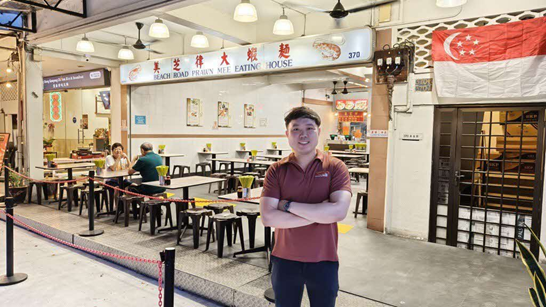
Having helped at the family business since Primary 1, the fourth-generation manager now oversees its daily operations and customer experience.
Customer preferences, however, have shifted.
Lee shared that Beach Road Prawn Noodle House has continued to prioritise fresh ingredients and preserve its family recipes, building trust with customers by consistently serving a satisfying bowl of prawn noodles.
“Our focus has always been on preserving the authenticity of our family recipes,” Justin said.
That same principle of preserving the core while improving what surrounds it has shaped changes beyond the kitchen.
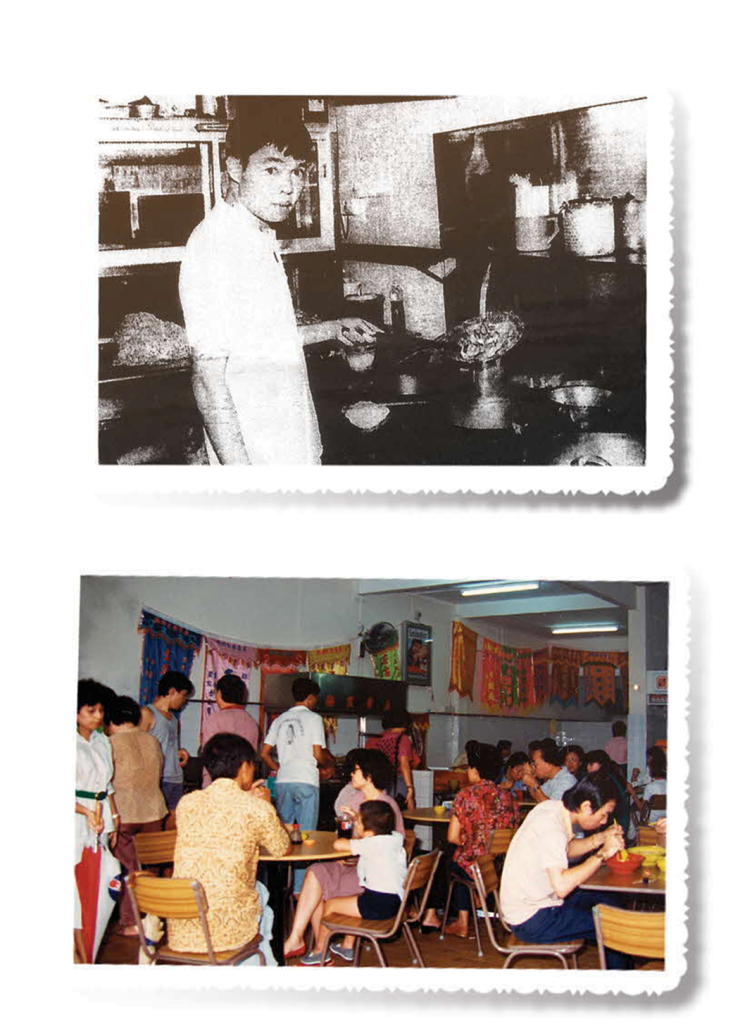
The business has evolved from its earlier years while preserving the family recipes and familiarity that generations of diners return for.
During Covid-19, the team noticed that waiting customers would often crowd around occupied tables, leaving diners feeling rushed and first-time visitors unsure of how the ordering process worked. The restaurant introduced a formal queue system to bring more order to the experience, and retained it after the pandemic because it proved clearer for customers and easier for staff to manage.
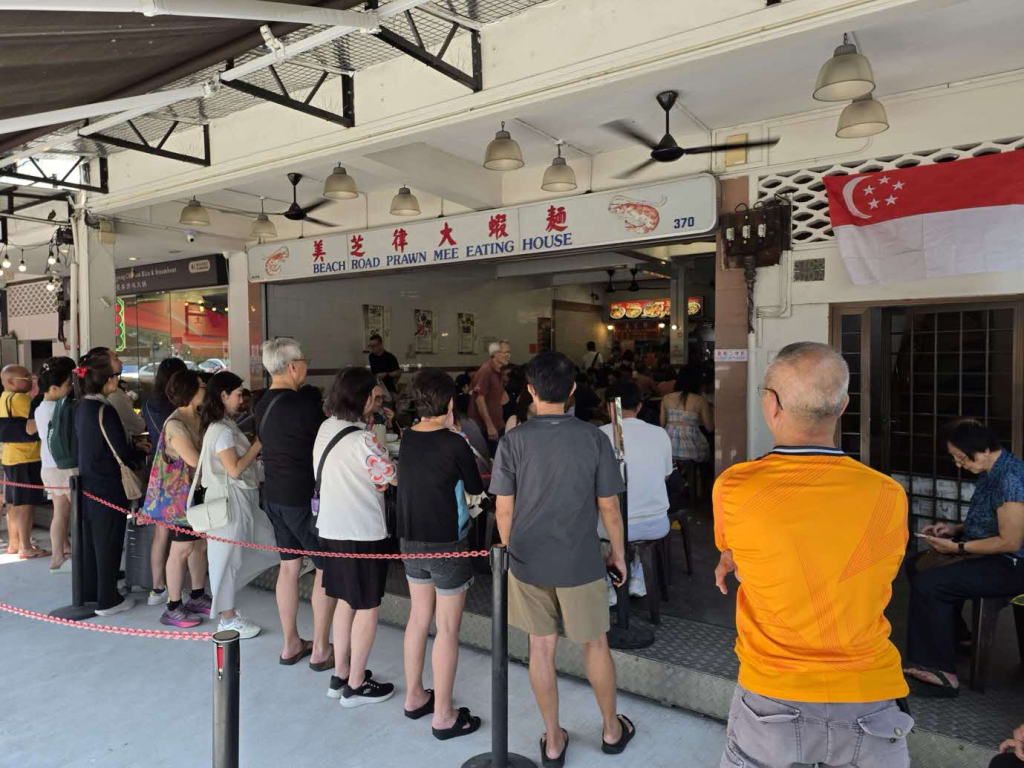
A steady queue at Beach Road Prawn Noodle House reflects the enduring appeal of the family-run business, even as it adapts its operations to changing customer habits.
Its payment options have evolved for similar reasons. With DBS’s support, Beach Road Prawn Noodle House adopted DBS MAX to offer QR payments as more customers moved away from cash. Cashless transactions have since grown from less than 10 per cent of payments to around half today.
For Lee, such changes do not require reinventing the restaurant. They are about preserving the food and familiarity people remember while making the experience work better for the customers of today. Many younger diners still arrive through their parents, allowing one generation of customers to introduce its famous prawn noodle to the next.
FMAS: Different Pressures, The Same Need To Adapt
The experiences of Sheng Tai Toys and Beach Road Prawn Noodle House reflect a wider shift across Singapore’s heartland economy.
Yeo Hiang Meng, President of the Federation of Merchants’ Associations, Singapore (FMAS), said merchants and hawkers today face pressures that extend well beyond their immediate neighbourhoods, from rising costs and manpower constraints to online competition, changing payment habits and higher customer expectations.

FMAS works with merchants, hawkers and industry partners to turn broader support programmes into practical help for businesses.
Many have responded with digital payments, delivery services, social media and online ordering. But Yeo believes their enduring advantage remains something harder to replicate: trust.
Heartland businesses often know their regular customers personally and understand the communities they serve. The challenge is therefore not simply to modernise, but to adopt new tools without losing those relationships.
That is also why support has to be practical and tailored. Sheng Tai Toys required trade and financing support, while Beach Road Prawn Noodle House benefited from payment solutions suited to its daily operations. For smaller merchants and hawkers, the challenge, often, is not just about adopting technology, but identifying which forms of support are relevant and implementing them without adding complexity to already lean businesses.
Yeo said FMAS and the Heartland Enterprise Centre Singapore (HECS) help bridge that gap through advisory services, workshops, digitalisation programmes and grant guidance. Its collaboration with DBS has likewise expanded beyond banking products into merchant engagement and capability-building.
“The partnership is valuable because DBS does not engage our members solely as banking customers,” Yeo said.
For heartland businesses, that distinction matters. The most useful support is often shaped not by what solutions are available, but by an understanding of where the business is struggling and what it can realistically adopt.
Supporting Businesses Through Different Stages Of Growth
The experiences of Sheng Tai Toys and Beach Road Prawn Noodle House show that business growth rarely follows a straight line. At different stages, companies may need to strengthen operations, weather a downturn, adopt new technology or find new sources of growth.
That is why support has to evolve with the business. For Sheng Tai, DBS’s role has included trade facilities and support during Covid-19. For Beach Road Prawn Noodle House, it meant helping the restaurant move towards cashless payments. Through FMAS, DBS has also engaged a wider group of merchants and hawkers as they navigate financial, digital and operational changes.
The solutions differ because the businesses do. Sheng Tai has diversified into e-commerce, lifestyle products and educational toys, while Beach Road Prawn Noodle House has focused on smaller operational changes that make a familiar business work better for a new generation of customers. Through FMAS and HECS, merchants and hawkers can also access practical support such as business advisory, capability-building, digitalisation programmes and guidance on relevant grants, helping them strengthen their resilience and adapt to changing business needs.
As Singapore has grown and changed, so too have homegrown businesses like Sheng Tai Toys and Beach Road Prawn Noodle House, alongside the wider heartland business community represented by FMAS. By preserving what matters while evolving with the times, they have remained part of Singapore’s story across generations, with DBS supporting them through different stages of their journey.
From start to scale, DBS is the bank that grows with you. Discover solutions designed to support your business at every stage of growth. Open a DBS Business Multi-Currency Account today and take the next step in your growth journey with us.


Street Smart
Singapore Gym Membership Price Guide (2026 Edition)


