
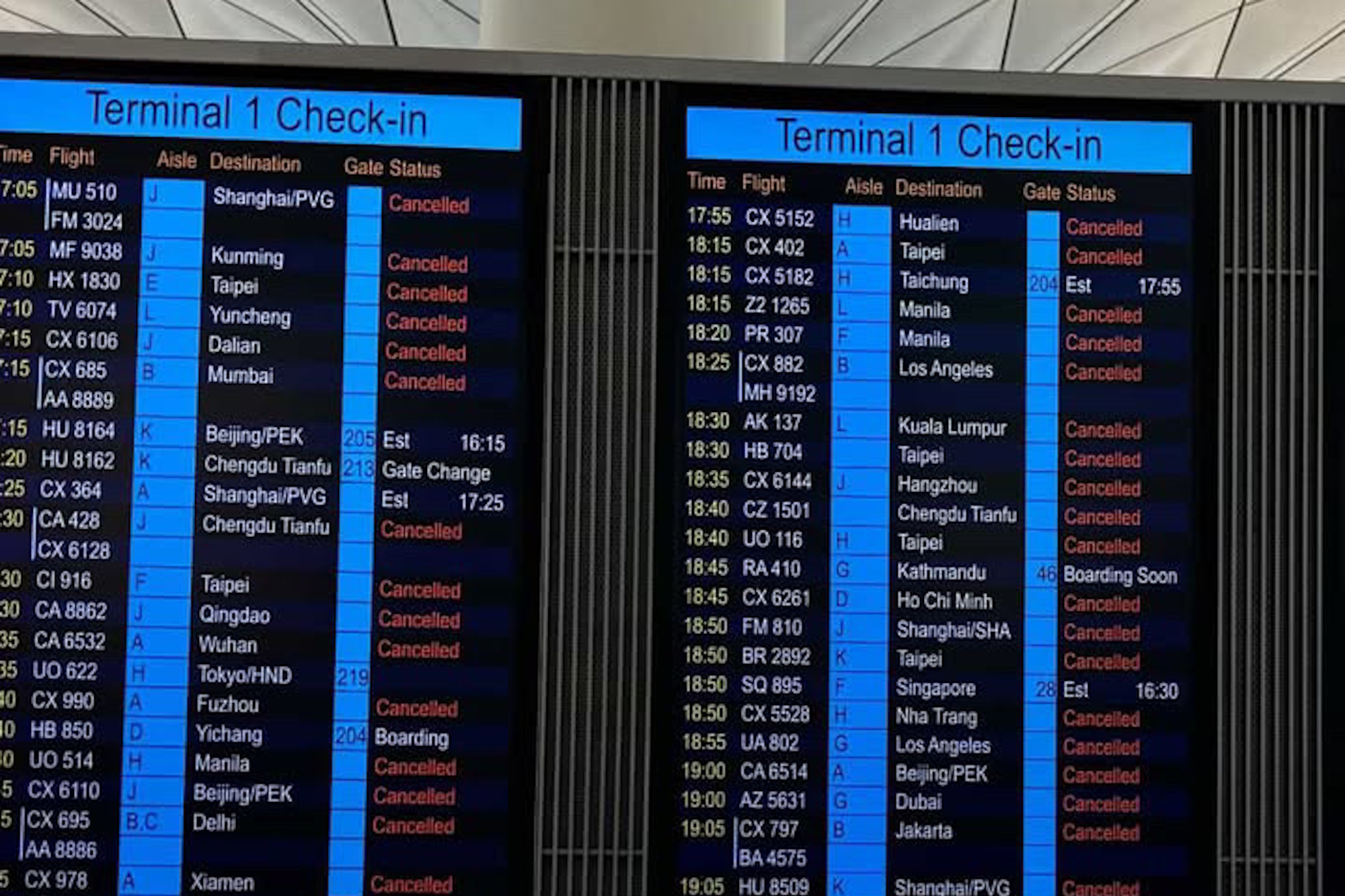
Over the last few days of September, Typhoon Ragasa swept a deadly and destructive path over parts of Asia, including the Philippines, Taiwan, and Hong Kong. As one of the strongest super typhoons in history, Typhoon Ragasa affected thousands of lives due to heavy rains and flooding. Hong Kong International Airport effectively shut down its passenger flight operation for 36 hours. The airport typically handles over 1,000 flights a day, including about 12 direct flights to Singapore.
For Singaporeans travelling to and from Hong Kong, Taiwan, and other affected parts of Asia, these delays represent a significant inconvenience. As they’re the result of an “act of God” or “force majeure”, the question is whether travel insurance policies cover these delays.
Read Also: Complete Guide To Buying Travel Insurance In Singapore
The “Act Of God” Or “Force Majeure” Clause
In insurance policies, an“act of God”, also known as “force majeure”, often refers to unexpected natural events, such as earthquakes, tsunamis, floods, and wildfires. Such clauses are mentioned in certain types of insurance policies to note that these events are not covered by that policy.
It’s therefore very important to look at how your insurance policy is worded, to find out if you are covered or not.
Fortunately, based on a survey of several travel insurance policies available in the market, most do cover natural disasters. In fact, the term “act of God” often isn’t used anywhere in the wording, with “natural disasters” being the term more commonly found in the policies.
Read Also: 6 Reasons Why You Should Always Buy Travel Insurance Coverage Before Going Overseas
Here’s how natural disasters are covered in the policies we found.
Travel Delay
All travel insurance policies should include a travel delay clause for several reasons, including travel delays due to natural disasters or adverse weather conditions. Do take note of how claims for travel delays are paid out. In the policies surveyed, you generally have to endure a delay of at least six hours and have written confirmation from the airline specifying the duration and cause of the delay to process a claim.
Travel Cancellation
Travel insurance policies should also cover travel cancellations, including unused airfare and accommodation charges, should a natural disaster happen at the planned overseas destination. In other words, should you have planned to travel to Taiwan or Hong Kong in September, and chose not to due to Typhoon Ragasa, you should be able to claim according to the wording of the policy.
Travel Misconnections
Some travel insurance policies also cover you should you miss your confirmed travel connection at the transfer point, for reasons including natural disasters. To be able to claim under this clause, no alternative transportation should be available for at least six hours, and again you will need to obtain written confirmation from the airline stating the reason for the travel misconnection.
Travel Postponement
Some travel insurance policies also cover travel postponement due to specific reasons, including serious damage to your home in Singapore within 14 days of the scheduled departure date. This includes serious damage due to natural disasters. Of course, the definition of “serious damage” is at the discretion of the insurer.
General Exclusions
It is also important to note that many insurance policies also have a “general exclusions” section, which you need to be equally familiar with.
For example, according to one insurer, the travel insurance policy both includes and excludes natural disasters. Specifically, the policy only covers natural disasters for purposes of Trip Cancellation, Trip Interruption, or Travel Delay.
In other words, any other losses that result directly or indirectly from natural disasters are not covered by this particular policy. If your belongings are consumed by a wildfire during your trip, for example, this travel insurance policy does not cover that.
The same policy also has an exclusion for “Things you were aware of”. In other words, if you already knew about Typhoon Ragasa when purchasing the policy, you will not be able to claim, even if your trip was cancelled, interrupted, or delayed due to the Typhoon.
Comprehensive Travel Insurance
This is why a spokesperson for the Ministry of Foreign Affairs also mentioned the need for purchasing “comprehensive travel insurance” in their 26 September statement on Typhoon Ragasa in Taiwan. When it comes to natural disasters, it’s important to know what you are covered for when you travel.
Top Image Credit: Wilson
Advertiser Message
Thinking Of Switching Brokers Or Consolidating Your Holdings?
Tiger Brokers is currently running a transfer-in campaign where eligible clients can receive an iPhone 17 Pro Max* when they transfer in their assets.
For SGX investors, there is also a CDP Transfer promotion with 0* commissions on Singapore stocks.
Find out more here. *T&Cs apply.




Budgeting 101
7 Ways Being Frugal Is Different From Being Cheap


Street Smart
Singapore Gym Membership Price Guide (2026 Edition)


Street Smart
Singapore Gym Membership Price Guide (2026 Edition)


