
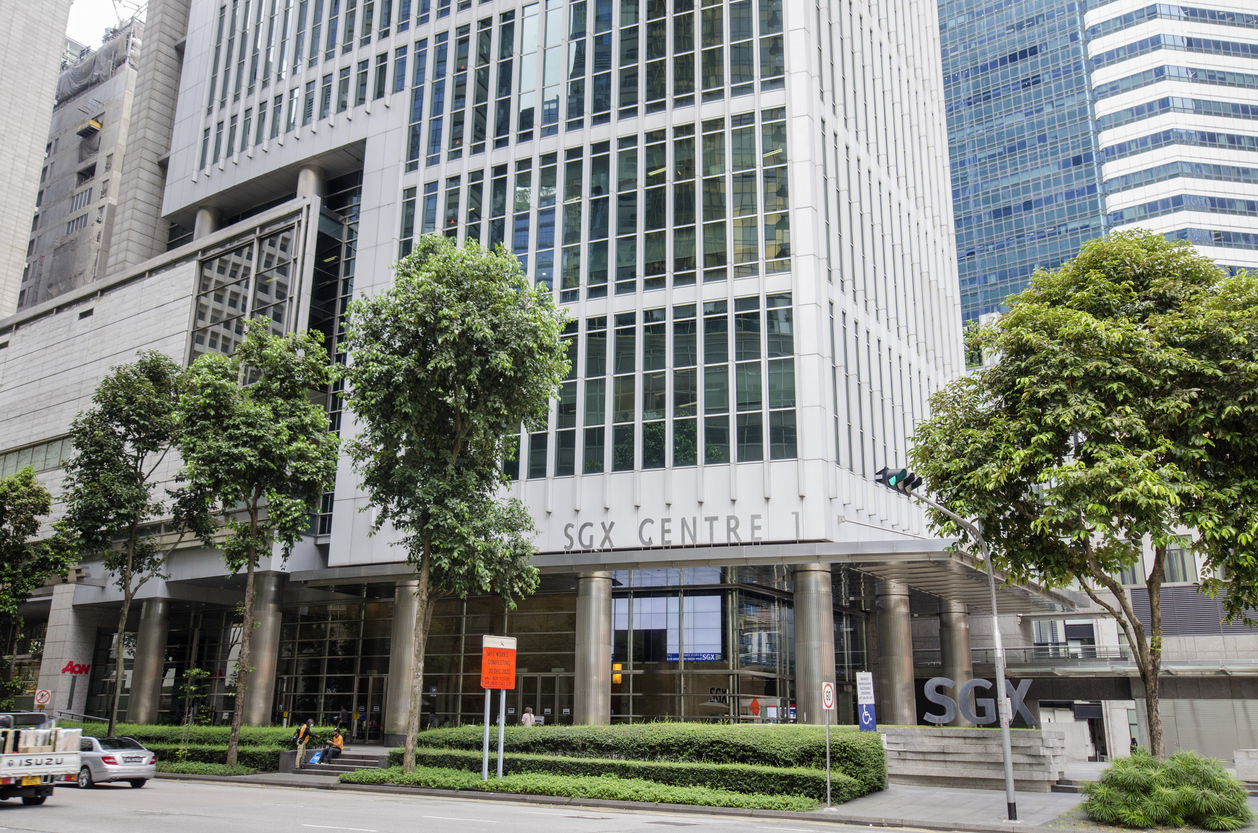
For Singapore investors building a bond portfolio, familiar options on the Singapore Exchange (SGX) include the ABF Singapore Bond Index Fund and the Amova SGD Investment Grade Corporate Bond Index ETF. These provide exposure to Singapore-dollar bonds, but investors looking to diversify beyond this market may want to consider regional alternatives.
The Amova Asia Credit Index ETF, which was listed on SGX on 1 October 2026, offers exposure to US-dollar-denominated bonds issued across Asia excluding Japan. It has two share classes: the SGD-hedged class (SGX: B95) and the USD class (SGX: B96).
Here are five things to understand before deciding whether it fits into your portfolio.
#1 Tracks A Broad USD-Denominated Asian Credit Index
The ETF tracks the Bloomberg Asia Ex-Japan USD Credit Index, which covers fixed-rate, US-dollar-denominated government-related and corporate debt across the region. Eligible markets include China, Hong Kong, India, Indonesia, Malaysia, the Philippines, South Korea, Singapore, Taiwan, Thailand and Vietnam.
The index includes both investment-grade and high-yield bonds. Investment-grade bonds generally come from issuers with stronger credit ratings, while high-yield bonds carry greater credit risk. Government-related issuers fall into four categories: agencies, sovereigns, supranational institutions and local authorities.
For Singapore investors, this offers exposure to a broader range of issuers than Singapore-focused bond products. Whether that diversification is useful depends on the role you want bonds to play in your portfolio, including how much credit risk you are comfortable taking.
#2 SGD-Hedged Share Class Reduces Currency Risk
The ETF’s two share classes give investors a choice of currency exposure. The USD class (B96) trades in US dollars, while the SGD-hedged class (B95) trades in Singapore dollars and uses currency hedging to reduce the impact of movements between the two currencies.
This may appeal to investors who measure their returns and expect to spend their investment proceeds in Singapore dollars. Without hedging, changes in the USD/SGD exchange rate can affect their returns, even when the underlying bonds perform well.
However, hedging does not eliminate all currency risk. The SGD-hedged class still carries investment risk, and its returns can be affected by how effectively the hedge works. Investors should therefore avoid treating it as equivalent to holding Singapore-dollar bonds.
#3 The Expense Ratio Is Capped At 0.35% Per Annum
The ETF’s total expense ratio is capped at 0.35% per annum, with fees and expenses above the cap borne by the manager. Its current management fee of 0.20% per annum is included in this total, rather than being an additional charge.
For comparison, the ABF Singapore Bond Index Fund (A35) has a reported expense ratio of 0.24% per annum, while the Amova SGD Investment Grade Corporate Bond Index ETF (MBH) has a total expense ratio capped at 0.30% per annum. However, these funds provide different types of bond exposure.
A35 focuses on Singapore-dollar government and government-related bonds, while MBH provides exposure to Singapore-dollar investment-grade bonds. The Amova Asia Credit Index ETF covers a broader regional credit market, including high-yield debt.
The decision should therefore go beyond comparing fees. Investors need to consider whether the underlying exposure suits their portfolio and whether they are comfortable with the risks involved. A slightly higher fee alone does not make a fund less suitable, just as broader diversification does not automatically make it a better choice.
#4 It Is Not A Capital-Protected Or Singapore-Only Product
Despite investing in bonds, this ETF is neither a deposit nor a capital-protected product. Its value can fall, and investors may lose part or all of their investment.
Bond prices generally fall when interest rates rise. They can also decline when an issuer’s financial position weakens or investors become less confident about its ability to repay its debt. Because the index includes high-yield bonds, investors take on a wider range of credit risks than they would with a fund limited to investment-grade debt.
Regional diversification also comes with concentration risk. The ETF focuses on Asia rather than global bond markets, so policy changes, economic slowdowns and geopolitical events within the region can affect its performance. Problems in one market can also spill over into others.
The fund uses representative sampling and/or optimisation to track its index. In practice, this means it does not necessarily hold every bond in the index, but instead builds a portfolio intended to deliver similar overall returns. Its performance may therefore differ from that of the benchmark.
#5 Accessible Through SRS
Investors can buy the ETF on SGX using Supplementary Retirement Scheme (SRS) funds, subject to the relevant SRS operator’s and broker’s terms. This allows it to form part of a retirement portfolio alongside other investments held through SRS.
The SGD-hedged class may suit SRS investors who want regional bond exposure while keeping their investment denominated in Singapore dollars. For someone already holding Singapore-focused bond ETFs, it offers another way to diversify across issuers and markets.
However, investing through SRS does not change the ETF’s underlying risks. Investors still need to consider how it fits with their existing holdings, retirement horizon and ability to accept losses.
The ETF is classified as an Excluded Investment Product, so investors do not need to complete the Customer Knowledge Assessment required for certain more complex products. This classification does not mean that the ETF is low-risk or suitable for every retail investor.
Read Also: SPDR STI ETF VS Amova Singapore STI ETF: What’s The Difference Between The 2 STI ETFs Listed On SGX?
Photo Credit: iStock/tang90246


