
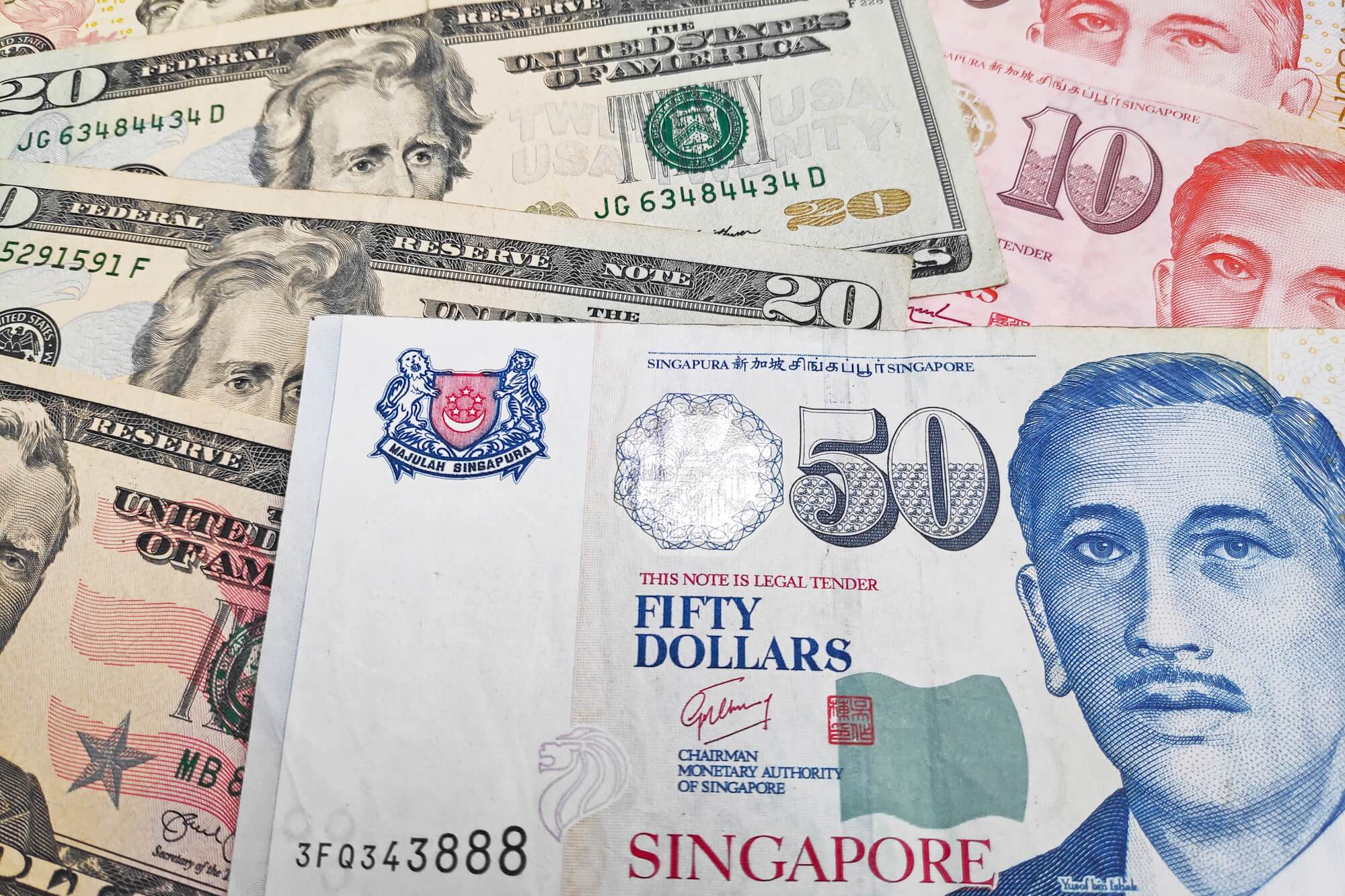
The war in Iran is making headlines and, beyond just oil price, it’s also starting to impact monetary policy around the world. As Singapore is a very import-dependent city-state, the Monetary Authority of Singapore (MAS) tightened monetary policy at its April 2026 review. That’s a fairly significant shift given that the MAS spent much of 2025 doing the opposite, loosening policy twice in the first half of the year amid global trade uncertainty. So, what’s changed? And more importantly, what does it mean for your wallet when you’re planning your year-end holidays? Let’s break it down.
How MAS Actually Controls Monetary Policy
First, a quick explainer on something that confuses a lot of people. Unlike the US Federal Reserve (Fed) or the European Central Bank (ECB) – two big central banks – MAS does not use interest rates as its primary monetary policy tool. Instead, it manages the exchange rate of the Singapore Dollar against a basket of currencies from its major trading partners. This is known as the Singapore Dollar Nominal Effective Exchange Rate, or S$NEER for short.
MAS sets a policy band for the S$NEER, and it can adjust three levers: the slope (how fast the Singapore Dollar (SGD) appreciates over time), the width of the band, and the midpoint. When MAS “tightens,” it means it’s allowing the SGD to appreciate faster. In other words, that’s a “hawkish” move in terms of the monetary policy action and can be seen as an equivalent interest rate “hike” if it was the Fed or ECB tightening policy. The result is that a stronger SGD makes imports cheaper, which technically should help dampen inflation in the domestic economy.
Read Also: What Does The Easing Of Singapore’s Monetary Policy Mean For The Singapore Dollar?
What Triggered The April 2026 Tightening
The April 2026 decision to tighten was driven by a combination of factors, external and domestic. On the external side, the most glaring reason was the Middle East conflict that erupted in late February 2026, which severely disrupted shipping through the Strait of Hormuz and caused ongoing uncertainty over global energy prices. This has fed directly into Singapore’s import costs, particularly for electricity, gas, and transport-related items.
On the domestic front, meanwhile, Singapore’s economy has been performing strongly. The Lion City’s GDP grew at an above-trend rate of 5% in 2025, and Q1 2026 data continued to show solid growth of 4.6% year-on-year. As a result, MAS raised its core inflation forecast for 2026 to 1.5% to 2.5%, up from the earlier projection of 1% to 2%.
With inflation likely to stay elevated for the next few quarters, the MAS decided to increase the rate of appreciation of the S$NEER policy band slightly. In effect, that means allowing the SGD to strengthen slightly faster to help offset rising import prices. At the same time, the US dollar has been weakening for much of the past year, which has also contributed to the SGD looking stronger against USD-pegged or USD-correlated currencies.
What This Means For The Singapore Dollar
The short version: the SGD is strong right now and the policy backdrop suggests it should stay that way for the foreseeable future. Against the US dollar, the USD/SGD rate has fallen to around 1.27, the lowest level since October 2014. In other words, every Singapore dollar buys you more US dollars than it has in over a decade. Year-on-year, the SGD has strengthened roughly 3.3% against the greenback. The picture is even more favourable when you look at the Japanese yen. Over the past year, the SGD has appreciated by approximately 10.9% against the JPY, making Japan significantly more affordable for Singapore travellers than in 2025.
The SGD/JPY rate has been trading in the 120s, compared with 107 yen per Singapore dollar just a year ago in April 2025. Against the euro, the EUR/SGD is around 1.49, while GBP/SGD is hovering around 1.71. These rates reflect the broader trend of USD weakness and the relatively strong performance of European currencies, so Europe remains on the expensive side for Singaporeans even with the SGD’s overall gains.
Read Also: 5 Exchange Rate Mistakes To Avoid When Travelling Overseas For Holiday
What This Means For Your Holiday Budget
A stronger SGD means your holiday dollars stretch further in markets where the local currency has weakened against ours. The most obvious example of this is Japan, which has been the standout winner for years. Even without the added advantage of currency exchange, Japan tops Singaporeans’ list of most-desired travel destinations. The SGD is roughly 10% stronger against the Japanese Yen than a year ago, so that food tour in Osaka or ski trip to Hokkaido is even more affordable. That means your $3,000 Japan trip last year would only cost you about $2,700 this year, all else being equal.
Meanwhile, Thailand and other parts of Southeast Asia have increased in attractiveness given the SGD’s strength against regional currencies. The Thai baht (THB) has weakened in recent months, while the Indonesian rupiah is down nearly 5% against the SGD over the past year. That has made regional getaways make more financial sense.
Europe and the UK deserve a bit more caution as both the euro and pound have strengthened even as the US dollar weakened globally. For Singaporeans, that means European holidays haven’t gotten proportionally cheaper despite the SGD’s overall strength. We all know how notoriously expensive Europe is, especially during the summer months, so, if you’re planning a trip to Paris, Rome, or London, your budget isn’t getting much help from a stronger SGD.
Good News For Travellers But With A Caveat
The MAS tightening story is mostly positive for Singaporean travellers. A stronger SGD policy enhances our purchasing power overseas. That said, it’s worth remembering that this same tightening is a response to rising inflation at home. Your holidays may cost less in foreign currencies, but here in Singapore, costs from electricity bills to services are expected to pick up over the course of 2026. So, while the currency moves are working in your favour when you travel, your household budget should still factor in the domestic cost environment.
The other thing to keep in mind is that exchange rates are dynamic. The Middle East situation remains uncertain, and any shift in global risk sentiment could move currencies in ways that are hard to predict. Currency markets have been unusually volatile in 2026, given all that’s going on, so if you’re planning a big trip and want to enjoy today’s favourable rates, it might be worth exploring prepaid multi-currency wallet cards to lock in your rate.
Using an easy, convenient multi-currency wallet like YouTrip makes this experience seamless. If you don’t have a YouTrip account yet, use the promo code DNS5 during your YouTrip registration to receive a welcome credit of $5 in your YouTrip account.
YouTrip fully supports several currencies including USD, MYR, JPY and THB and even offers a dedicated multi-currency wallet. This means you can lock in favourable exchange rates by converting SGD to another currency in advance through the app.
With the MAS tightening, the SGD will likely be stronger so that imported inflation doesn’t get out of hand. As a side effect, it makes overseas spending more affordable for Singaporeans. If you are planning to go overseas later this year, then it’s worth making plans early, and not assuming that rates will stay this favourable indefinitely.
Read Also: 6 Money-Saving Travel Tips Every Singaporean Should Consider Before Flying Off
Advertiser Message
Thinking Of Switching Brokers Or Consolidating Your Holdings?
Tiger Brokers is currently running a transfer-in campaign where eligible clients can receive an iPhone 17 Pro Max* when they transfer in their assets.
For SGX investors, there is also a CDP Transfer promotion with 0* commissions on Singapore stocks.
Find out more here. *T&Cs apply.




Family Planning
Cost Guide To International School Fees In Singapore


