
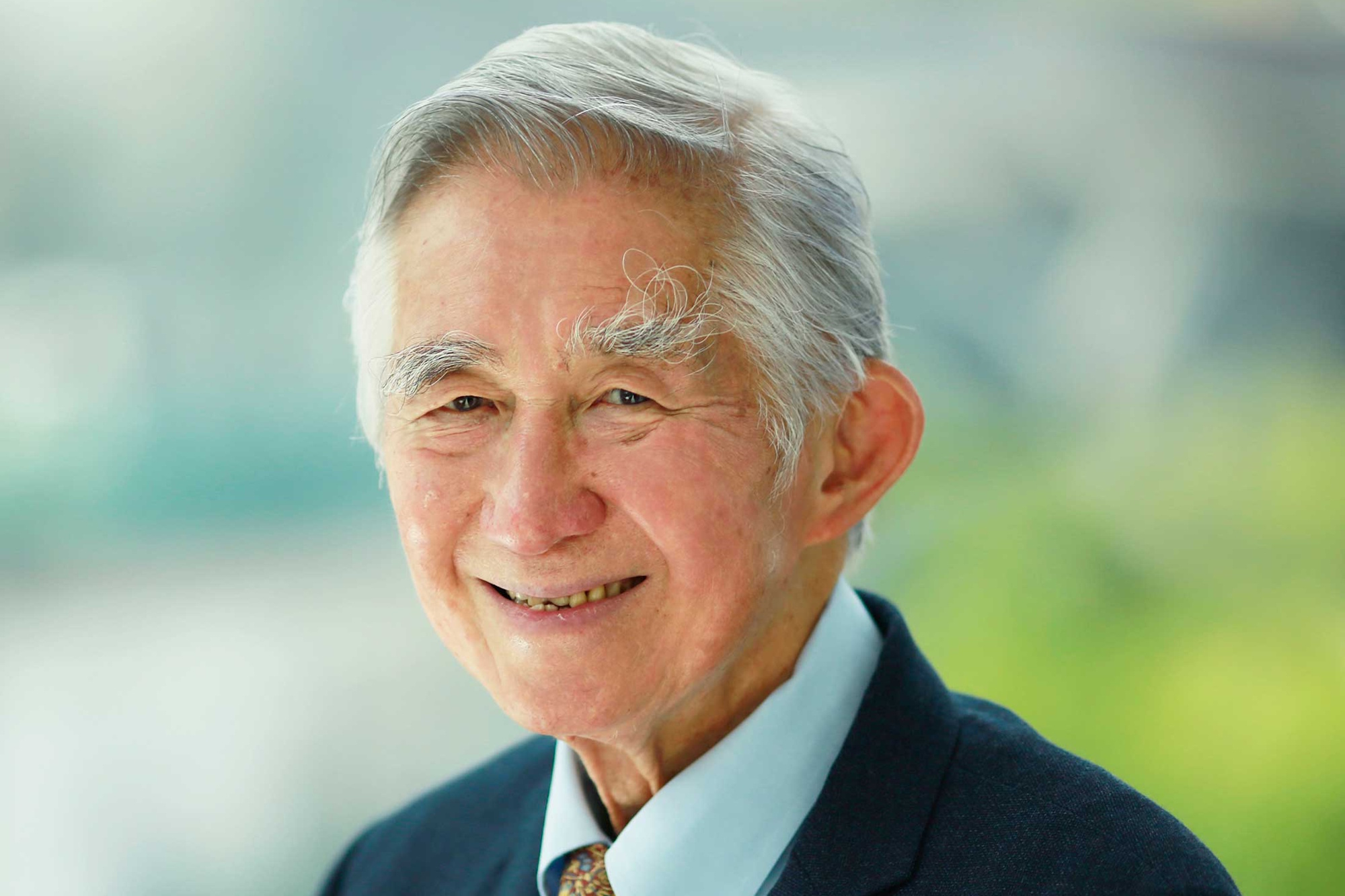
Singapore’s public housing, built by the Housing & Development Board (HDB), is home to 77.4% of resident households. By design, these HDB flats form neighbourhood precincts, alongside kopitiams, parks and playgrounds. Much of these precinct designs are attributed to the late Liu Thai Ker, who passed away on Sunday. He has been described as the “architect of modern Singapore” due to his contributions to housing and urban planning.
Liu Thai Ker joined HDB in 1969, after graduating from Yale University with a master’s degree in city planning. He worked for globally renowned architect I.M. Pei in the US before returning to Singapore as Head of Design and Research at HDB. In his 20-year career at HDB, he rose from Chief Architect to CEO. During this period, he transformed Singapore’s public housing landscape, overseeing the development of 20 new towns. Dr. Liu’s planning principles, design philosophies, housing policies, and implementation strategies fundamentally shaped Singapore as we know it today, setting the blueprint for HDB for decades to come.
#1 Highly Self-Sufficient Neighbourhoods
In 1971, Singapore was built around a “Concept Plan” that was shaped by broad principles, including new housing towns, industrial estates, transport infrastructure and recreational spaces.

Source: URA
Each town was envisioned as a “satellite town”, with a mixture of low density and high-density housing. Dr. Liu’s role was to “fill in the details” in line with this broad framework.
To do so, he envisioned five regions in Singapore, each like a small city. The regions would then be further subdivided into new towns, self-sufficient enough for residents to be born there, go to school, and work there. This was because of the desire to move Singapore’s population out of what Dr. Liu’s referred to as “urban slums” and “squatter colonies”.
His regional planning model was based on a clear hierarchy:
- Town: Each town would house about 300,000 residents. It would have a town centre with comprehensive amenities, function as a transport hub, and provide employment opportunities.
- Neighbourhood: Each town would have several neighbourhoods, each with 4,000–6,000 flats. They would be served by a neighbourhood centre providing daily necessities.
- Precinct: Each neighbourhood would have subdivisions known as precincts, made up of about a thousand families, clustered in six to eight blocks. Each precinct would be served by a playground and an exercise area. Dr. Liu believed that these smaller precinct sizes would create a sense of belonging, retaining the kampong spirit of early Singapore.
Read Also: HDB Price Guide: Cheapest And Most Expensive Estates In 2025
#2 More Variation In Housing Block Designs And Layouts
Dr. Liu was a big proponent of creating environments with a mixture of densities. He attributes the concepts of “flow” and “harmony” in building design to his time working for I.M. Pei. HDB block designs came in more varieties, with distinct features. In the 1970s, HDB built point blocks, tall apartments without the common corridors of the older slab blocks, providing each flat with windows on up to three sides for ample lighting and cross-ventilation.
Since slab blocks were made up mostly of three-room flats, and point blocks were made up of more expensive four- and five-room flats, having both in the same precincts would create more opportunities for families from different social classes to become neighbours.
Just as importantly, according to Dr. Liu, different densities allow “for better living”. In a 2017 CNA interview, he cited how The Pinnacle @ Duxton stands alone among the neighbouring shophouses. If there were too much high-rise housing densely packed together, it would create a very cramped physical environment. “High-rise housing must be mixed with low-rise schools, parks, sports fields, low-rise neighbourhoods and so on.”
Read Also: Where Are The Most Million-Dollar 4-Room HDB Flats Found In Singapore
#3 Creating Identity With Street Architecture
One way to give each town their unique identity, despite the high level of standardisation, was to have non-residential buildings at each street corner. Churches, temples, community centres, these were all added to neighbourhoods to create an identity.
Dr. Liu also pushed for variations in street architecture, ensuring that every row of buildings “looks like a piece of artwork with rhythms”. They should not be monotonously flat, but visually distinctive. He cited the row of flats in Bishan facing Bishan Park, and how each flat was built with different heights. “The buildings going up and down – that’s the result of street architecture. It was deliberate.”
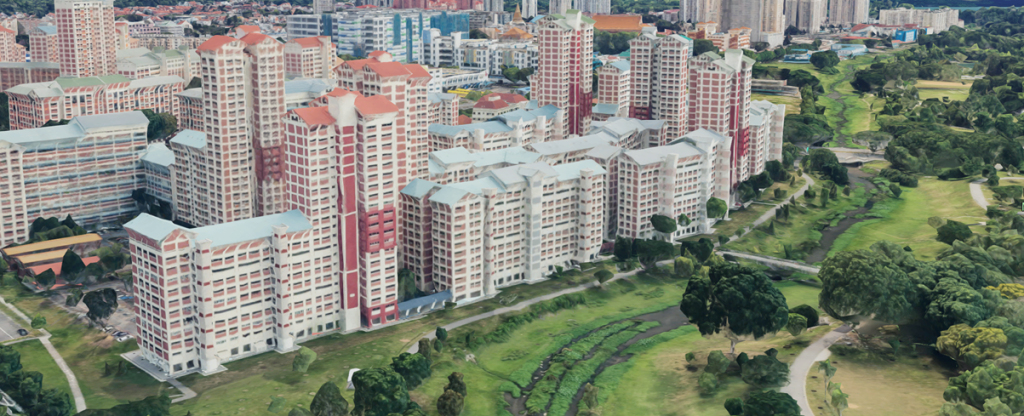
Source: Screenshot taken from Google Maps
This is why some flats in Potong Pasir have sloping roofs, while some blocks in Hougang have curved balconies. Dr. Liu was careful not to go overboard though. Ever the pragmatist, he deemed the curved façade of Block 259 at Ang Mo Kio Avenue 2, known today as The Clover @ Kebun Baru, to be impractical for public housing. But, he admits, “Human beings are not all uniform. Some people like this shape, and they’re prepared to pay the price of furnishing. I said I don’t want this to be done too often. But a small amount, we can do.”
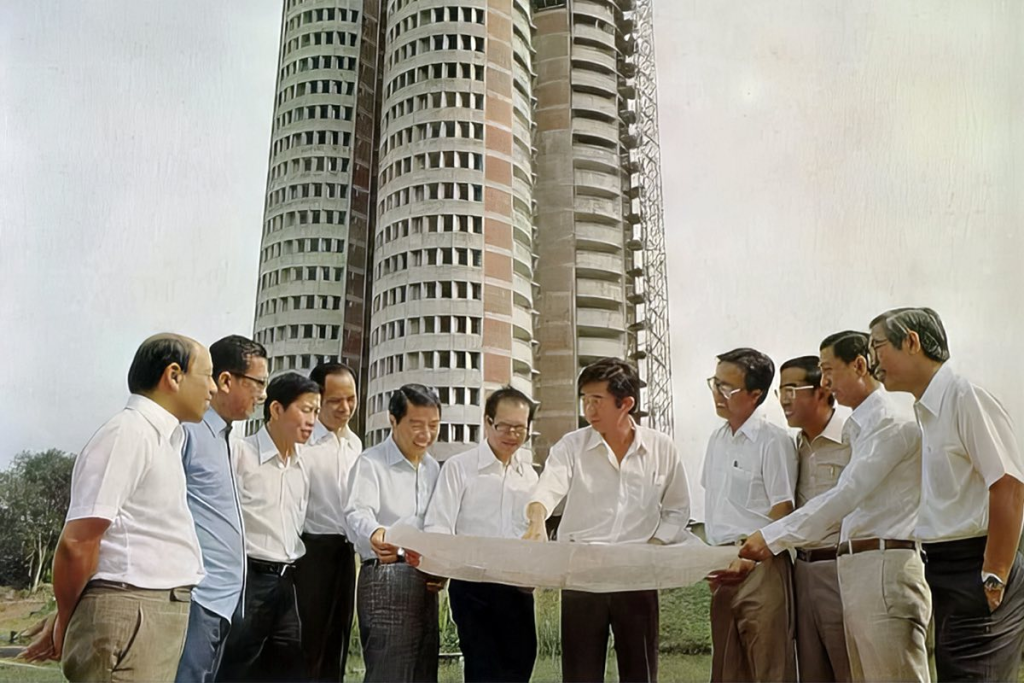
Source: Facebook/Housing & Development Board
#4 Blending Architecture, Engineering And Sociology
This keen awareness of human nature was what led Dr. Liu to establish a social research unit at HDB to conduct field studies, research that would help develop administrative and policy decisions. Sociologists helped to define how big the HDB precincts would be. As a uniquely Singaporean invention, the precincts would have to be 2.5 to 4 hectares each in area. According to Dr. Liu, sociologists told him this was small enough for people to develop “an emotional tie to the land”, creating the sense of belonging he aimed for.
In the same way, he got sociologists to estimate how many families should live in proximity to each other to maximise social interactions. Once told that it was about six to eight, he shortened common corridors to share only six to eight units. He also widened them from 1.2 metres to 1.5 metres and made sure that they were open enough to create a “courtyard in the sky”.
His vision was that, as people started to live higher and higher, you still had spaces to “mix with the neighbours”.
Read Also: Why Buying An HDB Flat Today Is No Longer As “Cheap” As It Used To Be (And Why It’s Okay)
Top Image Credit: MORROW Architects & Planners


Budgeting 101
7 Ways Being Frugal Is Different From Being Cheap


Street Smart
Singapore Gym Membership Price Guide (2026 Edition)


Street Smart
Singapore Gym Membership Price Guide (2026 Edition)


