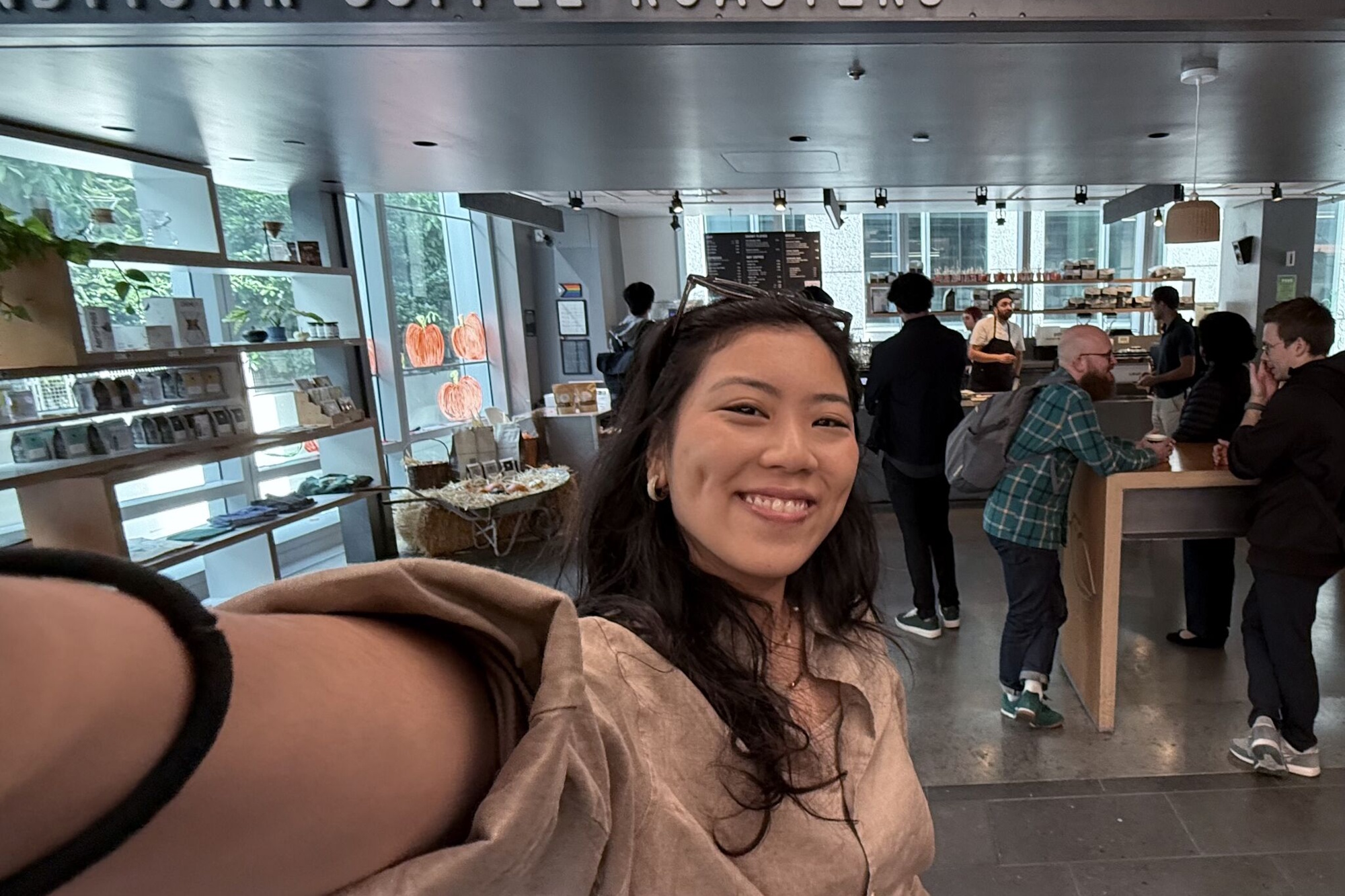
In a culture where managing our personal finances can sometimes feel like a harsh reality check or a chore, Sakura Seet is a breath of fresh air. Her enthusiasm for life is evident in every interaction, despite her busy roles as the co-founder of the personal finance ecosystem Dare to Finance and the co-founder and CEO of the AI-driven fintech startup Perfingo.
In our 40-minute conversation, Sakura’s passion for personal finance truly shines, but, the youngest of three admits it wasn’t financial strategy that led her to track her pocket money as a child.
“My relationship with money started quite early. When I was in primary school, I was the kid who had a principles of accounting book, and I would note down what I had bought during recess. With a daily budget of $2 back in the day, I would write down ‘$1 chicken rice, $1 Ribena’.
“I liked what came to be the analytics of it. I love looking at, oh, what did I spend on in that whole week? And then I look back at all the different things I had spent on, whether it’s food or whether it’s miscellaneous items, like pencils and pens.”
“That looks a lot like budgeting now, but back then it wasn’t very conscious. It was just me wanting to know more about myself.”
Her curiosity would then evolve into a sense of financial responsibility, discipline and building systems for herself.
Early Lessons In Responsibility
Sakura credits her mother’s unique method when it came to giving her pocket money.
“My mom was very strict growing up. She never allowed us to buy soft drinks. Anything outside of tea and water was not allowed at home.
“But my mom was also very liberal to give me a one-week allowance, and then a month allowance very early on. As early as lower primary, she allowed me to decide how I wanted to spend that slightly bigger pocket money.
“It was very obvious that I loved iced tea growing up. I would always get Pokka iced tea in school. And I am very sure my mom knew, but it was like her closing one eye, giving me the freedom to explore the different options and then see how I navigate around it also.
“It was her way of also allowing us to get like soft drinks, like behind her back. I had to decide whether I spent on chicken rice or iced tea. That was one of the things that I’m very sure she knew early on.
“Looking back, I do think my mom had a great influence on how I was brought up. She really allowed my siblings and me to have the freedom and also be responsible for our own decisions.
“Because she gave me a lot more freedom, I also started working part time very early on. So at 16 or 17, whether it was office part-time jobs, or F&B, events, or even tutoring. Being able to earn my own money also gave me a sense of income, no matter how small it was.
“There was no pressure, per se, from parents to work part-time. It was more like I had the time. Amongst my siblings, I was the only one that was working part-time through school.
“All along, I would say that whole mix of tracking my expenses to earning gave me a good, a good first taste of independence and also the responsibility of like my own personal finance.”
First Investments In Money And Mindset
Sakura’s sense of personal finance was shaped by receiving her first bank passbook at 16, but the desire to invest came later.
“I only had my own ownership over my bank account when I was 16. When I graduated secondary school, my mom passed me one of those POSBkids, like the kids’ account passbook. Back then, I also had a NETS card.
“I was also always surrounded by people older than me. I can’t pinpoint a single person who taught me how to invest. I think it was just the whole environment that I was in, but being in polytechnic and being surrounded by a lot of people who were a lot older than me naturally pushed me to just get started and do something first.
“But I only started investing at 18 years old, simply because that was when the income started coming in from work, even though I personally don’t feel like there was much to invest and especially because it wasn’t a very consistent stream then.
“I opened a CDP account. Back then, it was a lot more primitive. I remember it being quite a hassle. And then I bought one DBS stock. It was only about $15. Crazy times.
“But although I had bought my first stock quite early on, consistently investing only started in my early 20s.
“I took an approach of just trying it out first. I’m sure there’s a reason why I didn’t continue. Maybe I was just a little scared of “spending” so much continuously? So, it became just a one-time thing, and then I halted there until I was a bit more confident about my decisions.
“Honestly, it was quite courageous looking back, because I feel like I’ll hesitate a lot more now. I think the younger generation now has a lot more decision paralysis, for sure, and information overload.“
Read Also: From Stage To Stocks: How Ong Feng Yi Brings Together Career, Emceeing & Investing

Source: LinkedIn/Sakura Seet
Automating Decisions And Building Systems
That desire to overcome that decision paralysis is also what led Sakura to co-found Perfingo.
“If you look at what Perfingo does today, it dominates the whole process from planning your financial goals, to tracking, to then achieving them. So, that reduces the friction.
“I am quite a believer of systems, of automating things. When it comes to money, I see it as very emotional. It’s your relationship with money growing up, and how it evolved. So, with something so emotional, you don’t want to be making decisions daily or monthly, right? When you have a system, you eliminate the mental load, that emotional part, as much as possible.
“For me, personally, my dollar-cost averaging is scheduled, I have standing orders set in place. This started quite early since I started working full-time. It’s a passive investment. I don’t have to lay a finger; it will just do its thing. The hardest thing was keeping up with it when I was still building the startup.
“In terms of tracking, everything is tied to my phone. Through Perfingo, whenever I tap and pay via PayWave, it automates the transaction into Perfingo and collates all the data. So, in terms of my finances, it’s totally automated. There’s not much that I do manually.
Investing In People And Purpose
For Sakura, however, people are her greatest investment.
“I think the best investment I’ve made is in the people around me—the team we’ve built. People are a risky asset, but the payoff is good. There are great hires, and there are even better hires. Investing in these people allows us to scale the startup quickly and more productively. It’s not something you can do with just money alone.“
On a personal level, her biggest investment is in her mindset. From a young age, Sakura devoured non-fiction books and trained herself to reframe setbacks.
“Everyone has their lows, but I tell myself: this low is necessary. What do I learn from it, and how do I move forward? Every day is a trial, and you have to pick the better option of moving forward.
“One of the big things which I think pushed me to be able to achieve the things that I have, is training that mindset of eagerness. Eagerness to learn, eagerness to try things out, that reinforcement is something that was a more conscious investment in myself.
“Being able to also form that supportive community amongst my like-minded friends. And then, when I’m low, I can also count on these people. So, in practical steps, embody it first, then form the community of like-minded people and then try to reinforce it in yourself.
“I will also share, doing startups for a couple of years now, that this year I decided, okay, I’m going to invest in my health a little bit more. I’ve been a lot more consistent with my fitness. Being able to invest in yourself plays a very, very, very big part in being able to invest in other things in life.“
Redefining How We See Financial Independence
After many years of building a personal finance community Dare to Finance, Sakura says one thing stays true to her heart.
“A lot of times, those that wrote to us, saw money as a very emotional thing. I want to reassure people that are afraid to invest, or are not the most consistent investors, to really just remove the emotion from it as much as possible.
“Acknowledge that it’s emotional, yes, but try to create systems around it and be systematic about it. Even if it’s a small amount, building that habit is a lot more important than the inconsistency. Automate it, be consistent about it, and that’s the bottom line.”
Advertiser Message
Thinking Of Switching Brokers Or Consolidating Your Holdings?
Tiger Brokers is currently running a transfer-in campaign where eligible clients can receive an iPhone 17 Pro Max* when they transfer in their assets.
For SGX investors, there is also a CDP Transfer promotion with 0* commissions on Singapore stocks.
Find out more here. *T&Cs apply.