
In November, the Singapore Police Force revealed a new fraudulent online scam variant, describing a “Johor-Singapore Housing Subsidy”. Since September 2025, according to the Police, at least 21 cases have been reported, with total losses from the scam exceeding $1 million. This is despite a previous Police warning of the fraud on September 4th.
How The Johor-Singapore Housing Subsidy Scam Worked
Victims would come across advertisements on Facebook and WhatsApp touting a “JBSG Housing Subsidy Program”, or with headlines like “Free Homes Across The Causeway”. These advertisements included fraudulent, official-looking documents bearing the forged signatures of the Prime Ministers of Singapore and Malaysia. They would allege a false collaboration between the governments of Singapore and Johor to provide subsidised housing, with embedded links for interested parties to apply.
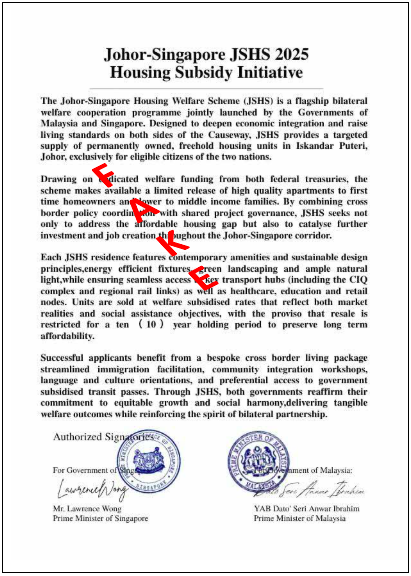
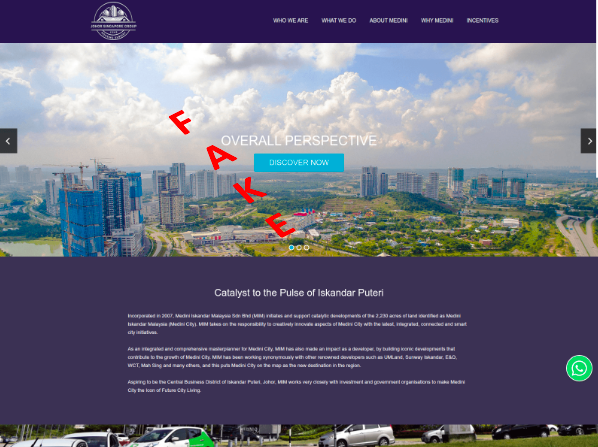
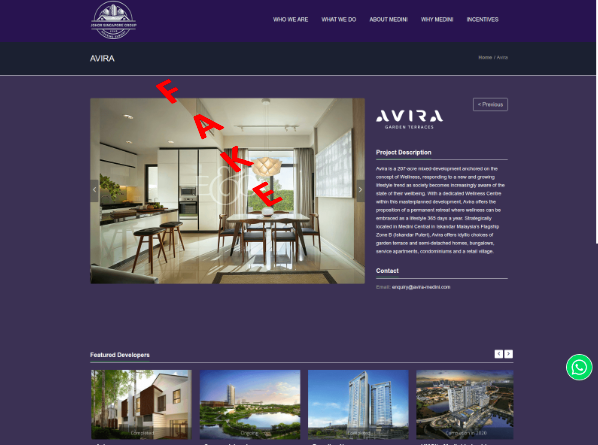
Photo Credit: Singapore Police Force
When victims clicked these links, they were directed to WhatsApp to communicate with the scammers. The scammers would be given a link to enter their personal information, including their NRIC or other Singapore ID, residential address, and email address. Some victims were then asked to transfer money to the scammers, purportedly for legal and stamp duties. These transfers would be done online, or victims would be asked to hand over cash to an unknown person physically.
Read Also: 5 Types Of New Scams Singaporeans Need To Be Careful To Avoid
What We Can Do To Protect Ourselves From Similar Online Scams
Despite the Police already reporting the scam in September, at least 21 cases were still reported. This means it is all the more important to share information about new scams to family and friends, so that they become more aware.
These scammers tend to prey on how much Singaporeans trust authority figures. It’s always good to have a healthy scepticism when viewing what appears to be official documents, and to check such information against official sources, including the ScamShield Helpline (1799).
Most of all, it is crucial that we do not provide any personal information, especially our NRIC or other Singapore identification, our residential addresses, and email addresses to people we do not know. Scammers could fraudulently use this information in future scams, for example, by pretending to be you.
We should also be more vigilant against unknown persons, or people whose identities are not verified. Never transfer money online, or physically hand money or other valuables to such people. We should never place money or valuables at a physical location for others to collect.
If you suspect you have been the target of a scam, you can report it to the Police by calling the Police Hotline at 1800-255-0000 or submitting information online via the Police website.
Read Also: 3 Ways Singapore Businesses May Be Scammed


