
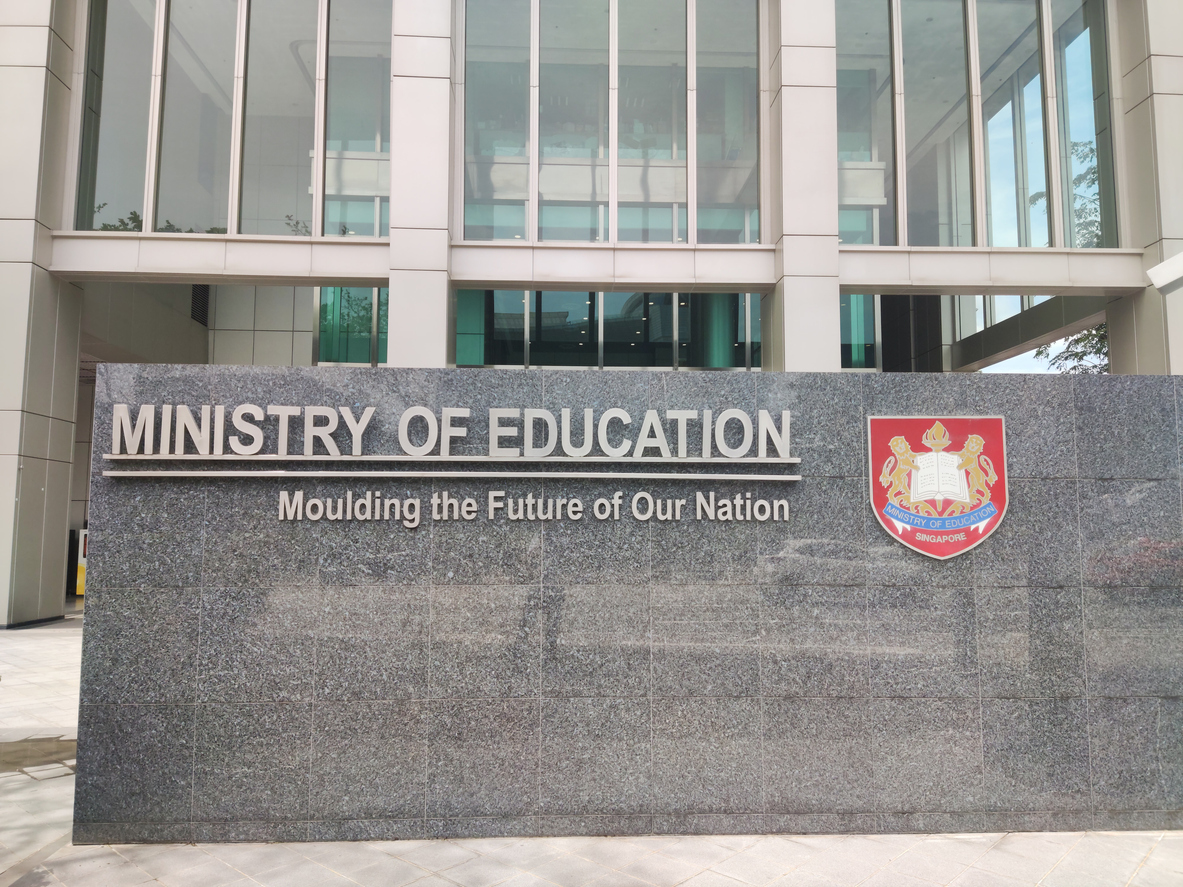
Raising children in Singapore can be expensive. But government schemes also help families offset some of these costs.
If you have a child in primary or secondary school, one such scheme is Edusave, a government-funded account overseen by the Ministry of Education (MOE).
Most parents would have heard of Edusave, but may not know exactly how much their child receives, what the funds can be used for, or what happens to the money after secondary school.
Who Gets An Edusave Account?
Every Singapore Citizen (SC) child who is eligible for Edusave is automatically given an account, so parents do not need to apply for one. For students in MOE-funded schools, the government makes annual contributions from the start of primary school until the end of secondary school.
Singapore Citizen children who are not studying in MOE-funded schools may also receive annual Edusave contributions from age 7 to 16, subject to the relevant eligibility rules. This includes eligible children enrolled in madrasahs and privately funded schools, as well as those who are home-schooled or living overseas.
How Much Does A Child Actually Receive Each Year?
For 2026, the annual Edusave contribution is $230 for primary school students and $290 for secondary school students. Over the standard six years of primary school and four years of secondary school, this works out to $2,540 in base Edusave contributions. That comprises $1,380 over six years of primary school and $1,160 over four years of secondary school.
This does not include any additional one-off Edusave top-ups that the Government may announce from time to time.
For example, Budget 2025 included a one-off Edusave top-up of $500 for Singapore Citizens born between 1 January 2009 and 31 December 2012, which was disbursed in July 2025.
Similar one-off top-ups have been announced in previous Budgets, so parents may want to watch for future Budget announcements.
Read Also: Complete Guide To Childcare Operator Fees In Singapore
Awards And Bursaries
Separate from the money held in an Edusave account, eligible students may also receive Edusave Awards.
The Edusave Scholarship (ES) is awarded to eligible students in government and government-aided schools who perform well academically and demonstrate good conduct. For primary school students, the award applies to eligible Primary 5 and Primary 6 students.
The Edusave Merit Bursary (EMB) recognises students who meet the relevant performance and conduct criteria, while also considering household income.
The EMB award is $200 for Primary 1 to 3 students, $250 for Primary 4 to 6 students, $350 for secondary school students, $400 for junior college or Millennia Institute students, and $500 for polytechnic or ITE students.
There is also the Edusave Character Award (ECA), which recognises students who demonstrate exemplary values and character, and the Good Progress Award (GPA), which recognises students who make significant improvements in their academic performance.
Unlike the annual Edusave contributions, these awards are not added to the student’s Edusave account. MOE pays award monies separately to recipients.
What Can Edusave Funds Be Used For?
Edusave funds can only be used for education-related expenses approved by MOE. This means parents cannot withdraw the money as cash or use it for expenses such as private tuition centre fees, international school fees or other costs that fall outside MOE’s approved uses.
For students in MOE-funded schools, Edusave can commonly be used to pay approved school fees through a standing order.
It can also be used for approved enrichment programmes organised by the school, including certain camps, workshops, cultural programmes, co-curricular activities and competitions that require payment. For students in independent or specialised schools, Edusave may also be used for eligible fees and programmes that fall within MOE’s approved guidelines.
Because the exact expenses that can be paid from Edusave may differ by school and programme, parents should check with their child’s school if they are unsure whether a particular expense is covered.
What Happens To The Balance When Secondary School Ends?
When a Singapore Citizen student turns 17, or leaves an MOE-funded school, whichever is later, the remaining Edusave balance is transferred to a Post-Secondary Education Account (PSEA).
Parents and students generally do not need to take any action for this transfer.
Compared to Edusave, the PSEA can be used for a wider range of approved education expenses. This includes fees at approved post-secondary institutions such as polytechnics, ITE and universities, as well as selected continuing education and training programmes. You can also use PSEA funds to repay certain government education loans, including the Tuition Fee Loan and Study Loan. Subject to the relevant rules, PSEA funds may also be used to pay approved education expenses for the account holder’s siblings.
The PSEA remains available until the account holder reaches age 31, when the account is closed under the prevailing PSEA closure arrangements. Any remaining funds may then be transferred to the account holder’s CPF account according to the applicable rules.
This means Edusave money that is not used during a child’s school years can continue supporting their education through the PSEA, rather than simply disappearing when secondary school ends.
Read Also: 6 Ways For Singapore Parents To Maximise The Child Development Account (CDA)
Photo Credit: iStock/ridham supriyanto
Advertiser Message
Thinking Of Switching Brokers Or Consolidating Your Holdings?
Tiger Brokers is currently running a transfer-in campaign where eligible clients can receive an iPhone 17 Pro Max* when they transfer in their assets.
For SGX investors, there is also a CDP Transfer promotion with 0* commissions on Singapore stocks.
Find out more here. *T&Cs apply.



Family Planning
How Much Edusave Money Does A Singaporean Child Receive?


