
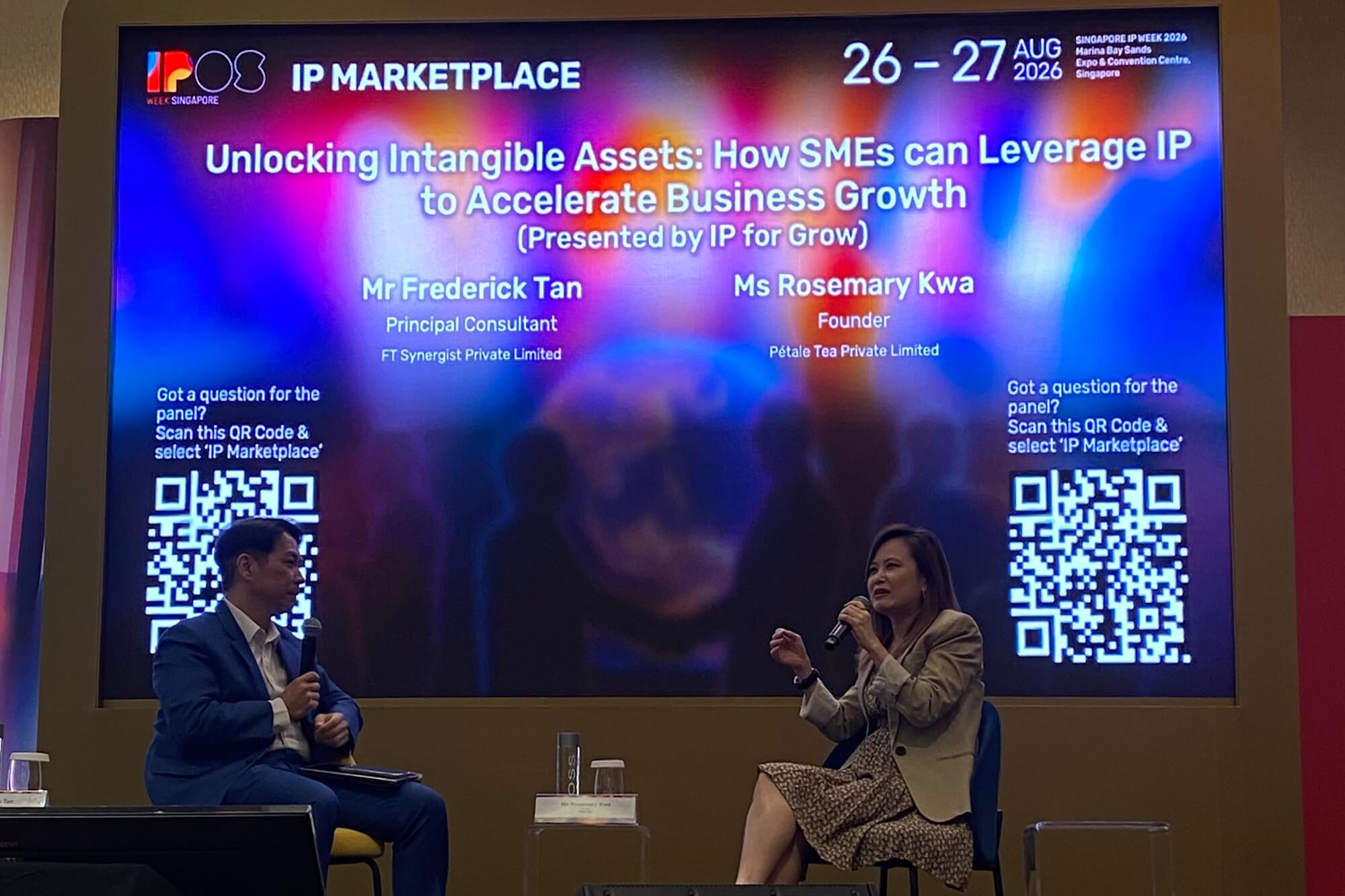
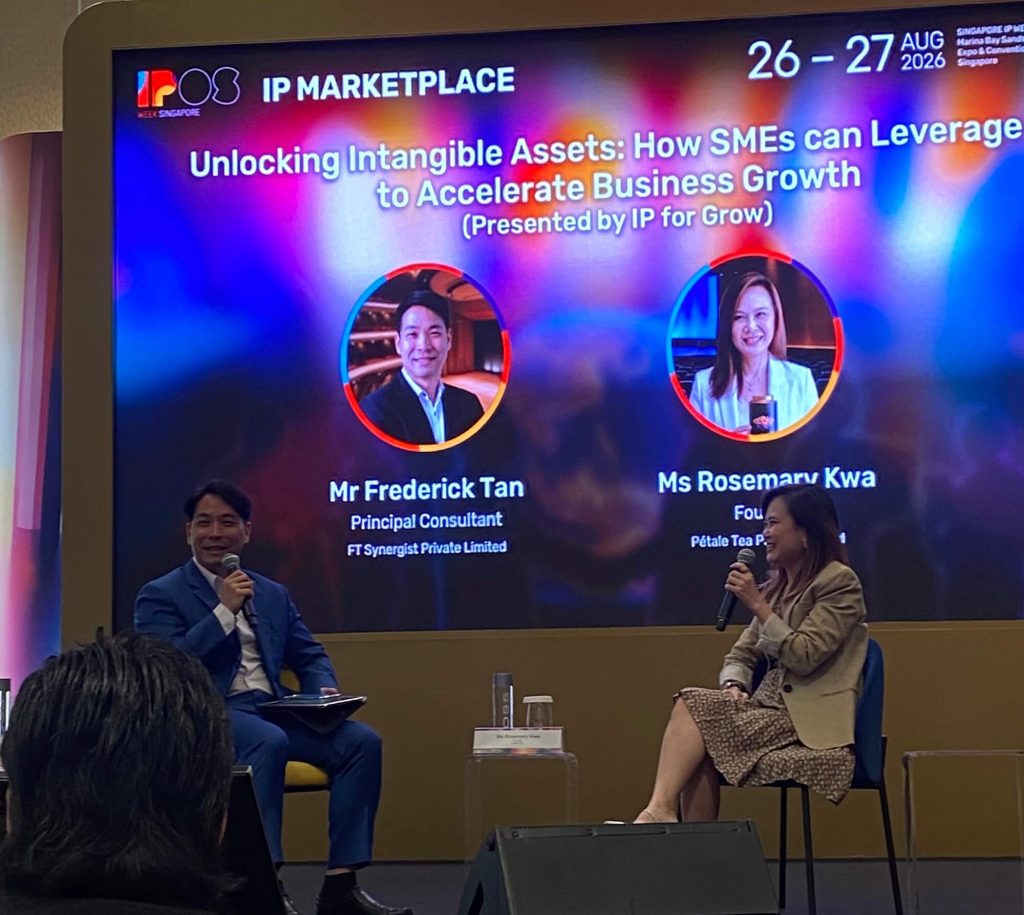
When you think of tea gifting, the first thing that comes to mind is the relaxing process of sipping a comforting blend of flavours from around the world. The thought of intellectual property (IP), or even protecting that IP, would probably be the furthest thing from the mind. That is why it was so interesting that IP Marketplace featured a session by Ms Rosemary Kwa, founder of Petale Tea, Singapore’s first blooming tea specialist.
IP Marketplace is an annual event organised by IPOS International as part of Singapore IP Week 2026. As part of the Intellectual Property Office of Singapore (IPOS), they provide patent search and analysis, training, and IP management services. They have also jointly developed GoBusiness IP Grow, an online IP services marketplace.
Ms Kwa was joined on stage by Mr Frederick Tan, Principal Consultant at FT Synergist, whom she met years ago through Enterprise Singapore’s Scale-Up programme. He helped her develop a strategic plan to scale Petale Tea to $3.15 million in revenue with a clear exit strategy.
From Tea Rooms To Tea Experiences
Ms Kwa’s tea journey began decades ago with managing tearooms and perfecting the art of tea-making. She later set up Petale Tea, a tea gifting brand, in 2018. Almost immediately, she recognised two important factors.
Firstly, selling tea as a commodity alone would not deliver the margins she needed. “If we had just sold loose tea leaves by weight, we would have been trapped in a commodity race,” she explained.
Other competitors were emerging at the same time, and it would be a race to the bottom if she tried to match them on quantity. She therefore needed to differentiate what she was creating at Petale Tea, and in 2018, they branded themselves as Singapore’s first blooming tea specialists.
Blooming tea, also known as artisan flowering tea, is a hand-tied bundle with a mixture of edible flowers and tea leaves. When steeped in hot water, the bundle slowly “blooms” into a floral display, making it a multi-sensory experience.
Secondly, by adopting this branding, she recognised that developing the blooming tea experience would help Petale Tea stand out. “We realised that our true IP wasn’t the physical leaf; it was the visual spectacle – watching delicate flowers unfurl slowly in water to create a ‘moment of pause’,” she elaborated.
Through her research, Ms Kwa found growing demand for a hyper-personalised product. While the brand initially offered customers a way to create their own tea blend via its website, this concept proved a hit with Petale Tea’s corporate clients. Petale Tea now offers bespoke blends tailored to each client’s unique brand identity.
Bespoke Storytelling Service
Recognising the emotional experience of drinking tea, Ms Kwa created a tea experience that mirrored the journey of self-discovery and emotion. To her, blooming tea represented mindfulness and transformation, and the experience created a pause to reconnect and be present.
“Our next frontier is establishing Singapore’s first Storytelling Tea Concept – because we believe tea should be a story you feel and experience, not just consume,” said Ms Kwa.
The challenge then was to turn that intangible experience into intellectual property that could be protected. This meant unbundling the artistic craftsmanship, visual storytelling, and proprietary blending recipes into a distinct high-value intangible asset portfolio.
The process included trademarking these distinctive sensory and visual presentations, linking them to the brand, and treating the blends as protected trade secrets to prevent imitation and passing off.
However, the decision to move into zero-waste sustainability proved to be the key move.
“Multinational corporations and premier lifestyle hubs want elevated gifting that fulfils strict ESG mandates,” Ms Kwa explained. Traditional tea bags use a lot of microplastics, and the corporate gifting industry tends to create a lot of packaging waste.
Petale Tea put its 100% loose-leaf, blooming teas into eco-friendly packaging and paired them with interactive workshops.
“When you show global brands that your product delivers a luxury experience while actively reducing their carbon footprint, sustainability stops being a compliance cost and becomes your ultimate commercial door-opener,” she elaborated.
She now counts Google, Meta, Tiffany & Co. and Singapore Airlines among her clients.
Expanding Overseas
After a decade of growth, the brand is now firmly established in Singapore – it recently won the Singapore SME 500 Award by the Singapore Association of Trade and Commerce. It is therefore looking to scale across international borders.
Ms Kwa shared more about her overseas expansion plans. In Indonesia, for example, she sought to immerse herself in Indonesian business culture, which helped her recognise that trust and relationships were crucial to success.
The company now provides brand equity, proprietary formulas, and quality-assurance governance to vetted local distribution partners in Indonesia through an asset-light licensing architecture.
She also advised anyone considering regional and global expansion to register the IP 2 to 3 years before expansion, since overseas registration can take longer than expected.


Family Planning
Cost Guide To International School Fees In Singapore


