
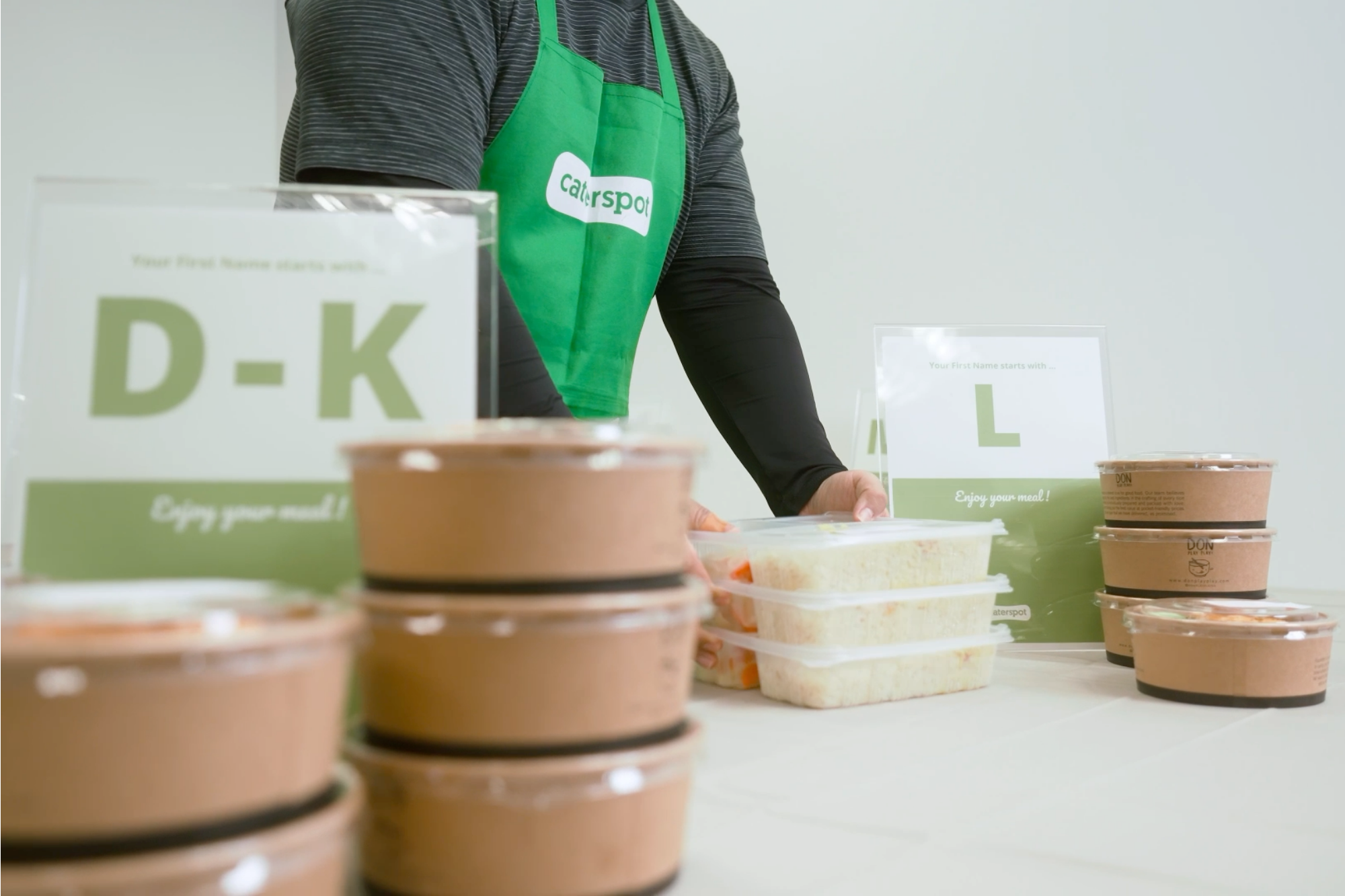
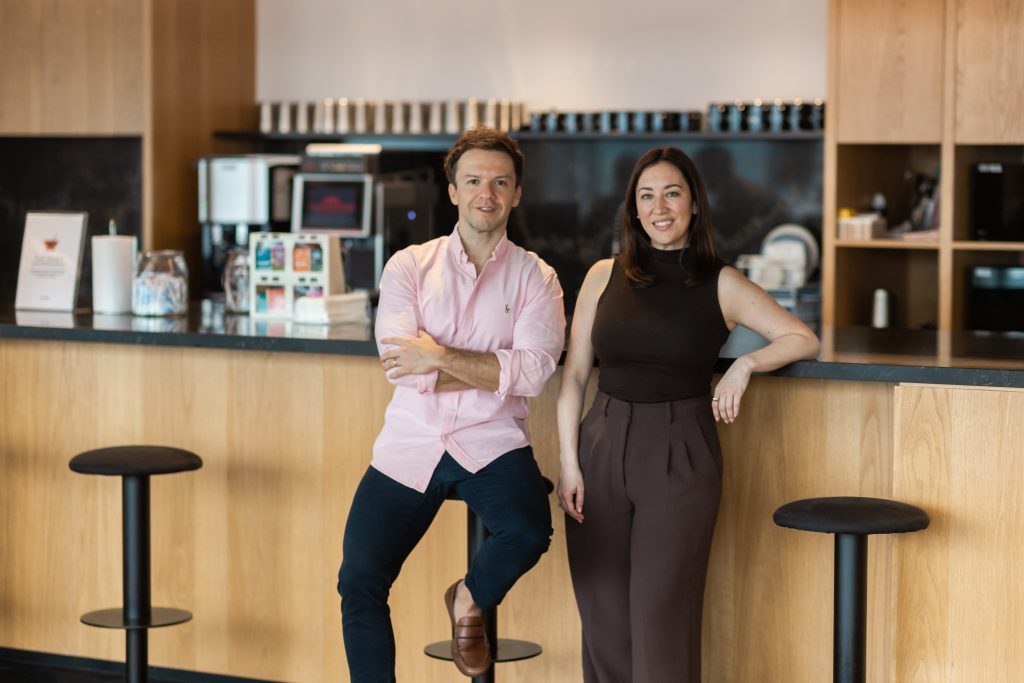
One corporate food order may contain 40, 100 or even 500 lunch boxes. For CaterSpot founders Amanda Ernst and Camilo Paredes, that difference made workplace food a more compelling business opportunity than consumer delivery.
Before launching CaterSpot, the pair helped build Foodpanda’s operations in Latin America. This gave them a close look at the economics of consumer delivery: relatively small orders, high delivery costs and heavy spending on discounts and vouchers.
Corporate food offered a different proposition. Larger orders could be delivered in fewer trips, while advance ordering made logistics easier to plan. Food partners could also prepare sizeable orders before their busiest consumer lunch period.
A decade later, CaterSpot has served more than 20,000 companies and works with over 800 food partners. We spoke to Amanda and Camilo about choosing a less glamorous B2B niche, running out of runway and building a profitable company.
#1 Corporate Orders Offered Better Economics Than Consumer Delivery
For Amanda and Camilo, workplace food was attractive because the interests of the platform, food partner and customer were more closely aligned.
A corporate order could be more profitable for a restaurant or caterer, while CaterSpot could deliver substantially more food in one journey. Since companies usually ordered in advance, CaterSpot also had more time to assign the right vehicle and plan the delivery.
Corporate customers behaved differently from consumers too. Instead of constantly seeking promotions, companies primarily wanted their orders to be correct and punctual.
“The orders were larger, the logistics were more predictable, and the customer cared more about whether we did a good job than whether we gave them a voucher,” the founders explained.
This became CaterSpot’s basic premise: build around a recurring corporate need rather than depend on discounts to generate repeat orders.
#2 CaterSpot Was Selling Reliability, Not Just Food Choice
When CaterSpot launched, companies could already order directly from restaurants and caterers or use consumer delivery platforms. However, none was designed to take responsibility for the complete outcome of a large office order.
A restaurant might accept an order for 100 meals without suitable packaging or delivery arrangements. A consumer platform could require several riders, causing meals to arrive at different times. Traditional caterers could manage events, but ordering was often manual and offered limited variety.
“Placing the order is the easy part. The hard part is making sure 100 people actually get the right food at the right time,” Amanda and Camilo said.
Dietary needs, budgets, building restrictions, attendance numbers and narrow delivery windows all had to be managed. While a failed consumer order may affect one or two diners, a failed workplace order can disrupt an entire team or important event.
#3 Running Out Of Runway Forced CaterSpot To Bootstrap
One of CaterSpot’s earliest challenges was running out of runway. Rather than assume more funding would always be available, the founders had to become more disciplined and learn how to bootstrap.
This changed how they measured progress. More traffic and orders could look encouraging without proving that CaterSpot had found the right customers or was solving a problem they valued enough to pay for.
In hindsight, Amanda and Camilo would have started direct sales conversations earlier. Speaking with customers helped them understand the wider problems companies wanted solved and eventually led CaterSpot to develop corporate accounts, recurring office meal programmes and pantry services.
Their lesson was to prioritise product-market fit over growth for its own sake: identify which customers valued the service most, which problems they would pay CaterSpot to solve and where the company could be meaningfully better than alternatives.
#4 Closing Hong Kong Allowed CaterSpot To Focus On Singapore
CaterSpot initially launched in Hong Kong but struggled to find the same demand it later found in Singapore.
According to the founders, Singapore already had a strong catering culture, with companies and families accustomed to gathering over catered food. In Hong Kong, space was more limited and dining out was generally more common.
Closing a market was painful after investing time and money in establishing it. Nevertheless, concentrating on Singapore became one of CaterSpot’s most important decisions.
It taught the founders that persistence should not mean ignoring the market. Entrepreneurs may need to release an original plan when customer behaviour points towards a stronger opportunity elsewhere.
COVID-19 reinforced this lesson. When workplace demand stopped almost overnight, CaterSpot examined every part of the business and became less interested in expanding merely to say it operated in more countries.

#5 Becoming More Than A Marketplace Created Recurring Business
Another turning point came when CaterSpot decided to become more than an online marketplace.
Initially, it helped companies discover and order from different restaurants and caterers. Over time, customers asked CaterSpot to manage more of their workplace food needs, including recurring meals, pantry programmes, account management and consolidated billing.
This shifted CaterSpot from a website used for occasional orders into a regular operational partner.
Workplace expectations were also changing. Corporate food was no longer limited to annual events or important meetings. Companies increasingly offered regular lunches, pantry snacks and food for employee engagement or return-to-office initiatives.
Hybrid work made planning more complex because attendance could change throughout the week. Companies also expected account support, reporting, budget controls and food-safety standards alongside menu choice.
To support an enterprise-grade catering service, CaterSpot became ISO-certified in food safety and developed operating procedures for its partners and internal teams. As the founders observed, operational excellence comes from doing many small things consistently well.
#6 Profitability Gives CaterSpot Greater Freedom To Grow
Today, CaterSpot is profitable and can use its own funds to invest in growth. It does not need to raise money simply to continue operating or enter another market.
Its regional expansion is increasingly being driven by multinational customers that already use CaterSpot in Singapore and want similar support in other Asia-Pacific offices. Entering a market with existing customer demand gives the company a clearer reason to expand.
Over the next five years, Amanda and Camilo expect workplace food to become more integrated. Many businesses still manage catering, recurring meals and pantry supplies through separate suppliers, creating fragmented invoices and limited visibility over spending.
CaterSpot’s ambition is to become the only food platform a workplace needs. Employees should retain access to a wide range of food partners, while employers gain greater structure through budgets, approvals, consolidated billing, reporting and food-safety standards.
After a decade in business, the founders’ biggest lessons are that survival is an achievement, the market matters more than the original idea and financial discipline creates freedom.
CaterSpot’s journey also shows that the strongest business opportunity is not always the most glamorous. It may simply be a complicated, recurring problem that customers are willing to pay a reliable company to solve.
This article was contributed to us by Alpha Story.


