

This article was written in collaboration with Long Bridge Securities. All views expressed in this article are the independent opinion of DollarsAndSense.sg based on our research, are purely for informational purposes, and should not be relied upon as financial advice. DollarsAndSense.sg is not liable for any financial losses that may arise from any transactions, and readers are encouraged to do their own due diligence. You can view our full editorial policy here.
Living in Singapore has its benefits – our life expectancy is one of the longest in the world at 83.5 years. While this is thanks to our high-quality healthcare and access to exceptional medical facilities, it also means that we will need to plan for a longer and potentially more costly retirement.
In general, Singaporeans may need to plan for about 15 to 20 years in retirement. The official retirement age in Singapore will rise to 65 years old by 2030, and the average life expectancy is 83.5 years.
The Future Cost Of Retirement In Singapore
One method of estimating our retirement income is to look at the latest data from the Household Expenditure Survey, conducted in 2023. About 9.3% of households comprise solely non-employed persons aged 65 years and over. In simpler terms, these are retiree households that are not earning an income from work.
For this group, the average monthly household expenditure per household member was $1,017 in 2023, up from $817 in 2018. That’s a compound annual growth rate of about 4.48% per year between 2018 to 2023.
While we’re using the average, it’s worth noting that the report also found that household expenditure per household member ranged from $481 to $3,227, reflecting the difference in housing and related expenditure. So, we can see that the average amount is already much closer to the lower extreme in terms of living standards.
To estimate the future cost of retirement for someone who is 35 years old today, we need to calculate the household expenditure for a retiree in 2055 (2023 + 32 years). Using the same compound annual growth rate of 4.48%, the household expenditure for a single retiree will go from $1,017 a month in 2023 to $4,130 a month by 2055.
Do note that this is just a simple way to estimate how much we may need in 32 years. A lot can change in that time. Furthermore, over the previous 5-year period, the compound annual growth rate of retirees was 2.99%. For simplicity, we’re just using the latest 4.48% p.a. growth rate.
How To Achieve A Future Monthly Dividend Income Of $4,130
For a start, Singaporeans are fortunate to be able to count on our CPF savings to help cover some of our retirement expenses.
For those turning 55 this year, the Basic Retirement Sum of $106,500 will result in an estimated monthly payout of $860 to $930 from age 65. That’s less than the current household expenditure for a single retiree today, let alone in 10 years.
On top of that, we’re just looking at the average retiree’s expenses. By its definition, 50% of retirees will spend more than the average.
To make up for the shortfall, we can consider investing in dividend stocks to earn a steady stream of dividend income. To start investing in such dividend stocks, we can use one of the newest and lowest-cost MAS-licenced brokerages in Singapore today: Longbridge Securities.
Having just started saving for my own retirement, I turned to PortAI, Longbridge Securities’ investment knowledge service platform, for suggestions on how to build my portfolio.
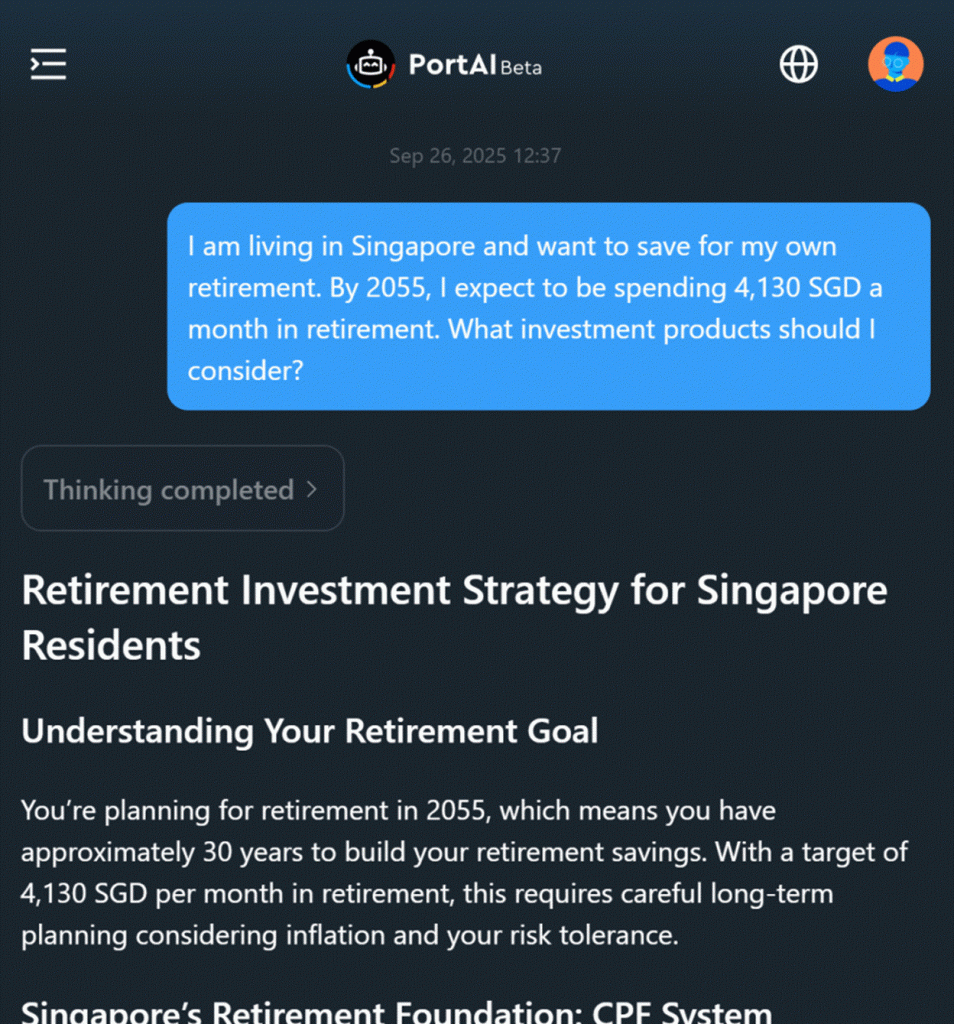
Source: Screenshot of Longbridge’s PortAI result
PortAI provided me with a comprehensive reply based on my relatively shorter investment runway of 30 years. It essentially recommended building a diversified portfolio with growth potential, which included the following suggestions.
#1 High-Yield Dividend Stocks In The Financial Sector
This may appear at first like the no-brainer answer – of course, if you want dividend income, you should look at stocks that give you high-yield dividends.
However, PortAI specifically mentions stocks in the financial sector, such as DBS, UOB, and OCBC, due to their strong regional presence. According to Longbridge’s platform, all three banks have a trailing twelve-month (TTM) dividend yield of at least 5%.
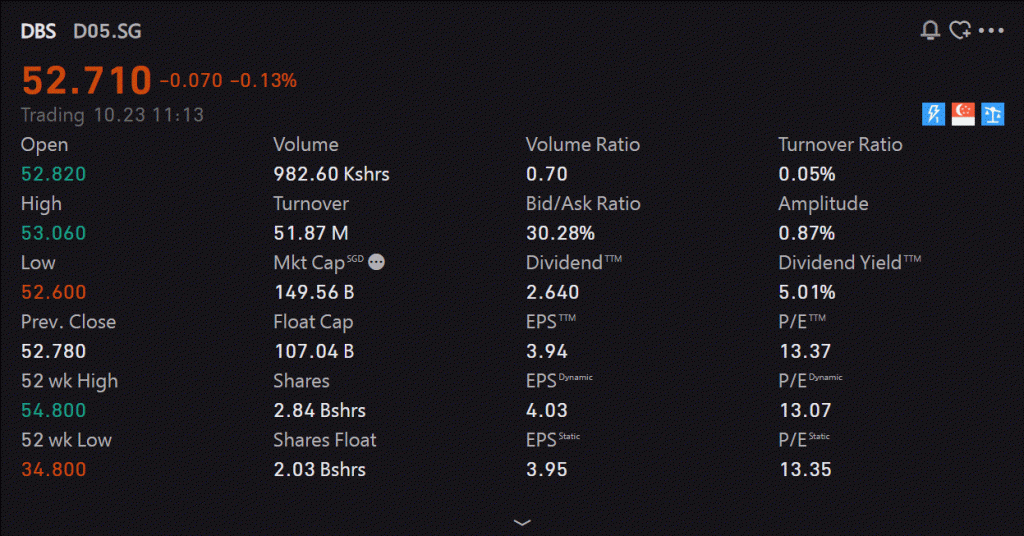
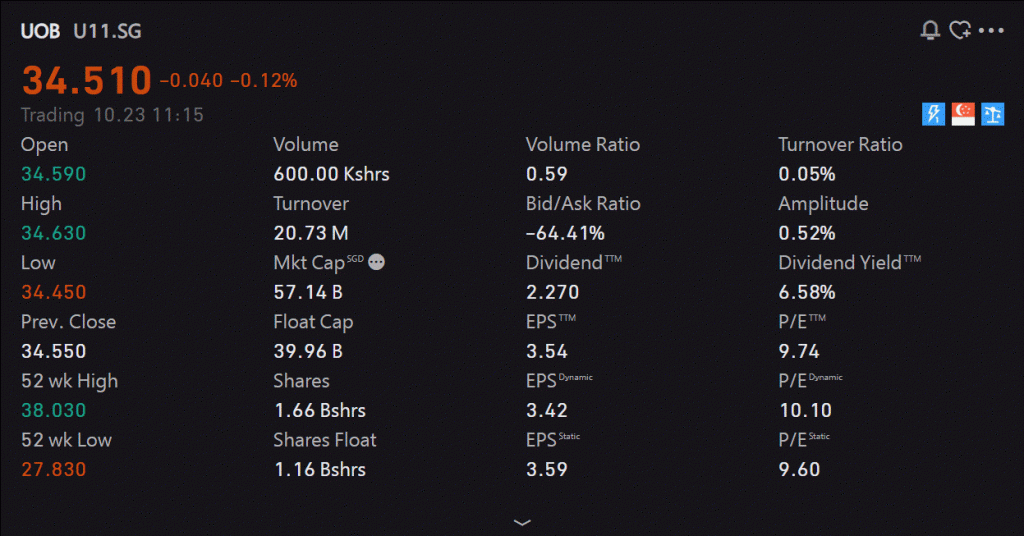
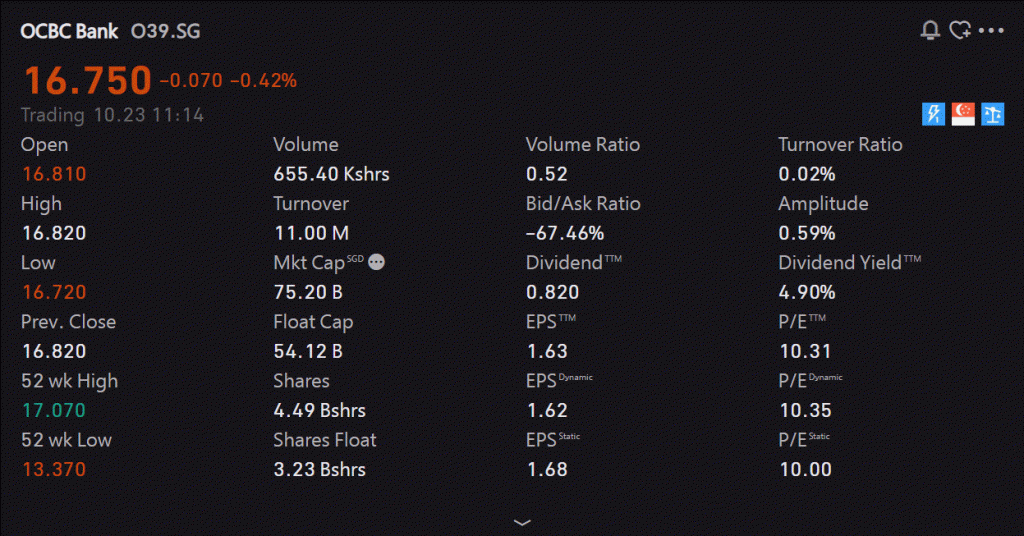
Source: Screenshots from Longbridge taken 23 October 2025
#2 Singapore REITs (S-REITs)
According to PortAI’s response, Singapore REITs demonstrated strong resilience following the COVID-19 pandemic and provided stable dividend income. In particular, it highlighted the performance of REITs that specialise in commercial properties, Retail REITs, and Industrial REITs.
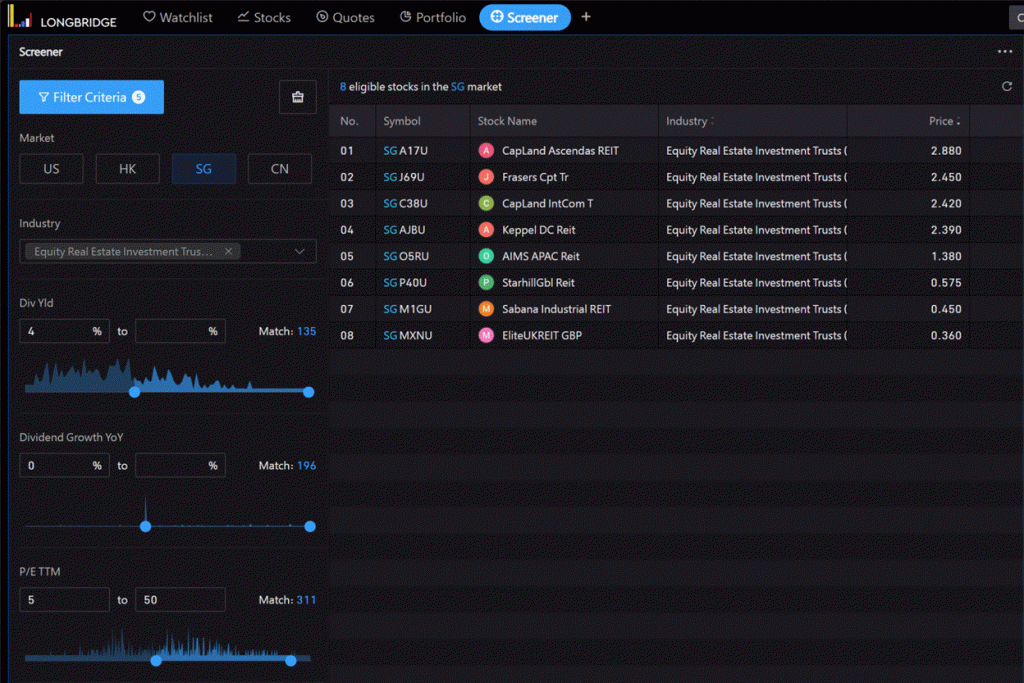
While it didn’t name any individual REIT, I used Longbridge’s screener to find REITs that had both high dividend yields and year-on-year dividend growth. The list of 8 REITs includes CapitaLand Integrated Commercial Trust, which has a trailing twelve-month (TTM) dividend yield of 5.46%.
Source: Screenshot from Longbridge taken 23 October 2025
#3 International Dividend Growth Stocks
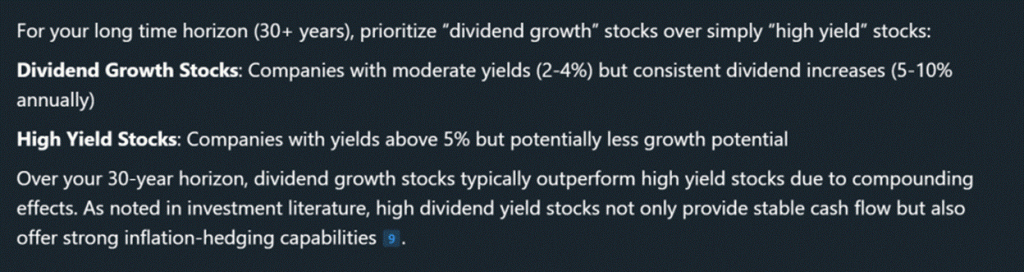
Finally, PortAI recommended diversifying my dividend-income portfolio to include global companies with proven track records of consistent dividend growth. It recommended companies with moderate yields (2-4%) but consistent dividend increases (5-10% annually).
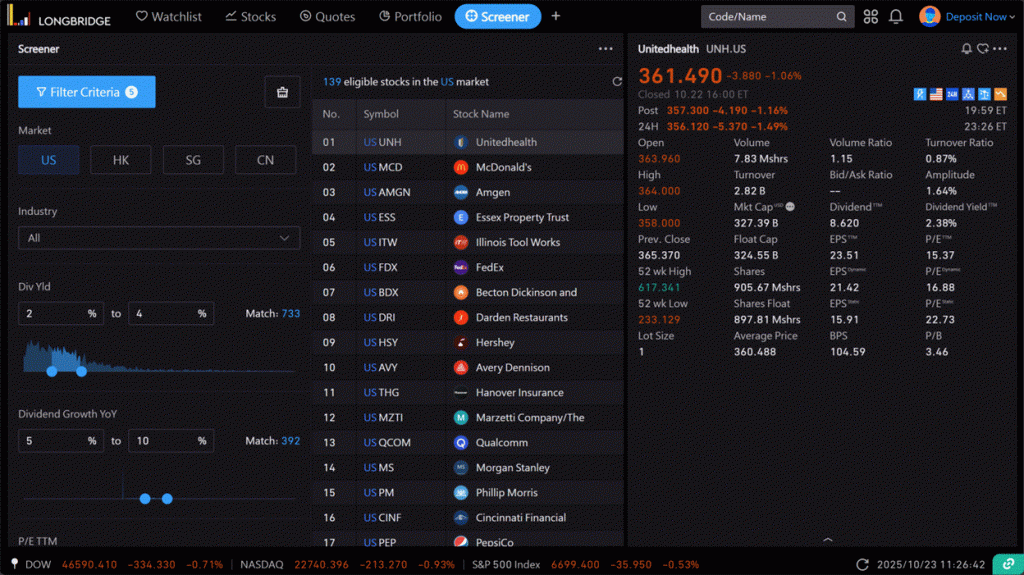
Putting these filters into Longbridge’s screener tool, I found over 100 US stocks that met these criteria, including UnitedHealth. Though the healthcare giant only had a dividend yield of 2.38%, its year-on-year dividend growth was 9.95%.
Source: Screenshot from Longbridge taken 23 October 2025
So, How Much Do You Need To Invest?
Let’s assume we have $300,000 in our CPF Account when we retire at the age of 65. Based on that amount, CPF LIFE will provide us with an estimated $1,630 in monthly payouts. Therefore, to achieve a $4,130 monthly income by 2055, one would still need to earn the difference of $2,500 a month.
Most of the recommended stocks above have dividend yields of about 5%, though this doesn’t consider any price appreciation, which comes from improving dividend payouts. Assuming an average yield of 5% from our investments, we would need to have about $600,000 of dividend-paying assets.
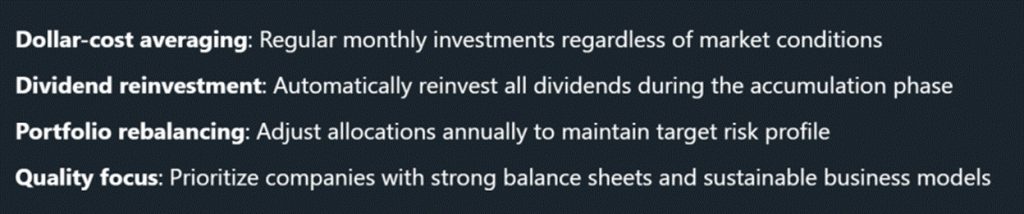
With about 30 years to build our dividend-income portfolio, PortAI suggests starting early and contributing consistently, with a four-prong investment approach.
Source: Screenshot from PortAI by Longbridge
Its suggestions of dollar-cost averaging and dividend reinvestment are sound, tried and tested methods to ensure that one’s portfolio grows over time, rather than relying on timing the market.
We should also reinvest any dividends we get today towards building our retirement nest egg, rather than seeing it as a windfall to splurge in the near-term.
With the time and mental effort saved by consistently investing, a good investor can look into portfolio rebalancing and identifying companies with sustainable business models, to ensure long-term portfolio growth.
If you have difficulty identifying such companies, it is worthwhile to turn to ETFs, which simply attempt to replicate an index, whether it’s a broad country-based index or one that focuses on business sectors or asset classes.
To Maintain Or Lower One’s Lifestyle
Singapore’s average core inflation rate over the past 20 years has been below 2%, but your dividend income will inevitably be worth less as prices rise. To ensure your lifestyle doesn’t downgrade too much, saving every cent today counts.
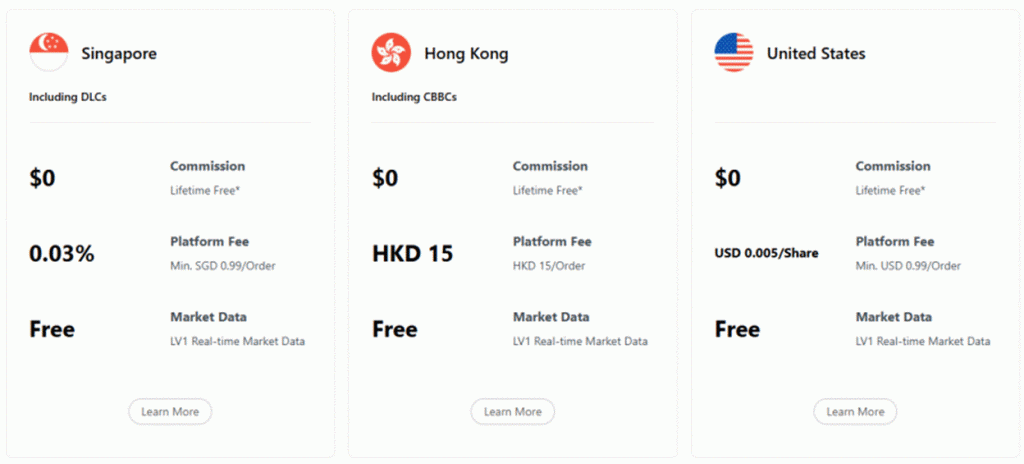
That is why Longbridge is choosing an investor-first model by offering lifetime* zero brokerage commissions when buying or selling stocks and ETFs in Singapore, Hong Kong, and the US.
MAS-licensed Longbridge is also charging one of the lowest platform fees in the market, with only 0.03% for Singapore stocks (minimum of $0.99 per order), 15 HKD per order for Hong Kong stocks, and 0.005 USD per share for US stocks (minimum of 0.99 USD per order). Now, they are also offering a 0 trading fees* campaign which waives your first 100 trading fees for HK/US/SG stocks for the first 3 months.
Source: Longbridge
Enjoy A Welcome Offer When You Open A Longbridge Singapore Account
From now till 30 November 2025, open a Longbridge SG account and deposit S$2,000 within the promo period to be eligible for:
- 3x USD 150 Platform Fee Coupon for US stocks;
- 3x HKD 1,500 Platform Fee Coupon for HK stocks; and
- 3x SGD 150 Platform Fee Coupon for SG stocks
If you sign up through DollarsAndSense, you also enjoy an exclusive 12% Interest Boost Coupon for 90 days (applicable on deposits up to S$2,000), and an S$18 cash coupon.
This welcome offer is only valid until 30 November 2025, for new Longbridge SG users.
On top of these coupons, if you open a Longbridge SG account, make a deposit, and complete buy trades within the promo period, you will be eligible for additional rewards.
- Deposit S$2,000, maintain the amount for 30 days, and complete 3 buy trades to receive S$40 NVDA + S$40 AAPL shares
- Deposit S$10,000, maintain the amount for 90 days, and complete 5 buy trades to receive S$135 NVDA + S$135 AAPL shares
- Deposit S$100,000, maintain the amount for 90 days, and complete 8 buy trades to receive S$385 NVDA + S$385 AAPL shares
Do note that these stock rewards are not stackable.

*Terms and conditions apply
^Other fees apply
Disclaimer:
This article has been prepared for the sole purpose of promoting Longbridge Singapore’s products and services. The information contained herein is intended for general informational purposes only and does not constitute an offer, solicitation, recommendation, or advice to buy, sell, or otherwise engage with any investment products or financial services. We are not acting as a financial adviser and does not provide any financial advice. Longbridge Singapore makes no representation or warranty as to the accuracy or completeness of the information or materials presented. All investments carry risks, may not be suitable for everyone, and you may lose your investment principal. Representations of past performance are not indicative of future results, and such representations have not been verified by Longbridge Singapore. You should seek independent financial advice if you are unsure about any investment decisions. This advertisement has not been reviewed by the Monetary Authority of Singapore.


