
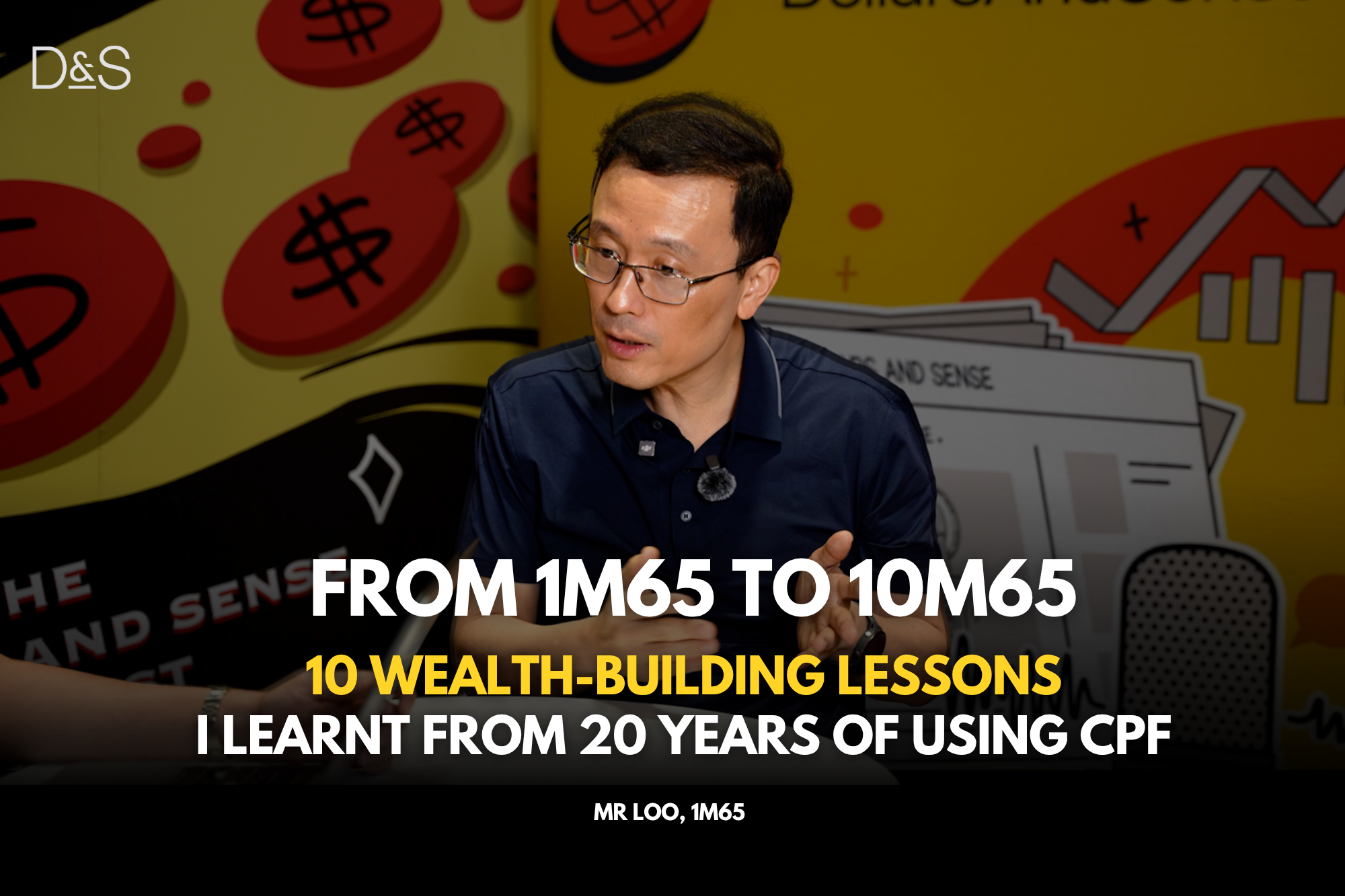
When I first encountered the idea of 1M65 in 2015, I was fascinated by a simple question: could an ordinary Singaporean become a CPF millionaire by age 65?
At the time, the concept seemed ambitious. Yet the more I studied CPF, the more I realised that the real power of the system was not just its interest rates. It was the combination of compulsory savings, long investment horizons and the ability to compound over decades.
A few years later, I developed the idea of 4M65, which explored how a couple could potentially accumulate $4 million in retirement wealth by age 65. Today, my wife and I are working towards what I call “10M65” — a projection of what may be possible through CPF, SRS, disciplined investing and continued contributions over time.
The number itself is not the point. Whether someone ultimately reaches $2 million, $4 million or $10 million, the principles behind the journey remain the same.
These are the lessons that made the biggest difference for us.
#1 Most People Underestimate How Compounding Really Works
Almost everyone has heard of compound interest. Far fewer people have experienced it long enough to appreciate its full impact.
One observation changed the way I think about wealth building. Compounding tends to happen in two phases.
The first 10 to 15 years often feel slow and uneventful. Progress is steady, but the results rarely look dramatic.
The later years are very different. Once a larger capital base has been built, growth begins to accelerate. Returns start generating returns on an increasingly larger amount of money.
The challenge is that many people abandon the process before reaching this stage.
#2 Surviving The First Decade May Be More Important Than Finding The Perfect Investment
When people ask me for the secret behind long-term wealth building, they often expect a sophisticated strategy.
In reality, one of the most important skills is simply staying invested long enough.
The early years can feel frustrating. Contributions seem small. Account balances grow gradually. The results may not appear worth the effort.
Yet those years are laying the foundation for future growth. Patience is often more valuable than optimisation.
#3 Start Building CPF Wealth As Early As Possible
One of the best decisions my wife and I made was to begin strengthening our CPF balances early. We made regular top-ups to our Special Account (SA) and MediSave Account (MA) while we were still relatively young.
CPF’s interest structure means that time can become a powerful ally. Even modest sums can grow substantially when given enough years to compound.
While everyone’s financial situation is different, the earlier the process begins, the more opportunities there are for long-term growth.
#4 Continue Strengthening CPF Throughout Your Working Life
Building retirement adequacy is not a one-off exercise.
As our careers progressed and our income increased, we continued to make use of CPF top-ups where appropriate. This included our Retirement Account (RA) and MediSave Account.
Many people focus on investment returns alone. I believe CPF contributions deserve equal attention. Consistently adding to retirement savings over decades can have a significant impact on eventual outcomes.
Read Also: The Ultimate Guide to CPF: 5 Ways to Optimise & Become a CPF Millionaire (1M65)
#5 Housing Choices Have Long-Term Wealth Implications
Housing is often the largest financial decision Singaporeans make.
For us, choosing to own only an HDB flat meant that more of our CPF Ordinary Account (OA) balances remained available over time.
Those funds eventually became a source of investment capital.
This does not mean private property is necessarily the wrong choice. Every housing decision involves trade-offs between lifestyle preferences, housing aspirations and investment opportunities. The key is recognising that money committed to housing is money that cannot compound elsewhere.
#6 Don’t Ignore CPF Strategies As You Approach Age 55
As retirement planning becomes more relevant, CPF offers additional options that some people may overlook.
One example is a voluntary housing refund, which involves returning CPF monies previously used for housing back into CPF accounts.
This strategy may not be suitable for everyone. Liquidity needs, family circumstances and overall financial goals all matter.
However, for individuals who have excess cash resources and are approaching age 55, it can be a useful way to strengthen retirement balances and benefit from CPF’s interest rates.
#7 Keep Investing Simple
One of the biggest misconceptions about investing is that successful investors must constantly analyse markets, identify winning stocks or predict economic trends.
That has never been our approach. Instead, we focus primarily on globally diversified index funds.
An index fund seeks to track a broad market rather than relying on the performance of a small number of individual companies. This approach provides diversification while reducing the need for constant monitoring and decision-making.
#8 Build A Financial Safety Net Before Taking Investment Risk
The sequence of wealth building matters. Before pursuing higher investment returns, we focused on building a strong financial foundation through CPF balances, savings and financial stability.
This foundation provided confidence during periods of market volatility. Without a safety net, investors may feel compelled to sell at the wrong time or take risks that exceed their comfort level.
#9 Market Crashes Can Accelerate The Compounding Journey
One of the more unusual aspects of our investment approach is that we invest most aggressively during major market downturns. During the market declines of 2020 and 2022, we deployed significant amounts into broad-based index funds.
This is not because we can predict crashes. In fact, I do not believe investors need to predict them.
When markets experience large declines, most people know they are in the middle of one. The challenge is not recognising the crash. The challenge is having the courage and preparation to act when it happens. Buying during periods of fear may help long-term investors acquire assets at lower valuations, potentially improving future returns.
#10 Contributions Matter Just As Much As Returns
Many wealth-building discussions focus almost entirely on investment performance.
Yet one of the most powerful drivers of long-term wealth is continued contribution. Throughout our journey, we continued working, contributing to CPF and making use of the Supplementary Retirement Scheme (SRS).
For couples, there is an additional advantage.
Two incomes, two CPF accounts and two SRS accounts can potentially create significantly more retirement wealth than a single contributor acting alone. I often refer to this as the “spouse multiplier”.
Investment returns matter. But so does continuing to add fuel to the engine.
The Real Goal Is Not $10 Million
Whenever I speak about 10M65, some people assume the objective is to reach a specific number.
That misses the bigger lesson.
The purpose of 10M65 is not to suggest that everyone will achieve the same outcome. It is to demonstrate what may be possible when long-term compounding, disciplined saving and patient investing work together over decades.
Not everyone will reach $10 million. But many people may achieve significantly more than they initially thought possible.
In my experience, wealth building is rarely about finding a hidden secret.
It is about understanding a few simple principles, applying them consistently and giving them enough time to work.
The first decade may feel slow. The second decade may feel encouraging.
And if we remain patient, the later decades are often where compounding begins to show its true power.
Loo Cheng Chuan is the Founder of the 1M65 Movement. He developed the 1M65 & 4M65 CPF investment strategy that is helping many Singaporean couples to become millionaires at retirement. He runs a 1M65 Telegram Group where he regularly coaches passionate 1M65 enthusiasts on good personal finance virtues and financial market analysis. Loo also has an entertaining 1M65 YouTube video channel where he regularly shares financial topics and updates of financial market events.


