

Wee Hur began in 1980 as a traditional contractor, building projects across Singapore with revenues tied to completion milestones. For decades, its business model was cyclical and vulnerable to property market fluctuations. The listing on the Singapore Exchange in 2008 gave the company access to capital, but the fundamental challenge remained: construction was a business of one‑off revenues, not recurring cashflow.
The turning point came in 2013 when Wee Hur entered the workers’ dormitory sector. By developing large‑scale housing for migrant workers at Tuas View Dormitory, the company tapped into an economically vital segment. These dormitories offered stable rental income and economies of scale, creating assets that were both profitable and institutional in quality.
From 2016 onwards, Wee Hur expanded into purpose‑built student accommodation (PBSA) in Australia. Thousands of beds were developed in Brisbane and Adelaide, packaged into funds, and eventually monetised through billion‑dollar transactions with GIC and Greystar. By retaining stakes and launching fund management platforms, Wee Hur institutionalised its real estate holdings, transforming them into investment products that attracted sovereign wealth funds and global asset managers.
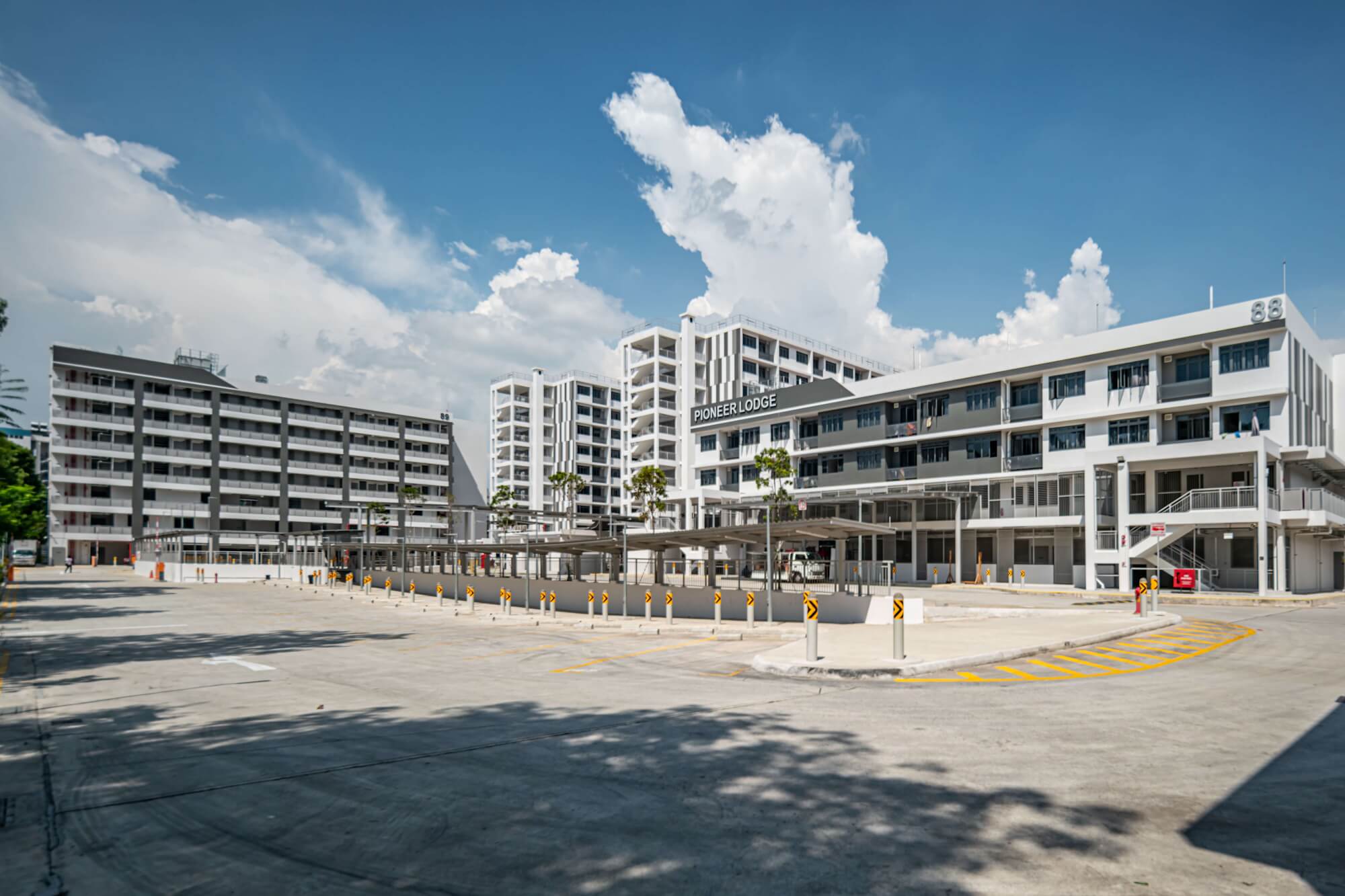
Pioneer Lodge
Pioneer Lodge in Jurong West exemplifies this strategy. The site at Soon Lee Road was secured in 2019 and opened in two phases in 2025.
I got to visit the dormitory as part of a series of corporate site visits organised by the Association of Singapore Listed Companies (SGListCos), in collaboration with Singapore Exchange (SGX). This is part of their efforts to increase awareness of the next tier of companies beyond the Straits Times Index (STI), and to showcase the company’s efforts to enhance shareholder value.
Developed by Wee Hur’s subsidiary Active System Development, a joint venture with dormitory operator TS Group, Pioneer Lodge has a total capacity of 10,500 beds. Built to post‑COVID standards, it offers larger living spaces, ensuite toilets, and amenities such as gyms, multipurpose halls, and reading lounges.
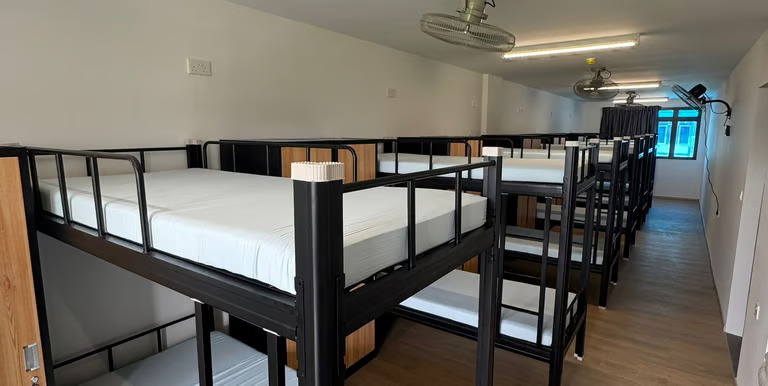
It even provides free Wi-Fi throughout the premises as well as a dedicated minimart and food court, both of which are open to the public.
With rents averaging around $500 per bed per month, Pioneer Lodge generates substantial recurring cashflow. Its strategic location near Jurong Island and Tuas Mega Port ensures high occupancy. More importantly, the strong partnership between Wee Hur and the operator, TS Group, which also operates Tuas View Dormitory, was evident throughout the site visit.
Read Also: Why Migrant Workers Would Benefit From Mandatory Financial Literacy
Wee Hur’s Financial Transformation In 2025
The financial impact of this pivot is evident in Wee Hur’s 2025 annual report. Revenue rose 47% year-on-year to S$295.4 million, driven by stronger contributions from property development, construction, workers’ dormitories, and fund management. Profit attributable to shareholders increased 27% to S$68.4 million, while adjusted net profit surged 130% to S$105.5 million, reflecting the strength of recurring income streams. Operating cashflow was robust at S$139.1 million, enabling capital recycling.
Most significantly, the partial disposal of Wee Hur PBSA Master Trust units generated AUD 375 million in net cash proceeds, the largest single tranche in the company’s history. This liquidity allowed Wee Hur to establish a S$500 million Medium Term Note programme, raising S$205 million through a five‑year bond issuance to diversify funding sources. These moves underscore how purpose‑built accommodation has given Wee Hur the financial muscle to expand into fund management and alternative investments.
Broader Implications And Risks
Purpose‑built accommodation has provided Wee Hur with a platform to scale, attract institutional capital, and diversify its business. The recurring income from dormitories and PBSA assets stabilises earnings, while fund management fees add another layer of profitability. Risks remain — regulatory changes in worker housing, cyclical shocks in student enrolment, and operational complexity — but the transformation has already reshaped Wee Hur’s trajectory.
Wee Hur’s journey from contractor to multi‑investment house is anchored in purpose‑built accommodation. Pioneer Lodge is a dormitory designed to meet modern standards, strategically located, and capable of generating predictable cashflow. Coupled with the monetisation of PBSA assets in Australia, these platforms have delivered record profits and liquidity, enabling Wee Hur to expand into fund management and alternative investments.
Most importantly, it was easy to see how the Group, with its expertise in construction and property development, can achieve economies of scale as owner, developer, contractor, and operator of these pupose-built accomodation.
Thank you once again to SGListCos for organising this exclusive site visit to Pioneer Lodge, and to Wee Hur and TS Group for hosting us.


Family Planning
Cost Guide To International School Fees In Singapore


