
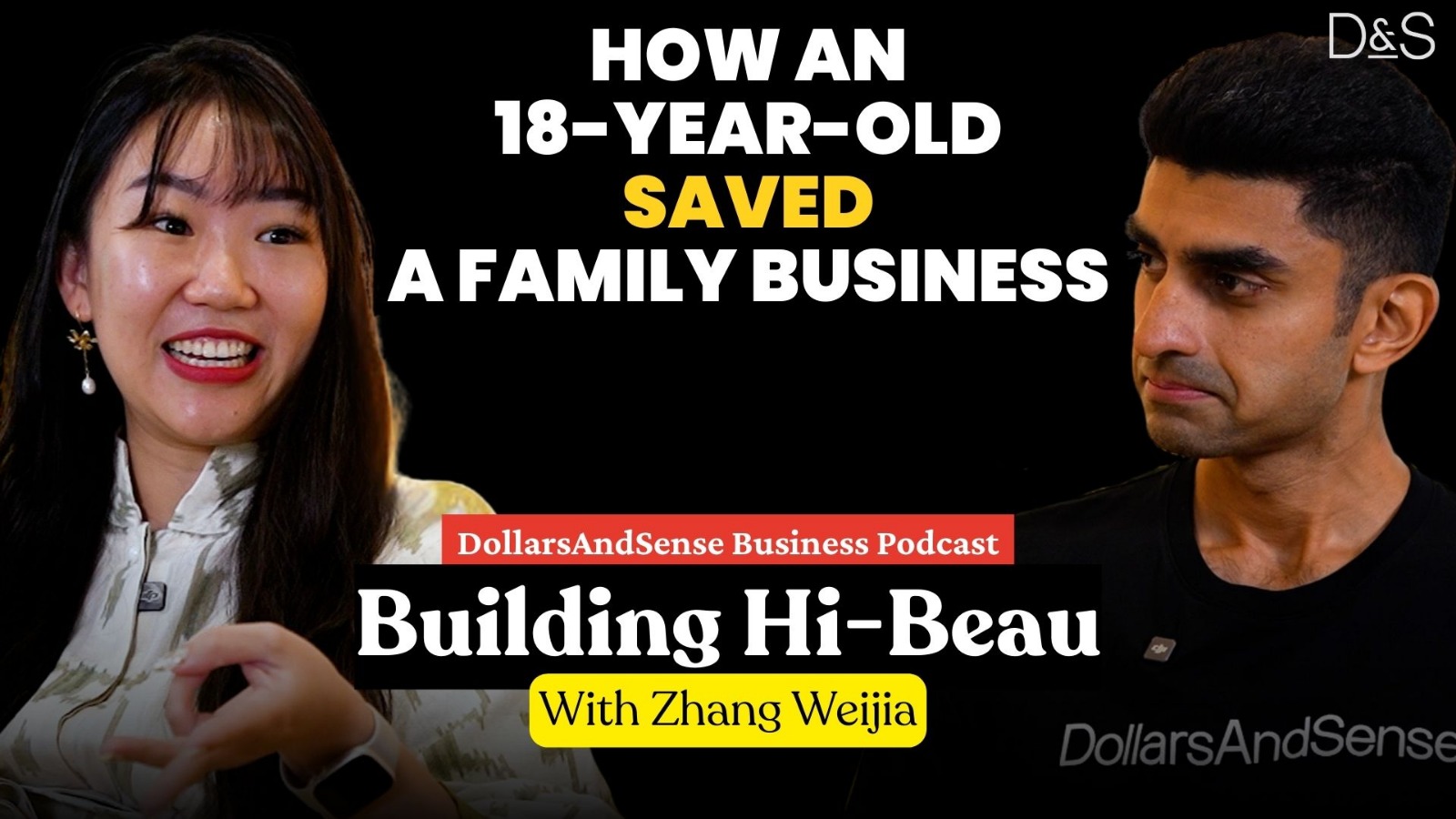
When Zhang Weijia, Next Generation Leader of Hi-Beau Group, joined her family’s supplement business at just 18, she didn’t expect to become the catalyst for one of the company’s biggest turning points.
Hi-Beau Group had already been around for nearly a decade. Founded by her mother in 2004, the business started as a health supplement brand built on deep roots in healthcare and nutrition. By the time Weijia stepped in, it was stable but also stuck.
What followed was not a dramatic takeover, but a series of practical, often uncomfortable decisions that reshaped how the business grew, sold, and even manufactured its products.
In this episode of The Building Series, we spoke to Weijia about growing up inside Hi-Beau, and the operational decisions that helped the business break out of stagnation:
As A Child, She Watched The Highs And Lows Up Close
Hi-Beau wasn’t something Weijia discovered later in life. It was always there.
Her parents had strong academic backgrounds and conventional careers before choosing entrepreneurship. That shift from “study hard, get a good job” to building something uncertain had left a lasting impression.
With a front-row seat to the business, Weijia gained an early view of its realities. Rather than pushing her away, it broadened her sense of what a career could look like. Even so, joining the company straight after school wasn’t part of a grand plan.
A Crisis That Forced Change
By 2013, Hi-Beau was facing two serious problems. Firstly, sales through traditional channels like pharmacies and TCM stores had stalled. Costs were rising, but revenue wasn’t.
Secondly, there was a growing waste issue. Products with less than 12 months’ shelf life couldn’t be sold through retail partners. By the time inventory made its way through warehouses and stores, much of it came back unsold.
It was a genuine make-or-break moment.
At the same time, online marketplaces such as Qoo10 and Lazada were gaining traction. Weijia’s parents encouraged her to experiment — almost as a side project — by selling Hi-Beau products online.
What started as a small test quickly changed everything.
Learning E-Commerce From the Ground Up
Weijia didn’t step into a senior role. She built something new.
She listed just two products online. In the first month, sales reached around $19,000. Over time, that e-commerce arm scaled into a business generating roughly $20 million a year.
It solved multiple problems at once.
Online sales reduced waste, opened new customer relationships, and gave the company real-time feedback from the market. More importantly, it allowed Weijia to grow credibility inside the business — not through title, but through results.
She packed orders herself. It felt less like inheriting a role, and more like running a startup within a family company.
Read Also: Building a Business of Happiness: How DreamUs Group Scaled Indoor Theme Parks Across Markets
Working With Family Comes With Its Own Pressures
Disagreements don’t end at the office door. Decisions feel heavier because everyone is emotionally invested. Weijia describes the stress as “intense”, but structure proved essential in keeping discussions grounded.
At Hi-Beau Group, debates are evidence-based. Ideas are tested, modelled, and sometimes A/B tested in real life. When things get heated, the family steps back, cools off, and even votes on decisions.
Weijia shared that change doesn’t always mean tearing things down. Sometimes it’s about adjusting expectations, including your own.
Why Manufacturing Became A Non-Negotiable
One of Hi-Beau Group’s biggest decisions was bringing manufacturing in-house.
For Weijia, owning the brand without owning production never felt complete. Even with third-party lab tests, it’s impossible to test for everything unless you know exactly what goes into the product.
Over several years, the company invested around $50 million to build its Singapore-based manufacturing facility, including clean rooms, R&D capabilities, and automated warehousing systems.
It wasn’t a leap into the unknown. Her father’s background as a professional engineer and factory manager provided the technical leadership needed to make it work.
Today, Hi-Beau Group operates one of Singapore’s largest NSF GMP-certified supplement factories, a milestone that reinforces trust in both local and overseas markets.
From Global Expansion To A Home Market Reset
Hi-Beau products are now sold across 15 countries, spanning Southeast Asia, China, the US, Europe, and the Middle East.
Global expansion came with challenges, especially around regulation. Supplements are classified differently in every market — sometimes as food, sometimes as medicine — making compliance complex and time-consuming.
One key lesson stood out: build local teams.
Instead of sending Singapore staff overseas, Hi-Beau Group hires people who understand each market from the inside.
Yet after years of focusing outward, the company made a surprising shift.
In late 2023, global uncertainty and slowing demand in China pushed Weijia to look back at Singapore not as a maintenance market, but as a core opportunity.
That rethink led to the creation of EstaLife, Hi-Beau Group’s first direct-to-consumer brand. Products are developed based on consumer’s wish list, from eye health supplements to magnesium and newer ingredients like NMN.
Selling direct from the factory reduces costs, but transparency matters just as much. Hi-Beau regularly opens its doors for factory tours, showing customers exactly how products are made.
The response has been strong and EstaLife has seen rapid month-on-month growth, largely driven through digital channels.
A Long-Term View of Leadership
Despite her role today, Weijia doesn’t see leadership as a handover waiting to happen.
She views herself as a partner to her parents, each focused on different parts of the value chain. Growth, in her eyes, isn’t about replacing founders, it’s about building a wider leadership bench of family and professional managers who can grow the business together. This includes investing in patented ingredients that may take decades to develop, to exploring better nutrition for pets, the goal isn’t quick wins. It’s about building something that can last generations.
Supporting Serial Entrepreneurs as They Scale
As founders expand beyond a single business, banking needs often become more complex. Since 2019, OCBC has been working with thousands of serial entrepreneurs across Singapore, Malaysia and Hong Kong, supporting businesses at different stages of growth. For founders managing multiple entities, this includes consolidated banking support through a dedicated relationship manager, as well as the ability to earn more interest across business balances — helping entrepreneurs focus on scaling without losing oversight.
Start your journey with OCBC today.


