

If you’ve been following the real estate investment trust (REIT) space in Singapore, you might have noticed that there hasn’t exactly been a flood of new listings on Singapore Exchange (SGX) over the past couple of years. Higher interest rates have also weighed on investor demand for REITs, which is typically seen as a rates-sensitive sector.
So, when UI Boustead REIT (SGX: UIBU) launched its IPO in early March 2026, it drew more attention than usual. That wasn’t down to the fact that it was the first Mainboard listing of the year, but more because of its sheer size and the names behind it. The REIT began trading on Thursday, 12 March, and is currently trading at $0.80 as of 27 March, below its IPO offer price of S$0.88.
Whether you ended up applying for units, you’ve bought some since its listing, or simply just want to know if it belongs in your portfolio, here are seven things you should know about UI Boustead REIT’s listing.
#1 Singapore’s Biggest IPO In Years
Let’s start with the headline number, and that’s usually what catches investors’ attention. UI Boustead REIT raised approximately S$973.6 million through its IPO, making it Singapore’s largest listing so far in 2026. To put that in perspective, including the overallotment option, the total amount sought was up to S$1.02 billion, which would potentially make it the largest Singapore IPO since 2017.
Units are now traded on SGX under the ticker code “UIBU”, with trading having kicked off at 2 pm on Thursday, 12 March. The IPO also attracted a notable line-up of institutional backers, with cornerstone investors including Amova Asset Management Asia, JPMorgan Asset Management, and Amundi committing S$377.7 million.
#2 Portfolio Focused On Industrial & Logistics Assets
UI Boustead REIT is not a retail or hospitality REIT. Instead, its mandate is clear: it is established with the principal investment strategy of investing in logistics, industrial, Hi-Specs industrial and business space assets in the Asia-Pacific region. The REIT’s initial portfolio comprises 23 properties — 21 located in Singapore and two in Japan — with a total gross floor area of approximately 5.9 million square feet.
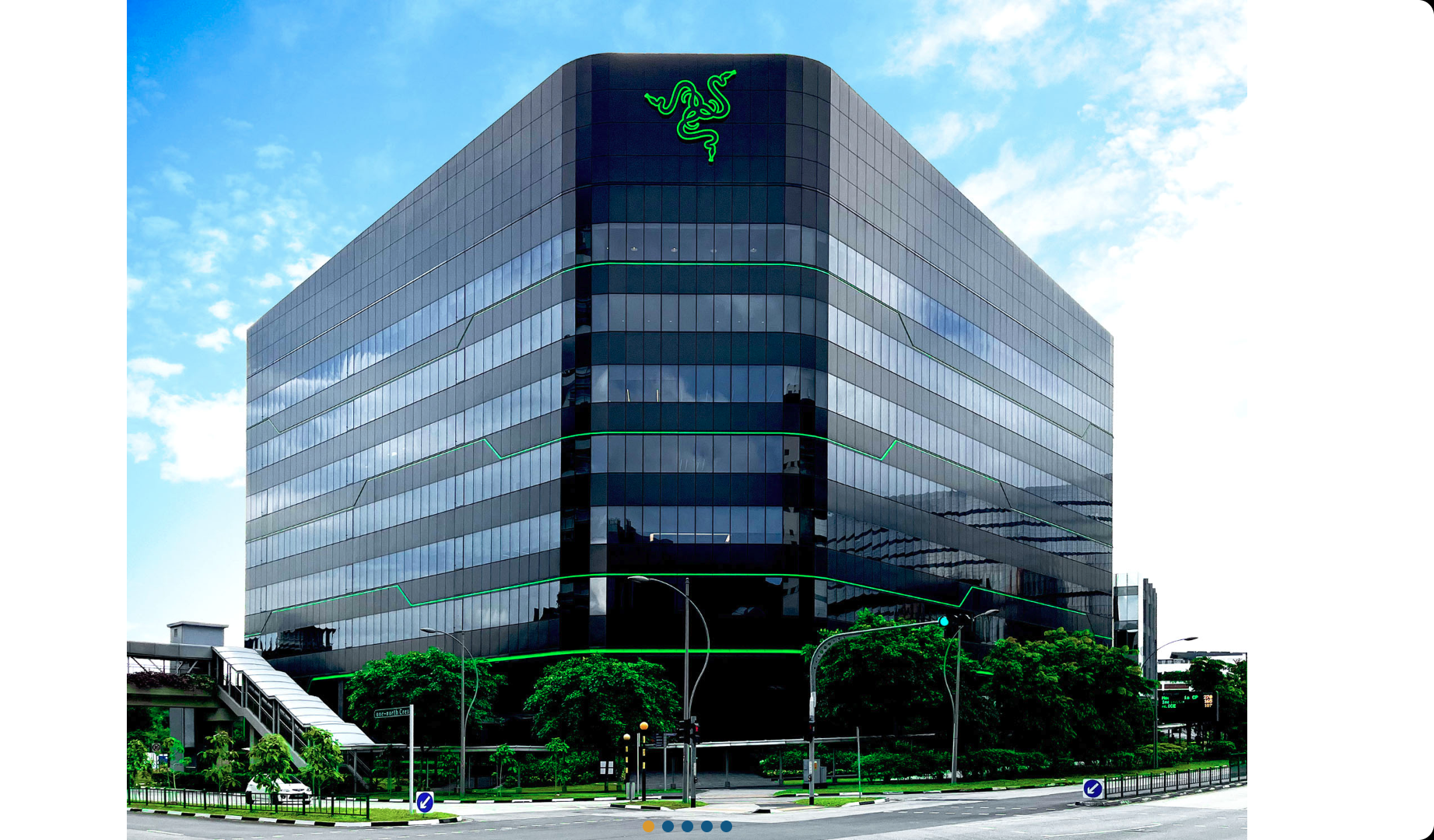
In terms of its portfolio value, the total is estimated at S$1.904 billion as of 30 September 2025, with 71.2% of that coming from Singapore-based properties. Some of the key assets in the portfolio include familiar names, such as GSK Asia House and Razer’s Southeast Asia headquarters, as well as AUMOVIO Buildings and UIB Konan Phase 2 in Japan.
Read Also: How Much Would You Have Earned (Or Lost) If You Invested $1,000 In Every IPO On SGX In 2025?
#3 Tenant Base Is Blue-Chip Heavy
One thing worth noting for investors is the quality of the tenants behind the REIT’s income. Nine out of the top ten tenants are Fortune 500 or listed companies, and around 65% of the portfolio serves as strategic tenant infrastructure. These are not tenants you’d expect to pack up and leave overnight. Indeed, they appear to be more “sticky” tenants of the REIT.
Tenant exposure spans a variety of sectors and sub-sectors, including aerospace, electronics, life sciences, automotive, logistics, and high-tech. Fortunately, all of these are operating within industries that Singapore has been actively nurturing as part of its long-term economic strategy. Collectively, the top ten tenants represent 53.9% of the REIT’s net property income as of 30 September 2025.
#4 Projected Yield = 7.4%-7.8%
For income and dividend investors, this is likely the number that catches their attention. The REIT aims to deliver a distribution yield of 7.4% for the forecast period in 2026 and distribution per unit (DPU) growth of 4.8% between 2026 and 2027, bringing the projected yield to as high as 7.8% for FY2027. The total return target from organic growth is 12.2%, driven by built-in rental escalations, occupancy uplift and rental reversions.
On the balance sheet side, aggregate leverage stands at 37.9%, with an interest coverage ratio of 4.7x. Both metrics suggest the REIT isn’t overextending itself financially, which is a positive sign in an environment where interest rates could remain elevated. Only a small portion of borrowings is due for refinancing over the next three financial years, which reduces near-term refinancing risk. One thing to keep in mind is that the IPO offer price of S$0.88 is slightly above its net asset value of S$0.85 per unit.
#5 Solid Sponsor & Robust Pipeline
Behind every good REIT is a sponsor you’d want to believe in. UI Boustead REIT is sponsored by UIB Holdings Limited, a Pan-Asian logistics and industrial real estate platform formed from the merger of Unified Industrial and Boustead Projects’ real estate business, with a track record of US$7.7 billion in transactions and 37.5 million square feet of gross floor area managed across Singapore and Japan.
The pipeline is where things get more interesting for long-term investors because it gives them more visibility on the REIT’s growth potential. UI Boustead holds a right of first refusal (ROFR) over assets from both the UIB pipeline and Boustead Projects, which is a combined pool estimated at S$4 billion. Importantly, Boustead Singapore has signalled its intention to reinvest its divestment proceeds in UIB REIT units, which is generally a positive sign of the sponsor’s conviction. Post-listing, the sponsor group intends to retain approximately 15% to 19% of the stake, depending on whether overallotment options are exercised. Again, that’s a meaningful commitment in terms of “skin in the game”.
#6 IPO Oversubscribed But Debut Timing Was Rough
Demand heading into the listing was strong as the institutional placement tranche was oversubscribed 3.3 times, reflecting roughly S$1.9 billion in demand. The retail public offer saw 4,697 valid applications for about S$87.9 million worth of units, translating to a 2.9 times oversubscription. That kind of demand is encouraging but what happened on listing day should temper expectations somewhat.
Units fell to a low of more than 9% below the S$0.88 offer price on debut before paring some losses to close with an 8.5% decline at S$0.81. For context, the weighted average first-day gain for Singapore IPOs over the past year has been around 4.5%, so this was an underperformance relative to the broader trend. The weak debut reflects broader market caution (market volatility from the fallout from the Iran war didn’t help) more than anything fundamentally wrong with the REIT itself. However, it’s a reminder that strong IPO demand does not automatically guarantee a smooth start once listed.
#7 Certain Things Worth Watching
No REIT is without its question marks, and UI Boustead REIT is no different. The Japanese properties are the most obvious ones to monitor. The two properties in Japan had committed occupancy rates of 76.7% for the Kansai asset and 76.5% for the one near Tokyo as of the prospectus date. That said, the prospectus indicated that occupancy for the Kansai property is expected to reach 99.4% by 2027, and the Tokyo property had already hit 100% as of 20 February 2026. If those projections hold, the occupancy drag should be temporary.
The broader market environment is also worth noting, as the REIT was listed amid heightened geopolitical and macroeconomic uncertainty. Investors also have to contend with interest rate expectations, currency movements between the SGD and JPY, and any shifts in industrial demand across Singapore and Japan, all of which will have a bearing on how the REIT performs going forward.
Read Also: 10 Things To Know About NTT DC REIT – Singapore’s Largest REIT IPO In Over A Decade
Photo Credit: UI Boustead REIT


