
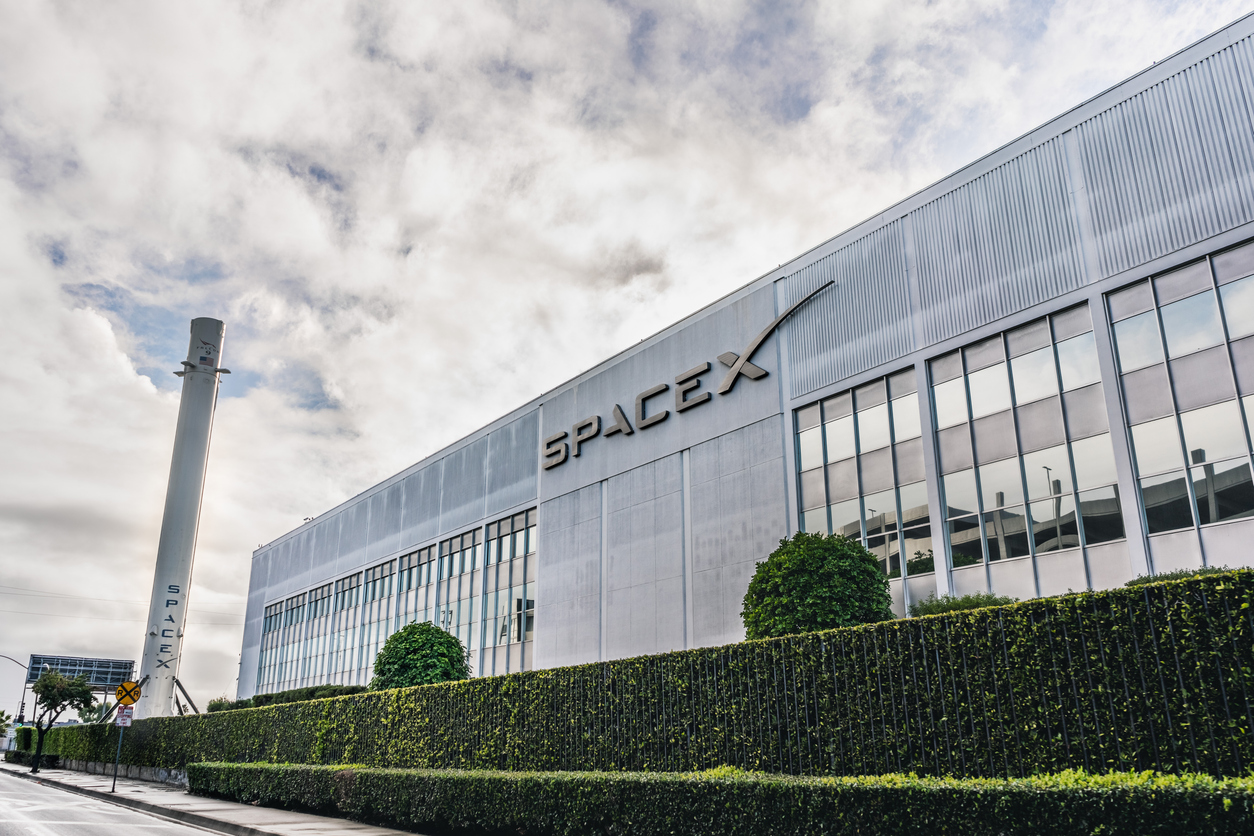
Most Singaporeans who invest passively do so to avoid the noise and stress of the markets. You pick a broad-market ETF, set up a regular savings plan (RSP), and let compounding do the heavy lifting.
You are not trying to pick the next big winner.
So when a headline-grabbing IPO like SpaceX comes along, the natural instinct is to tune it out. However, the sheer size of this listing means it is worth paying attention to and hard to ignore, even if you want to.
On 20 May 2026, SpaceX formally filed its prospectus with the SEC and confirmed plans to list on Nasdaq under the ticker SPCX. The company is targeting a valuation between US$1.75 trillion and US$2 trillion and may raise up to US$80 billion through the IPO.
That would make it the largest IPO in history, comfortably surpassing Saudi Aramco’s US$29 billion listing in 2020.
Whether or not you plan to buy a single share, the way large IPOs interact with index funds means SpaceX could end up in your portfolio anyway through passive ETFs.
What Is SpaceX?
SpaceX now reports across three segments: Space, Connectivity and AI.
The Space segment covers Falcon 9 and Starship launches, while the Connectivity segment includes Starlink, which reached 10.3 million subscribers across 164 countries as of Q1 2026.
The AI segment was created when Elon Musk merged xAI into SpaceX in February this year, bringing together the Grok models, the Colossus data centres in Memphis and Southaven, and the X platform under a single corporate structure ahead of the IPO. (So yes, X (formerly Twitter) is part of the SpaceX IPO)
On a consolidated basis, SpaceX reported FY2025 revenue of US$18.7 billion and an operating loss of US$2.6 billion.
This is a company investing heavily in infrastructure that has yet to generate returns proportionate to its spending. That is also why the valuation is largely a bet on future scale rather than current earnings.
Read Also: The Hidden Risk Of Playing It Safe: Why Not Investing May Cost You More In The Long Run
The Index Rule Changes That Matter
Historically, newly listed companies often had to wait months before being added to major indices.
That has changed quickly, partly in anticipation of a wave of mega-cap IPOs in 2026. We are also expecting blockbuster listings from companies such as OpenAI and Anthropic later this year.
From 1 May 2026, Nasdaq introduced a fast-entry rule that allows companies whose market capitalisation ranks within the top 40 of the Nasdaq-100 to become eligible for inclusion within 15 trading days of their IPO. The Nasdaq-100 is tracked by more than 200 investment products with over US$600 billion in assets under management (AUM) globally.
FTSE Russell followed in late May 2026 with its own fast-entry mechanism. IPOs with an investable market capitalisation above the Russell Top 500 breakpoint, currently around US$17.5 billion, qualify for inclusion after just five trading days. That means SpaceX could enter the Russell 1000 within days of its debut. Roughly US$10.5 trillion in assets is benchmarked against the broader Russell US indices.
Meanwhile, the S&P 500 is also considering changes. Its current framework requires a company to have been publicly listed for at least 12 months and to have generated four consecutive quarters of positive GAAP earnings, a test SpaceX would currently fail.
In May 2026, S&P Dow Jones opened a consultation proposing to waive these requirements for mega-cap IPOs, with implementation scheduled for 8 June, just ahead of SpaceX’s expected debut.
In other words, whether they like it or not, any fund tracking the index would need to buy SpaceX shares shortly after listing. And if you invest in any of these indexes, you would be an investor in SpaceX.
Why Your VWRA Is Different From A Nasdaq-100 ETF
Global ETFs such as the Vanguard FTSE All-World UCITS ETF (VWRA) and the SPDR MSCI ACWI UCITS ETF track broad global indices and weight holdings based on free-float-adjusted market capitalisation. In simple terms, they only count shares that are actually available for public investors to buy.
Even if SpaceX achieves a US$2 trillion valuation, the IPO is expected to make only around US$75 billion to US$80 billion of shares available to public investors. Elon Musk is expected to retain 42% of the company and be subject to a 366-day lock-up, while other insiders face staggered lock-up periods of up to 180 days.
As a result, the free float at listing will be only a small fraction of the headline valuation. That means any initial index weighting is likely to be much smaller than investors might assume when looking solely at the company’s market capitalisation.
If SpaceX enters global indices in the near term, it will probably do so at a relatively modest weight. Exposure would then increase gradually as lock-up periods expire and more shares become available for public trading over the following 12 to 18 months.
The Nasdaq-100 is different.
Its fast-entry rules are based on total market capitalisation rather than free float. This means SpaceX could enter the index at a weight that reflects its full valuation, giving holders of Nasdaq-100 ETFs such as QQQ or CNDX meaningful exposure almost immediately.
Importantly, that exposure could occur before the market has had much time to determine a fair value for the shares.
For long-term investors, this highlights an important difference. A Nasdaq-100 ETF and a global equity ETF may both be passive investments, but the rules governing how new companies are added to each index can differ significantly.
What Should You Actually Do?
For most investors, probably nothing.
If your current investment strategy aligns with your goals and time horizon, there is little reason to make changes based on a single IPO.
If you own VWRA or a similar global ETF, your initial exposure to SpaceX is likely to be limited and will grow gradually over time as more shares become available to the public. You are unlikely to wake up and find a large portion of your portfolio suddenly allocated to a newly listed rocket company.
If you own a Nasdaq-focused ETF, the situation is different. You may gain significant exposure almost immediately at IPO pricing, with relatively little price discovery.
The SpaceX IPO is worth watching because it provides one of the clearest examples in recent years of how passive investing and index mechanics intersect.
Photo Credit: iStock/Sundry Photography


Street Smart
Singapore Gym Membership Price Guide (2026 Edition)


