
Many people have preconceived ideas of the challenges women face when running a business. For instance, they think that once your investor or customer sees you’re female, you’ll be taken less seriously. Or that having a child means more distraction at home and less attention on the business.
But as businesswoman Verleen Goh will tell you, the playing field for female entrepreneurs—in Singapore, at least—is actually…pretty level.
“It’s true that female founders are still a large minority,” she says. (Only about 30% of SMEs in Singapore are women-owned, based on OCBC data from 2018 to 2023.)
“Most founders or businesspeople are males. But in Singapore, I think the discrimination is fortunately not there.”
Verleen is the co-founder of Alchemy Foodtech, which sells a range of products that make everyday foods healthier. This includes their signature Alchemy Fibre for Rice, a powder that increases the fibre content of rice and reduces its glycaemic index without changing its taste.

Verleen runs the business with her husband, Alan Phua. The co-founders recently welcomed their first child. We spoke to her to learn about her entrepreneurship journey and how it hasn’t been disadvantaged by her gender and entry into motherhood.
Read Also: Venus Rising: Is It More Difficult To Be A Woman Entrepreneur?
For The Love Of (Healthy) Food
Verleen’s entrepreneurial streak comes from her “motorhead” dad, who ran a car trading business. But while his passion was cars, hers was making healthy food. When she baked, for example, she would experiment with making her baked goods not just tastier but also healthier.
“People feel that when they eat healthy, they have to compromise on food taste. But as a food scientist, I want to use the knowledge I have to deliver the promise that healthy food doesn’t have to be yucky,” shares Verleen, who graduated from university with a food science degree.
“You can have tasty, healthy food as well.”
Alan had also been keen on starting his own business. So, combining their shared interest in making a difference in the world and love for ice-cream, they started Soyato, a business selling low-fat vegan ice-cream.
The couple ran Soyato from 2010 to 2017. During this time, though, they began brainstorming what else they could do to make a bigger impact. This was when Alan hit upon the idea of tackling diabetes—a year before the Singapore government declared war on the chronic disease.
Alan had grown up knowing firsthand the severe consequences diabetes could have on individuals and their loved ones. Both his grandmothers had passed away from diabetes complications, and many of his aunts and uncles are also diabetic.
Diabetes is also a big global problem: more than half a billion people have been diagnosed with diabetes, according to the International Diabetes Foundation.
“All the food porn we see every day on Instagram and TikTok isn’t helping the situation because people really love good food,” says Verleen.
“So, I think it’s for us to show how we can use technology to make an impact on the everyday foods we eat.”
Read Also: How Much Does It Cost to Live Healthier Each Month in Singapore?
Cooking Up A New Creation
Verleen and Alan started working on Alchemy Foodtech in 2015 while still running Soyato. They initially juggled both businesses but then decided to focus their efforts on Alchemy Foodtech, which felt like the project with a bigger purpose.
The co-founders made a small exit from Soyato and applied for grants to kick-start their research and development efforts.
Securing funding was challenging. The grant panels didn’t understand what they were trying to do and how it involved tech. They’d ask “What do you mean you’re trying to make something healthy? Is this just a recipe?”
“We needed to convince them there’s real tech in this,” shares Verleen. “It’s like material science, just that the materials we’re dealing with are edible.”
It took a lot of persuasion, but Verleen and Alan managed to clinch a Technology Enterprise Commercialisation Scheme grant worth $250,000 from SPRING Singapore. (This government grant is now known as the Startup SG Tech and it is administered by Enterprise Singapore, which succeeded SPRING Singapore.)
The duo subsequently worked with the National University of Singapore to produce prototypes and received $1.8 million in seed funding. They then started a lab and hired a team to develop their products.
Today, Alchemy Foodtech’s technology is patented in around 20 countries—“I fought very hard for every single patent”, says Verleen—and is used by food and beverage businesses like chicken rice chain Boon Tong Kee and Chinese restaurant Dian Xiao Er in Singapore, and the China outlets of Canadian coffeehouse chain Tim Hortons.
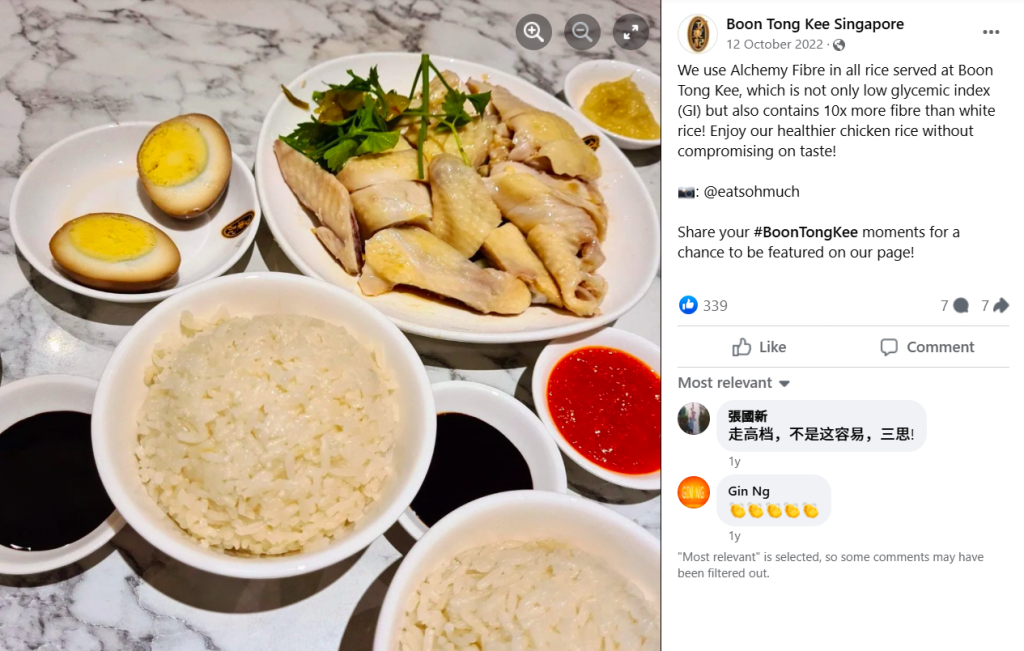
The business has also expanded into offering other products like sugar-free baking premixes and sweetening syrup.
In Singapore, Female Founders Are Respected
Women keen on starting a business will be encouraged to know that Verleen hasn’t faced much discrimination as a female founder in Singapore.
“Maybe I do feel a bit more discrimination when I’m in countries where female entrepreneurs or C-suites are a lot rarer,” she shares.
“In Singapore, female founders are respected. And there are some opportunities that female founders can tap into [but male founders cannot].”
One of these is the OCBC Women Unlimited programme, which offers female-founded startups waivers on loan application processing fees, among other benefits.
If there are differences in how female and male founders are treated, Verleen thinks these boil down to having (or not having) common interests with the other party, rather than being a gender issue.
“For example, let’s say two males are talking about work and they realise they’re both Manchester United fans. But that doesn’t mean you can’t join the conversation if you’re a female and Manchester United fan,” says Verleen.
“It’s just that there are much fewer female Manchester United fans compared to males, right? So, in that sense, it may not be so much of a male or female thing per se. It’s about establishing common interests with the other party you are talking to.”
Preparing For Motherhood
Verleen and Alan had their first child, Asher, earlier this year. Although she didn’t fully disconnect from work during and after delivering her son—in fact, she was replying to emails in her delivery suite—she said her team was “very nice” and “tried not to disturb me so much”.
And they didn’t need to. In preparation for the big day, the couple had broken the news of Verleen’s pregnancy to their teams when she was four months pregnant. They had also discussed how the business would be run while the couple was on parental leave and wouldn’t be physically in the office.
Since each team had a manager with the autonomy to run it, the couple focused on providing the information the teams needed ahead of time and ensuring they could run independently.
“As a female entrepreneur, it’s definitely about juggling between having the newborn and the work,” says Verleen. “But the good thing was that the teams were also quite self-sufficient and could handle a lot of the day-to-day work.”
Verleen shares that the biggest difference she experienced after giving birth was travelling for work less frequently. She and Alan used to travel together every month, but he now goes on work trips solo.
“Not travelling for work also gave me much more time to be involved in the operations here,” she says. “So, it’s also not a bad thing.”
Alchemy Foodtech practises a work-from-home policy, which lets Verleen flexibly spend time with her baby at home while still working.
Every Superwoman Needs A Good Co-founder
One piece of advice Verleen has for aspiring female entrepreneurs? Find a good co-founder.
“As much as people say, ‘Oh, this person is a superwoman who can do everything herself’, entrepreneurship is really hard,” says Verleen.
“It’s an unbeaten path and you need to find a way to make it work. So, I think it’s important to find a partner with whom you can do this journey.”
According to Verleen, this person should have different skills from you, but the same mindset and goals. They should also express mutual understanding of each other’s quirks. (Verleen laughingly says Alan doesn’t mind if she spam-texts him at 3 am when she can’t sleep because she’s thinking about work.)
That said, although her work partner happens to be her life partner, she doesn’t think her advice applies to only co-founders who are a couple.
“At the end of the day, you’re two individuals wanting to do something together, right?” she says.
“A lot of people say building a company is like getting married. But it’s true because you have to spend so, so much time with your other half.”
Read Also: Mixing The Perfect Blend Of Science And Art: How 27-Year-Old Joyce Lian Launched Her Own Boutique Perfume Brand, Scent Journer, In Singapore
Subscribe To The DollarsAndSense Business Pass
Enjoy what you are reading and want more? Join The DollarsAndSense Business Pass and unlock access to valuable tools, exclusive networking opportunities, and tap into the wisdom of industry experts to fuel your business expansion!


