
On 14 September 2023, the Ministry of Manpower (MOM) released the 2Q2023 Labour Market Report. While total employment expanded by 24,300 for the quarter, there were signs of cooling labour demand, suggesting that the demand for labour may be starting to ease given the current weak external environment and economic growth.
For the fifth consecutive quarter, the number of job vacancies declined to 87,900 in June 2023, from the peak of 126,000 in March 2022. This led to the ratio of job vacancies to unemployed persons dipping to 1.94, from 2.28 in March 2023.
In fact, according to data from the LinkedIn Economic Graph, hiring has continued to decline in most countries, with Ireland and Singapore reporting the most substantial drops at – 34.6% and – 31.8% respectively. Other major economies including Australia, United Kingdom, Canada and the United States are seeing a similar trend in the decline in hiring.
In fact, in China, the government has stopped publishing youth unemployment data. In June 2023, the unemployment rate for those between 16 to 24 years old was more than 20%.
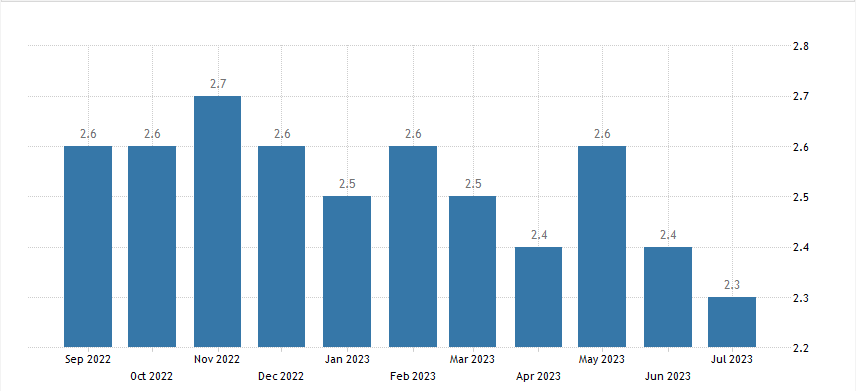
In the US, job openings have also dropped to their lowest level of 8.8 million in July, the lowest level in nearly two and a half years. The Job Quits rate for July 2023 has also declined to 2.3, a level that is seen pre-pandemic and much lower than it was over the past 12 months.
What Is The September Surge?
The “September Surge” is a phenomenon that suggests that companies would start hiring more aggressively during September and the later months of the year. There are theories for this ranging from companies wanting to hire more workers due to capture year-end festive spending or hiring managers and job-seekers returning from their summer holidays and raring to do more.
Whether you believe in the September Surge or not, one thing that many data points are showing in 2023 is this, jobs are starting to get more difficult to come by.
There are simply too many macroeconomic issues that are happening at the same time.
Interest rates are high and this has led to a slowdown in the economy, particularly in certain sectors such as technology where it feels like almost every other big tech firm is retrenching workers. And if inflation continues to remain high, it’s likely that The Feds will not ease their monetary tightening policies. The war in Ukraine and geopolitical tensions among major global powers could also make the already difficult business environment more complex.
To an extent, the writing is already on the war. Besides retrenching workers, companies, including big tech firms like Zoom, Google and Facebook are expecting their workers to return to the office. Big finance firms such as Goldman Sachs and JPMorgan are likewise trying to get their workers back to the office.
In fact, based on observation, it seems like Singapore employers including the government are doing a stellar job in continuing to allow their workers to work remotely more often than many of our counterparts in other developed countries.
Ultimately, companies would do what is in their interest. And this means hiring fast and workers well when they believe business opportunities present themselves, and slowing down the rate of hiring when they don’t believe the economic conditions are ideal. And given that the Ministry of Trade and Industry (MTI) has recently reduced their 2023 GDP forecast for Singapore to “0.5% to 1.5%”, from “0.5% to 2.5%”, it’s safe to say that the outlook for the rest of the year is not as optimistic as it once was for both employers and employees.
Read Also: Would The Great Resignation Become The Great Retrenchment?
Subscribe To The DollarsAndSense Business Pass
Enjoy what you are reading and want more? Join The DollarsAndSense Business Pass and unlock access to valuable tools, exclusive networking opportunities, and tap into the wisdom of industry experts to fuel your business expansion!