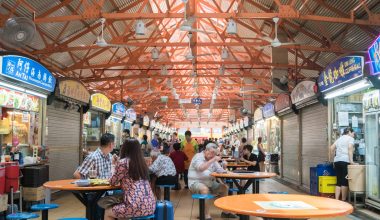
After 14 years of operations, Pin Si Restaurant, a Cantonese in Safra Yishun club, also announced a cessation of operations. According to Today, the more than doubling of their electricity bill from about S$15,000 a month to S$40,000 was the straw that broke the camel’s back for the restaurant that was already having issues with manpower during the pandemic.
Electricity prices have already been on a rise in Singapore since last year, leading to the closure of some electricity retailers. This year, there is no abatement in oil and electricity prices as the Ukraine war exacerbates the already tight energy markets. Russia is a major exporter of natural gas and oil which means the current crisis is causing global energy prices to spike.
For Singapore businesses and consumers, this global energy price spike is reflected in higher petrol pump prices and electricity bills. Here are the 4 groups of businesses that are and will be affected (more severely) by the soaring energy prices.
Read Also: 3 Ways Russia’s Invasion Of Ukraine May Impact Businesses In Singapore
#1 Food & Beverage
Restaurants and eateries already struggling with manpower shortages now have to grapple with soaring electricity prices.
For example, 126 Dim Sum Wen Dao Shi, a 24-hour dim sum restaurant, recently shortened their hours from 24 hours to 10.30 am to 3 am due to a “shortage of manpower and the threefold increase in electricity prices”.
For many eateries and restaurants, the closure of their former electricity retailers meant that subject to higher electricity rates after their transfer over to SP Group. For an industry that is already struggling with manpower issues, cessations caused by the safe management measures and higher costs due to food inflation, the doubling or even tripling electricity bills couldn’t have come at a worser time. Eateries and restaurants may have to shorten operating hours to cut costs or pass on additional costs to consumers.
#2 Private Hire Car Drivers, Taxi Drivers And Delivery Drivers
Higher petrol and diesel pump prices have also affected drivers. In particular, platform workers such as Private Hire Car (PHC) drivers, taxi drivers and delivery drivers are hard hit as their earnings are directly affected by the daily pump prices.
Despite the recent taxi fare hikes, the taxi drivers may not see an increase in earnings due to the higher expenses for petrol. Likewise, PHC and delivery drivers are also subject to higher costs as petrol prices hit their peak in March. As of 12 March 2022, petrol prices have all crossed the $3 per litre mark, ranging from $3.15 for 92-octane to $3.91 for premium petrol.
To help its taxi drivers, ComfortDelgro is also offering daily rental waiver of 15% for the month of March, it will also give a one-time S$90 rental rebate on April 1 for hirers who drive for the entire month of March.
Meanwhile, the government is monitoring the situation and will provide more assistance if needed. In the meantime, PHC drivers can tap on the COVID-19 Driver Relief Fund (CDRF) for assistance.
#3 Logistics And Supply Chain
Self-employed drivers are not the only ones affected by the rising fuel prices. As an industry, the logistics and supply chain businesses expect operating costs to rise sharply.
Global supply chains are already strained by surging demand as economies recover from the pandemic. The current Ukraine crisis makes matters worse as it disrupts one of the key shipping routes by air. Russia owns a vast area of airspace which affects air travel to Europe and Asia. Air freight may have to be rerouted to slower or even more expensive modes. The integrated nature global supply chain means that disruption in trade to and from Russia has knock-on effects to the rest of the world.
Additionally, the rise in fuel prices has a direct impact on the cost of shipping. In Singapore, increasing pump prices are a cause of concern for logistics companies as they directly increase the cost of operations.
#4 Aviation
For the aviation sector that is just getting back on its feet with the reopening of air travel, the current Ukraine crisis is another setback that may pull the winds from under its wings of recovery.
Despite the $500 million OneAviation Resilience Package that the government has set aside to support the aviation sector, recovery may be affected if the Ukraine conflict and soaring fuel prices continue unabated.
The closure of Russian airspace will impact flights between Europe and Asia. Not only is there disruption to air travel lanes, but the increased fuel prices will also affect ticket prices which could deter the recovery of consumer interest for travel. Likewise, air freight charges are likely to increase which not only affects logistics companies but also the aviation industry which has been leaning on air freight to continue operations while consumer flights have been grounded.
Are Employees Who Are Working From Home Bearing The Burden Of Increased Electricity Prices?
While businesses and self-employed bear the cost of higher energy prices as part of their business expenses, there is one group of workers who may be taking on the higher prices at their own expense – employees who are working from home.
Household electricity rates have also increased in tandem with the rising fuel and electricity rates. For workers who continue to work from home, this would inadvertently affect their household electricity bills. Yet, this additional cost is rarely reimbursed by the company.
As Singapore’s current safe management measures continue to restrict up to 50% of workers who can work from home to return to office, workers may not have much choice in whether they can return to work in the office. Employers may have also reduced their office spaces during the pandemic to cut costs.
As hybrid working arrangements become more commonplace and working from home becomes a norm (not just a pandemic norm), employees and employers may need to renegotiate the often unspoken cost of working from home.
Subscribe To The DollarsAndSense Business Pass
Enjoy what you are reading and want more? Join The DollarsAndSense Business Pass and unlock access to valuable tools, exclusive networking opportunities, and tap into the wisdom of industry experts to fuel your business expansion!