
All-organic, halal-certified brown rice puffs, cereal, and fruit and vegetable sticks for children up to 12 months old. They may sound too healthy to be tasty, but these products by Little Blossom are a hit among little ones.
“One thing people are surprised by when they learn that the products contain no added sugar or salt is how good they taste and that their kids actually enjoy them,” shares Gillian Choo, who co-founded Little Blossom with Kwek Yi Jun.
Little Blossom’s products are stocked in over 1,000 stores across six markets, including Singapore. The company is made up of a team of 10 dedicated staff members based in several Southeast Asian countries.
And like most entrepreneurship stories, Gillian and Yi Jun’s started with a dream and a seed of an idea.
From Close Friends To Co-Founders
Gillian and Yi Jun met while working for global consumer packaged goods company Unilever, and became close friends during overseas work trips.
As their friendship blossomed, they learnt that they both envisioned starting a business. So, after about five years with Unilever, they left their jobs in October 2019 to make it happen.
While they didn’t have kids then, many relatives and friends were new parents. Through interactions with parents, they realised that existing baby food products tended to be unhealthy and contained sugar, salt and added preservatives.
Plus, many products were developed by Western brands and didn’t cater to some Asian parents’ needs, such as being halal-certified.
So, with the idea of starting a healthy food brand for parents in Asia planted in their minds, Gillian and Yi Jun pooled around $60,000 in savings to nurture it.
An Encouraging Start
To kick things off, the co-founders did customer interviews to understand parents’ needs and pain points.
They also began developing their products with a Thailand-based factory, with the requirements that the snacks be all natural and organic, and comply with relevant food safety standards.
Soon, they had some food samples, packed in unremarkable silver bags.
They told a few family members and friends they were looking for taste testers. To their surprise, many mums caught wind of the news, and they received an overwhelming response.
“We aimed to have only around 20 people to try the samples, but we had hundreds of sign-ups,” shares Yi Jun.
“We didn’t have a brand at the time, and we had no packaging. But this validated our hypothesis that there is a gap in the market, at least in Singapore, for something healthier.”
Gillian and Yi Jun went full speed ahead with snack production, and put quality control processes in place and secured the necessary compliance to sell in Singapore.
Pivoting When Necessary
The co-founders initially planned to launch their products in April 2020 at Mummys Market—a baby fair that had recorded hundreds of thousands of visitors. They signed up for a booth and were ready.
Unfortunately, the Covid-19 pandemic hit. Singapore entered the circuit breaker and the baby fair was cancelled.
“That’s when we had to think about pivoting,” says Yi Jun. “And our strategy was to bring everything online.”
In May 2020, Gillian and Yi Jun started Little Blossom’s online store. They bundled their products into gift sets and capitalised on the trend of people sending care packages to family and friends.

“We thought snacks would be a good gift idea for parents stuck at home with their kids,” says Yi Jun.
The foray into gift sets worked. In a savvy marketing move, the co-founders promoted the gift sets to the community of parents who helped taste-test their products. They also sent gift sets to influencers in exchange for reviews.
Little Blossom started getting sales from people who gamely ordered gift sets despite never having tried the products. And as they did so, word of mouth about the brand grew.
Read Also: How Much Does It Cost To Start A Retail E-Commerce Business In Singapore?
Expanding To Brick-And-Mortar Stores
After they maintained an online presence for about three to six months, Gillian and Yi Jun started receiving increasing feedback from their customers that they wanted to buy Little Blossom products from physical stores.
So, the co-founders reached out to different retailers, with Motherswork—an established and trusted parenthood product retailer—being their first partner. This collaboration was the foot in the door that led to partnerships with supermarkets like RedMart, Cold Storage and FairPrice.
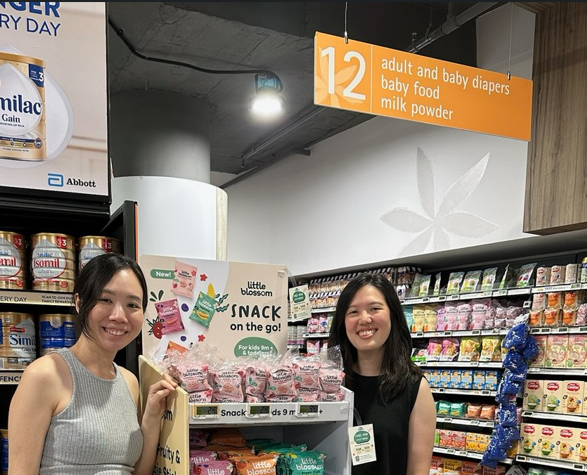
But Gillian and Yi Jun’s expansion plans didn’t stop there. In 2021, they started exploring a launch in the Malaysian market.
“We were seeing very good traction in Singapore,” shares Yi Jun. “But from our experience at Unilever, we know that for a fast-moving consumer goods business, we do need scale, and we do need volume.
So, we’ve always known Singapore will not be our only market.”
Growing Beyond Singapore’s Shores
Gillian and Yi Jun chose to expand into Southeast Asia for the same reasons they started the business in Singapore – Western players had dominated the markets, with few catering to local palates and preferences. In particular, Malaysia was their first choice, as its proximity to Singapore gave the co-founders the confidence that they could monitor operations there well.
The co-founders set up a Malaysian company to import products and also hired a small local team to help with business development and other responsibilities.
“One of the key sales channels when you’re starting out in Malaysia is baby stores,” says Yi Jun. “And baby stores in Malaysia are quite fragmented and independent.
You need someone to make contact with every single one of them and be on the ground and build relationships.”
Following its entry into Malaysia, Little Blossom pursued other overseas markets. Today, the brand is in Singapore, Malaysia, Vietnam, the Philippines, Brunei and the Maldives.
Little Blossom’s entry into new markets was made smoother thanks to tie-ups with local partners.
In Vietnam, for example, the brand had to register its products with the country’s Ministry of Health before selling them. This was a major challenge as Gillian and Yi Jun weren’t familiar with the Vietnamese language and local laws.
But by this point, the co-founders had successfully nurtured a relationship with Con Cưng—Vietnam’s largest baby products retailer with over 650 stores—after more than two years of effort. The retailer not only assisted Little Blossom with registration, but also stocked the brand’s products after that.
Influencing The Tastebuds Of The Next Generation
International sales have been positive. It comprises about 40% of Little Blossom’s sales as of 2024, according to Yi Jun. The brand has also experienced double-digit growth.
Gillian shares that regardless of which country we’re in, parents want healthier baby food that tastes good at the same time. Little Blossom’s products fill this gap—and seeing families enjoy them keeps her going.
“I think one of the things Yi Jun and I enjoy doing the most is attending baby fairs and events, because that’s where we are able to interact and hear from our customers directly,” Gillian says.
“At events, sometimes, a toddler could run up to our booth and share his excitement about the snacks with us. Other times, it’s the parents telling us that they’ve tried Little Blossom with their first kid, and continue to enjoy the products with their other kids.”
Gillian gives the example of mum influencer Anabel Chew, a long-time supporter of Little Blossom. Anabel’s daughter, Arya, has munched on Little Blossom snacks since 2021. Her younger brother, Miles, is also a big fan.
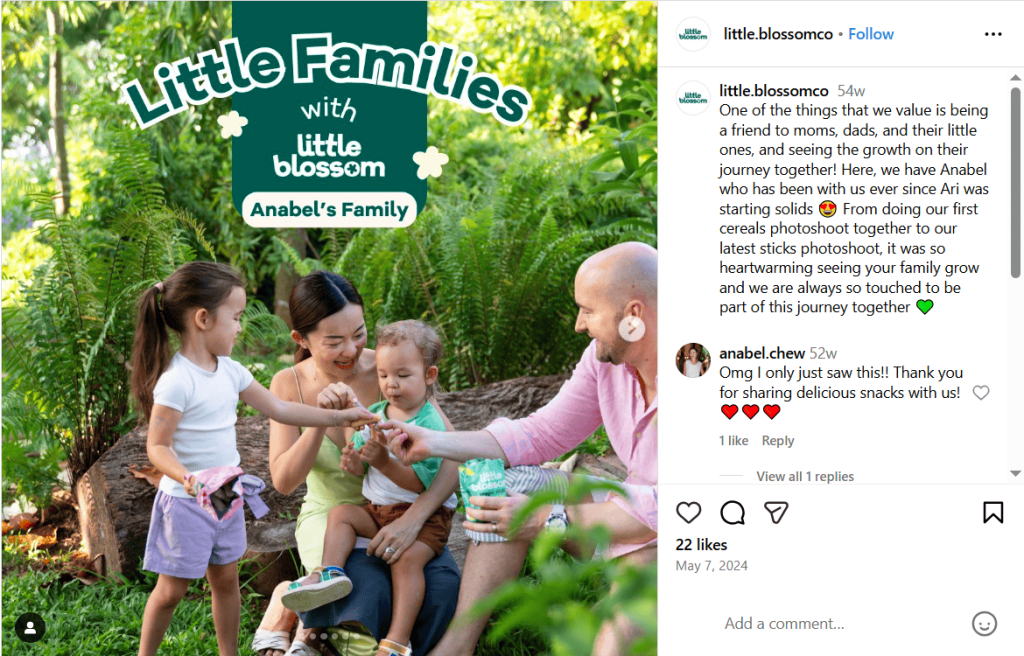
While Little Blossom has focused on baby food so far, Yi Jun shares that their mission is to grow with the kids. The brand is working on snacks for older children—and these products also have to be healthy, as children who grow up on Little Blossom products may dislike overly sweet or salty foods.
Yi Jun shares that they were surprised to learn of this during customer interviews.
“I don’t think we can fully take credit for it, but influencing palates from young is fundamentally one of the things we want to do. And it seems like it’s working,” she says.
“I think that’s also a rewarding part of this journey – knowing that we will have the next generation of kids grow up with Little Blossom, and not unhealthy snacks we used to eat when we were kids.”
Read Also: Building Asia’s Largest Marketplace for Parents: How Luke Lim Found His Calling in Supermom
Subscribe To The DollarsAndSense Business Pass
Enjoy what you are reading and want more? Join The DollarsAndSense Business Pass and unlock access to valuable tools, exclusive networking opportunities, and tap into the wisdom of industry experts to fuel your business expansion!


