
Amidst the stretch of cafes, restaurants and good food, unobtrusively located along Owen Road, is a gym packed full of state-of-the-art training equipment. Homeground Gym was started by a trio of friends, during the pandemic. For fitness enthusiasts, opening and running a gym may be a dream come true but what happens when dream meets reality? I interviewed one of the co-founders, Reuben Choo, to find out more about the gritty business behind opening and running a gym.
The Pandemic Was An Opportunity
Reuben and his co-founders, Kah Qi and Lester, had been long-time friends, as early as secondary school. However, the catalyst to start a business, specifically a gym together, only came about during the pandemic. During the pandemic, safe management restrictions severely affected many brick-and-mortar gyms, especially those in the CBD area. Many fitness enthusiasts also moved online for workouts, including Reuben himself.
“It was never really the same without a community and without a human touch.”
However, it was also a period when many people became interested in fitness, especially after a long period of being cooped up at home. After this period of isolation and restriction, “we realised that the demand for fitness amongst young adults has surged.”
Thus, Reuben and his co-founders took the opportunity to start Homeground Gym to cater to this group of young working adults. To do so, they paid attention to details. This included careful selection of the gym location: a heartland area like Owen Road, where it was close to “those who prioritize convenience when it comes to selecting a gym”.
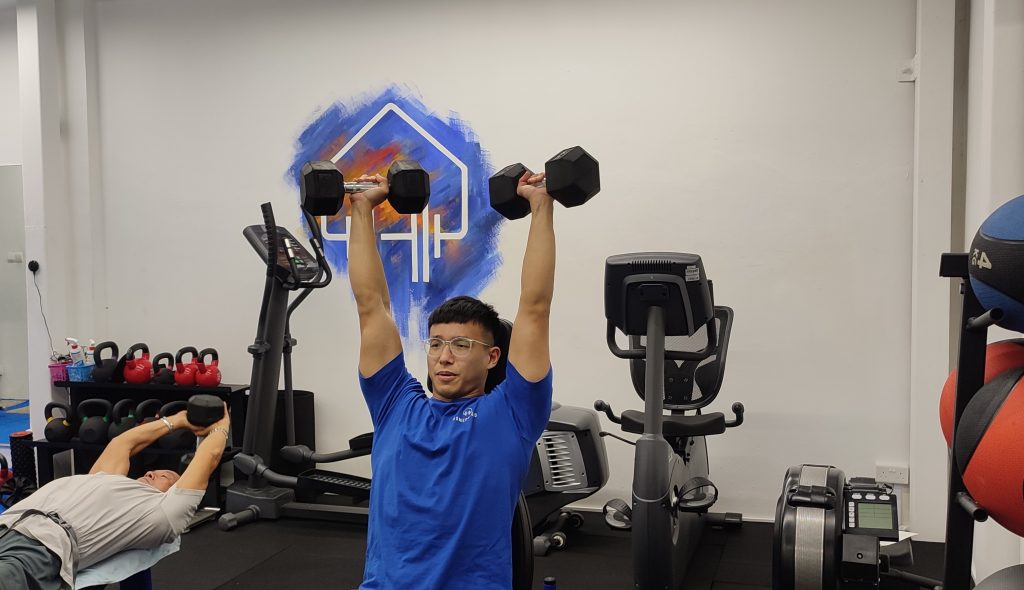
Additionally, the gym operations also had to benefit the members. This meant designing from the onset for the gym to operate 24 hours a day, with a digital lock system while also maintaining manned hours where a staff member is available to help and engage with members. While convenience is important, Reuben and his co-founders also want the gym to be more than just a place to be a physical location to work out in. They prioritised building a strong sense of community: the #HomeSquad.
“This 24/7 gym will become a second home to like-minded members, so we really make it a point to come here, to inspire fitness, and to foster symbiotic relationships.”
Building A Community Takes Commitment
To build the #HomeSquad community, Reuben and his co-founders dedicate time and effort to engage each member individually with conversations. During the initial period, each of them would commit 12 hours a week (outside of their full-time jobs) to come to the gym and talk to their members. They also train their gym managers to engage with members, on top of having a Telegram chat and a name card-dropping bowl.
This dedication to the gym naturally requires sacrifice of personal time for each of them. At the beginning, they also engaged the help of part-timers while scheduling a rotation for each co-founder to staff the manned hours of the gym. Now, they have a full-time gym manager to manage the daily operations and help with members’ enquiries. Even then, they still continue to commit hours in the gym physically for at least one shift. This ensures that they continue to keep in touch with their new members and retain the ties with members who have supported them from day one.

The Opportunity Cost Of Opening A Gym
While Reuben and his co-founders didn’t give up their full-time jobs to start the gym, it still required the sacrifice of their personal time, effort and capital.
Planning for a business starts even before the lease is signed. For Homeground Gym, Reuben and his co-founders started planning for the business about 6 months before they even signed the lease, meeting at least three times a week to discuss matters covering Marketing, Operations, Finances, etc.
Once they signed the lease, the time commitment ramped up significantly as they did many of the initial setup work themselves, coming to the gym almost daily.
“All the equipment you see, we assembled them all by ourselves. We didn’t pay anyone. It was so painful to the point that I was opening cardboard boxes and my hands were shaking, I didn’t even have the strength to grab.”
Initial Setup Costs
According to Reuben, the initial setup cost was around $180,000 to $200,000. Bulk of it was contributed by renovation and equipment. The cost of the equipment (and shipping) was significant, as the equipment are customised specifically for Homeground gym.
While I had expected renovation and equipment to be expensive, I had not expected that shipping would be a significant cost. Yet, the heavy nature of the training equipment and the fact that they are customised before being shipped, meant that shipping costs did add up significantly.

Operating Costs
Aside from the upfront costs, there is quite a lot of work that goes into the operations including daily cleaning and manpower.
Operating cost monthly is about $10,000. That includes rent, utilities, cleaning, salary, marketing and other miscellaneous costs.
Reuben did share that while they did manage to secure a lower rent due to the pandemic, they will have to account for the higher rents for future operations and expansion.
As the revenue of the gym is collected through prepaid memberships (entitling members to future use), it is not straightforward to account for the profits. However, Reuben did share that they are doing well enough and are already planning for a second Homeground Gym.
There Are Sacrifices Aside From Costs
If Reuben and his co-founders had not started Homeground Gym, they would have likely invested the capital into investments like stocks, cryptos, and real estate. While it would have been hard to predict how those investments would have performed, especially given the current market environment, they would have likely would have more personal time.
“We are good friends, maybe even best friends. But nowadays, when we talk, it’s all about the gym”
Starting the gym also affected their personal relationships. Thankfully, they have been blessed with supportive friends and families.
Starting A Gym As A Side Hustle
What stood out from my interview with Reuben is how the trio of founders leveraged their individual strengths to drive the business. Their meticulousness and planning which are assets in their day jobs as Personal Trainer (Kah Qi), Financial Consultant (Reuben) and Investment Advisor (Lester), gave them confidence to take advantage of opportunity in fitness. Fitness is also an area of personal interest for them and an area of expertise for one of them who is already a freelance personal trainer.
While the initial setup and operating costs are significant, they are able to shoulder the risks by keeping their day jobs. However, this comes at the cost of their personal time and energy. So, think twice (and more) before deciding to start a business as a side hustle.
Also, look for the right partners to start your business with. As Reuben puts it, “No business is perfect, as cliché as it sounds, communication is key. Just like in relationship.”
“We have been friends for a very long time, we all have different ideas and different opinions. We have our fair share of quarrels. But at the end of the day, we just want to put Homeground first.
Subscribe To The DollarsAndSense Business Pass
Enjoy what you are reading and want more? Join The DollarsAndSense Business Pass and unlock access to valuable tools, exclusive networking opportunities, and tap into the wisdom of industry experts to fuel your business expansion!


