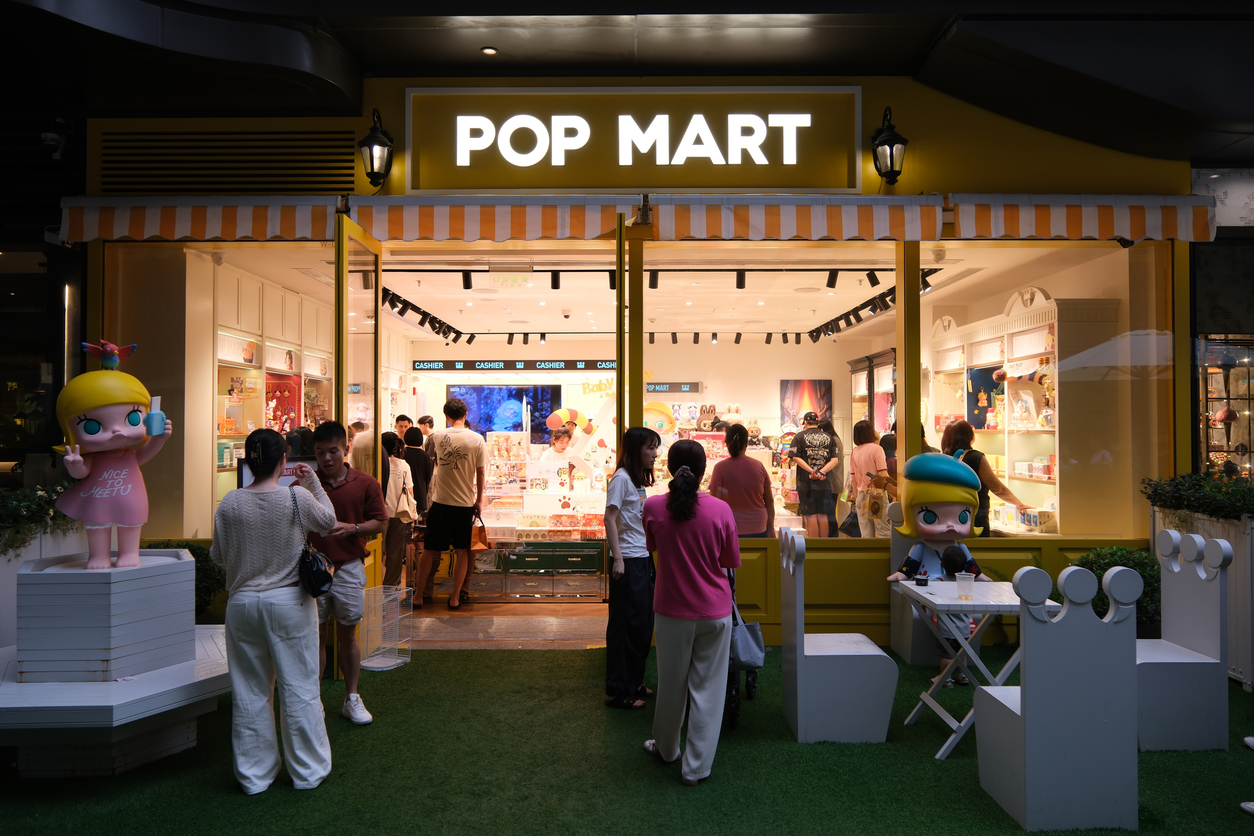
As far as global consumer crazes go, it is hard to miss the blind box.
Walk through almost any mall in Asia and you will see it. Rows of small, sealed boxes stacked neatly behind glass counters. Cute, brightly coloured characters smiling back at you. You pick one, pay, and only find out what you bought after tearing the box open.
That surprise is the entire point.
What started as a niche toy concept in Japan and China has quietly grown into a multi-billion-dollar global business. And for the companies behind it, blind boxes have become one of the most effective growth engines in modern retail.
So what is really going on behind those sealed boxes, and why are companies making so much money from them?
What A Blind Box Really Sells
At its most basic level, a blind box is simple. You buy a sealed box from a fixed series of characters or designs, without knowing which one you will get.
A typical series might have 10 to 12 designs, plus one or two rare “secret” figures that are much harder to obtain. Every box looks identical on the outside. The only difference is what is hidden inside.
That single design choice changes how people buy.
In traditional retail, you choose exactly what you want. You see a bag, a shirt, or a figurine, decide if it is worth the price, and move on. With blind boxes, you are not buying a specific item. You are buying a chance.
This uncertainty nudges consumers to buy more than one box. Maybe to complete a set. Maybe to get a favourite character. Maybe to chase that rare version that everyone is talking about.
If this feels familiar, it should. Think back to the collectible toys that came with fast food in the 1990s. Many people did not stop at one. Blind boxes take that same idea and turn it into a permanent business model rather than a limited-time promotion.
Why Mystery Keeps People Coming Back
Blind boxes work because they tap into very basic human psychology.
The biggest driver is variable reward. When outcomes are unpredictable, people tend to stay engaged longer. It is the same mechanism used in mobile games and slot machines. In other words, there is an element of luck/gambling involved.
Each box creates a small emotional loop. Anticipation while opening. Excitement if you get something you like. Mild disappointment if you do not. Either way, the brain remembers the experience and wants to try again.
Then there is the urge to complete a set. Once someone owns two or three figures from a series, stopping feels unfinished. Buying “just one more” starts to feel reasonable, even inevitable.
Scarcity adds fuel to the fire. Rare or secret figures are produced in small quantities on purpose. Most buyers will never get one, but their existence lifts spending across the entire series.
None of this is accidental. These behaviours are carefully designed into the product, packaging, and marketing. From a business point of view, it is remarkably effective.
Why The Economics Are So Attractive
From a company’s perspective, blind boxes solve several retail problems at once.
Demand becomes more consistent. Customers are not waiting for a specific design to restock. They are buying into a whole series. Average spending per customer is higher. Buying multiple boxes becomes normal behaviour, not an upsell.
Pricing power improves. Even when production costs are modest, companies can charge a premium because the value is not just the object. It is the surprise and the collectability.
Inventory risk is also lower. Slow-moving designs do not sit unsold on shelves because every box looks the same. Everything sells through the same pool. Put together, this creates a business model that quietly compounds over time.
How Pop Mart Turned Blind Boxes Into A Giant Business
No company shows this better than Pop Mart.
While the company did not invent blind boxes, it scaled the concept into an industrial system. Its rise has been driven by proprietary characters, frequent product launches, and a constant sense of novelty. Labubu, from “The Monsters” series, is one of the most recognisable examples.
Read Also: Understanding Labubu Dolls, And Why They Are So Popular (And Expensive)
Instead of betting on one hit product, Pop Mart continuously launches new series. Some succeed, some fade, but the overall machine keeps running.
The key is control. Pop Mart owns or licenses the intellectual property, designs the figures, manufactures them at scale, and sells them through its own stores, vending machines, and online platforms.
This vertical integration allows it to move fast, test ideas cheaply, and retire weak lines without painful inventory write-offs. The result is a consumer company with gross margins in the mid-60 percent range, numbers more commonly associated with software firms than toy retailers.
Is This Just A Passing Fad?
Blind boxes have lasted because they align business incentives with human behaviour better than traditional retail.
They turn simple products into experiences. They encourage repeat purchases without aggressive discounts. They allow companies to build characters, communities, and habits that grow over time.
As long as brands can keep designs fresh and avoid overdoing the gimmick, blind boxes are unlikely to disappear anytime soon. They are not just selling toys. They are selling anticipation, and that is a powerful thing.
Photo Credit: iStock/Robert Way
Subscribe To The DollarsAndSense Business Pass
Enjoy what you are reading and want more? Join The DollarsAndSense Business Pass and unlock access to valuable tools, exclusive networking opportunities, and tap into the wisdom of industry experts to fuel your business expansion!


