Many employees dream of leaving their corporate life to start a business. Few venture into the unknown, and even fewer endure the brutal realities of F&B long enough to find a smarter way forward.
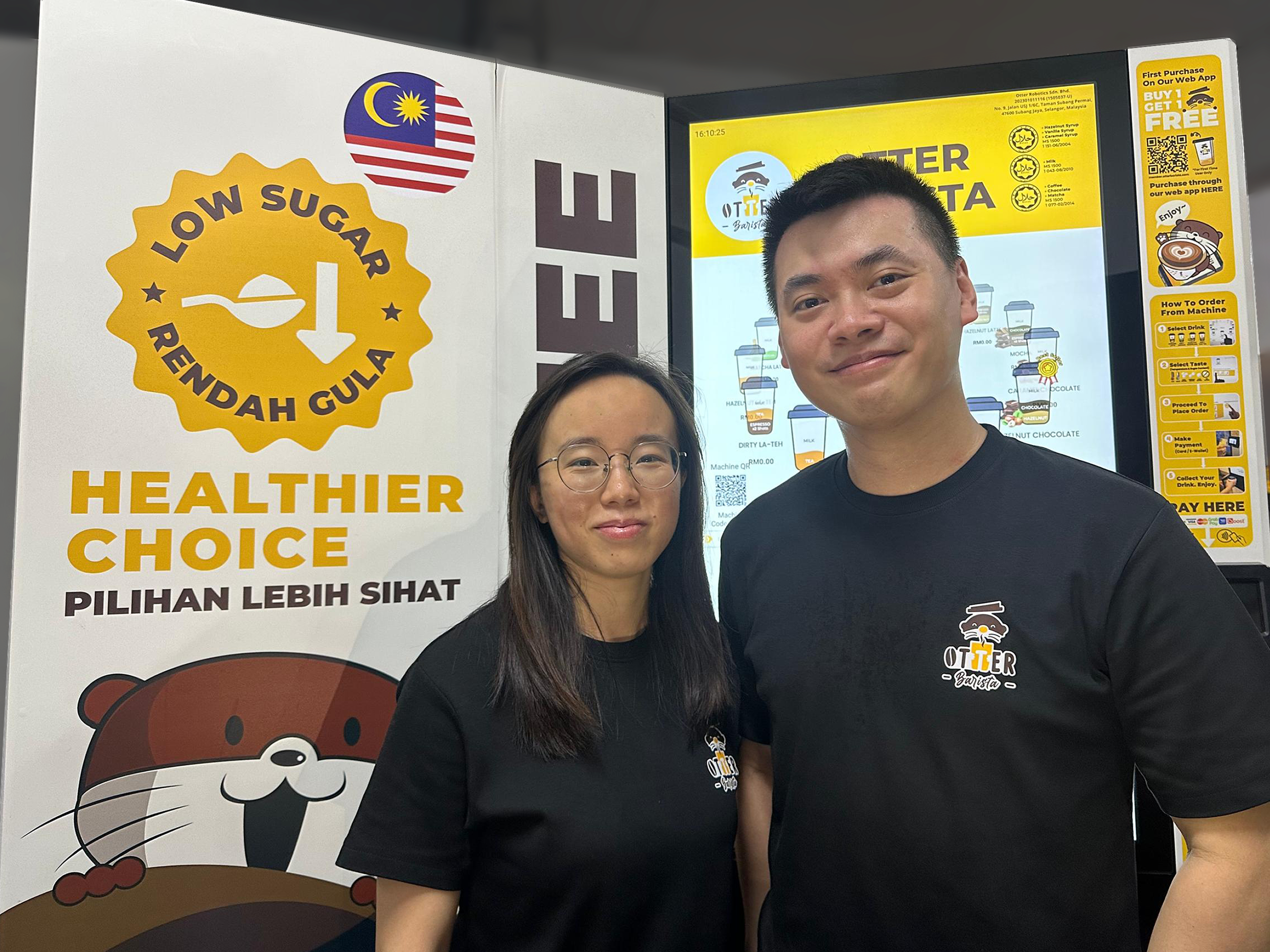
29-year-old Eeyong Ho started Otter Barista to embark on that path. Her journey from a full-time Cyber Security Consultant at EY to launching a robotics coffee vending machine business has been mired with engineering challenges, and having to continuously learn and innovate.
Read Also: How Two Lawyers Stirred Up Malaysian’s “TasteBudds” Through Meal Replacements
Corporate Burn-Out To F&B Burn-Out
“My first real experience with business was helping a friend launch a Japanese ramen restaurant,” Eeyong recalls. “I thought I’d learn entrepreneurship.”
What she took away was a much bigger lesson, “Instead, I learned how gruelling F&B can be.”
Like many in the food industry, she faced endless operational headaches. Long hours, high dependence on human labour, and relentless customer demands. “I was working 12 to 16 hours a day, six days a week,” she says. “Eventually I got completely burned out.”
But amid the exhaustion, she started thinking, whether there’s a way to succeed in the F&B industry without the punishing lifestyle.
Relying On Hands & Legs That Never Gets Tired
Eeyong began examining F&B from a systems perspective by training. “The two biggest costs in F&B are rent and human resources,” she explains. “If I could automate those, I could lower costs, improve consistency, and scale faster.”
As a self-confessed coffee addict, she honed in on the idea of making quality coffee accessible and affordable through automation.
She started researching coffee vending machines, but was disappointed by what was available in the market: expensive machines producing subpar coffee. Determined to improve this, she took a leap of faith by importing her first coffee vending machine from China without ever having seen it in person. “I just bought it after video calls with the supplier,” she laughs.
That first machine arrived in pieces, literally and figuratively. For six months, Eeyong tinkered with it outside her house, figuring out how it worked and how to customise it to Malaysian tastebuds. “I’d come home from my F&B job and spend the night testing the machine.”
Pouring her whole heart into the venture, she sold cups of coffee to her neighbours each day at affordable prices, even offering free deliveries to collect genuine, firsthand feedback. She used their insights to refine her recipes and soon began scouting for commercial locations to expand her business.

Building Otter Barista Into A Robotic Coffee Experience
Once she was satisfied with the reliability of the machine and quality of the coffee, Eeyong launched her brand. But she wanted something that made vending machines feel fun and approachable rather than cold and industrial.
“I went to the zoo,” she says. “I watched otters play together, so lively and engaging. That’s how I wanted the brand to feel, fun, interactive, and memorable.” Thus, the name “Otter Barista” was born.
Otter Barista’s business model resembles a traditional cafe, but without human baristas or high rents. Eeyong rents small spaces, sometimes as little as one square meter, in locations like hospitals, offices, and universities. Instead of building a typical cafe, she places her coffee vending machines there.
A key technological advantage is that the machines are fully IoT-enabled. Eeyong can monitor everything remotely: from the level of coffee beans to sales, and even dispense a cup for someone at a particular vending machine if needed.
Read Also: Planting Seeds Of Purpose: How Lim Yee Zhing Built Little Eden Succulents
A Breakthrough Expansion Into Hospital Locations
While Eeyong’s first machine went into an office building, the real breakthrough came after 1.5 years, when Otter Barista secured placement in a hospital. “Hospitals are one of the best places because they run 24/7, unlike offices or universities that shut at night or for holidays.” She explains.
Yet, winning hospital contracts wasn’t easy. Otter Barista had to comply with strict standards, from hygiene to machine certifications under Malaysia’s MSQH requirements. “Getting that first hospital was a big milestone, once we could reference that, it was easier to secure more hospitals.” She shared.
Prioritising Innovation & Quality Over Price
Competition in Malaysia’s coffee vending space has since heated up, with many new players expanding aggressively. But Eeyong refuses to compromise on quality.
“Many F&B businesses cut costs by lowering ingredient quality, thinking consumers won’t notice,” she says. “But people do notice. We only use 100% Arabica beans from Brazil, while some others may use cheaper blends. It’s a big taste difference.”
Otter Barista’s drinks sell at around RM7-RM9, slightly lower than many cafe prices, yet higher than the cheapest vending options. For Eeyong, that balance matters. “The taste has to match the price,” she insists, determined that every cup lives up to its value.
To date, Otter Barista operates more than 60 machines, with its robotic baristas making approximately 20,000 cups of coffee each month.
Growing The Business And The Team
While Otter Barista is built on automation, Eeyong emphasises the importance of her people. “The biggest challenge is still human,” she admits. “Machines can be monitored online, but how a technician solves a problem on-site makes all the difference.”
Many of her technicians come from non-technical backgrounds, some were previously Grab drivers. “They may not think like engineers,” Eeyong says. “So I’ve created step-by-step troubleshooting guides and a knowledge library with videos. I have to train them not just technically but in how to think through problems.”
She has also introduced a unique compensation model, whereby all staff including technicians, share in revenue bonuses. “Everyone knows the company’s financials,” she says. “That way, technicians care whether a machine is selling well.”
Don’t Just Chase Money, Stay Consistent in Quality
Eeyong aims to scale Otter Barista to 800 machines in the next three years. She’s also begun building a management team to take over daily operations so she can focus on strategic growth.
Beyond hospitals, she’s eyeing tourism spots and offices for future machines. “There’s still a huge market for good coffee on the go,” for people who want quality coffee without a cafe price tag.
For those considering F&B, Eeyong has a practical advice. “Don’t just chase the dream of becoming rich quickly. If you don’t enjoy the challenge, it’s very hard to survive the tough years. And most importantly, build systems. Whether it’s recipes, SOPs, or costing controls, consistency is everything. “
She believes many F&B businesses fail because they ignore costs or quality. Consistency is the key to win customer’s heart and loyalty.
Through Otter Barista, Eeyong has shown that even in the competitive coffee industry, strategic innovation and resilience can create a distinctive and sustainable business to grow and scale.
Read Also: From Legacy to Leadership: How Lim Yau Hui Is Transforming Petsmore Beyond Just Pet Supplies
Subscribe To The DollarsAndSense Business Pass
Enjoy what you are reading and want more? Join The DollarsAndSense Business Pass and unlock access to valuable tools, exclusive networking opportunities, and tap into the wisdom of industry experts to fuel your business expansion!


