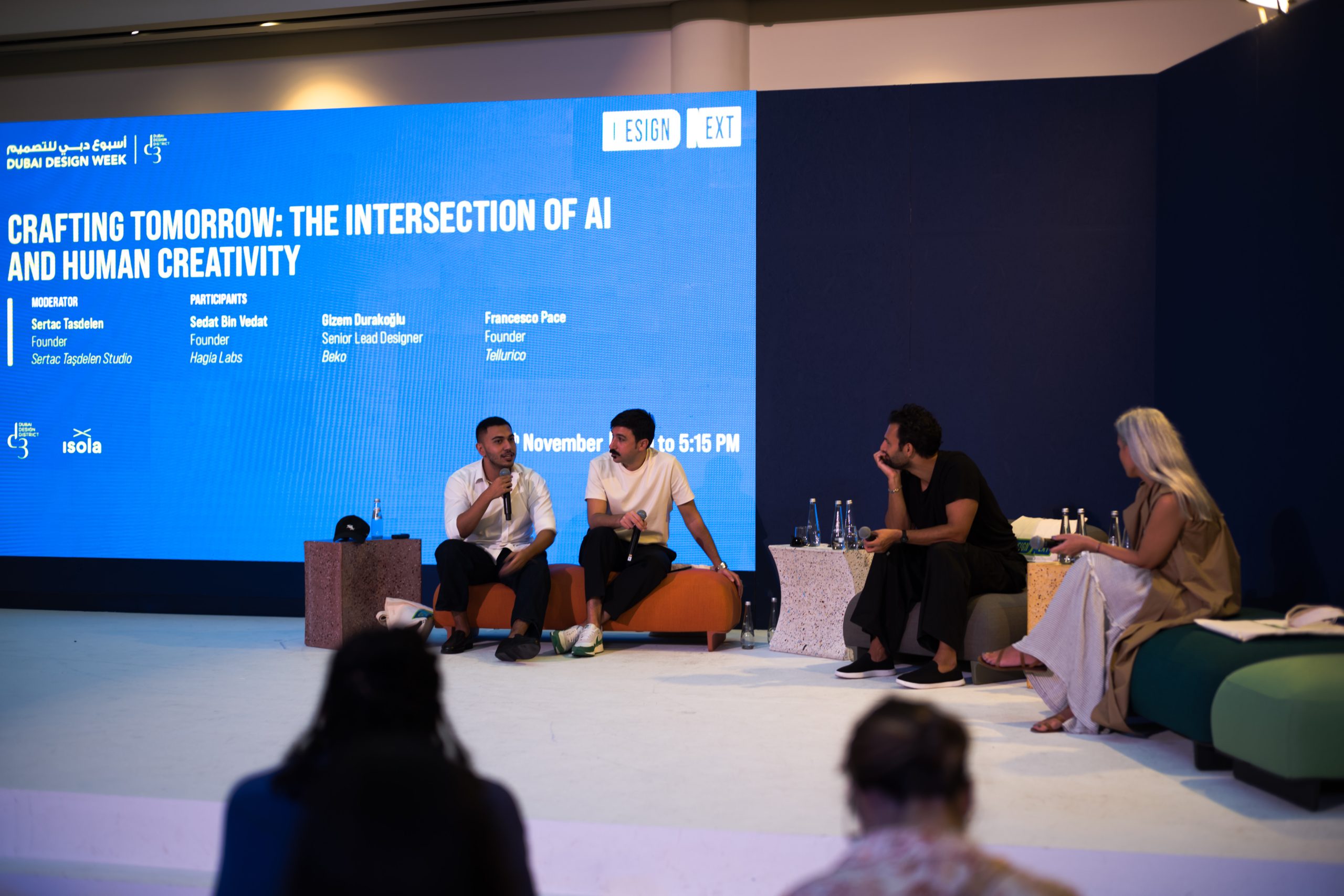
While the world races to automate, Sedat Bin Vedat Boynuegri has taken a quieter but more radical approach. At the heart of Hagia Labs, the AI company he founded in 2024, lies a provocative idea: AI is NOT the one you notice. It is the one that disappears into your everyday life, that works hand-in-hand with your imagination so seamlessly that you forget it’s even there.
“We’re not building tools for robots to ‘act human’,” Sedat says. “We’re building extensions of the human imagination.”

(Sedat, Founder of Hagia Labs)
The Jargon That Gets In The Way
“I’ve seen the same thing happen over and over again,” Sedat says. “Business owners get super excited about AI, then they get overwhelmed by tech-speak and walk away to stick with the conventional.”
It is a sentiment he doesn’t just observe – Sedat understands. Coming from a background that blends product thinking with human empathy, Sedat noticed how businesses were being asked to contort and conform themselves around AI. “This should be the other way around!” Sedat protests. He saw people shut down, not because they didn’t want to grow, but because they were made to feel inadequate in a space ruled by engineers and algorithms.
So he asked a different question: What if AI could feel like an assistant, not an overhaul?
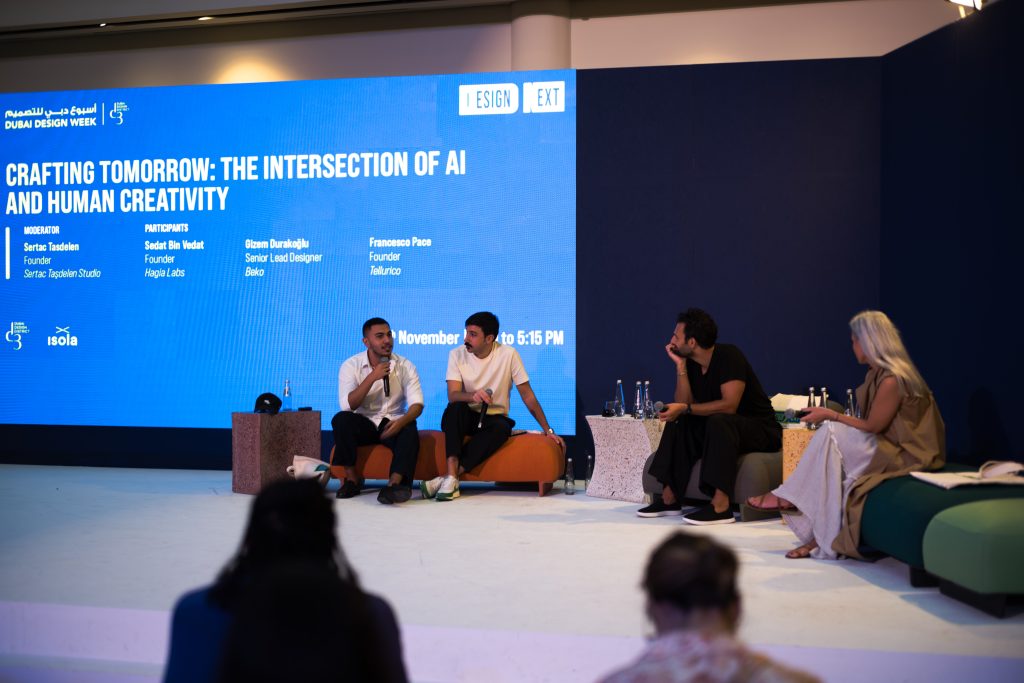
(Sedat speaking at the 2025 Dubai Design Week)
Human-Centric Creative AI
At Hagia Labs, AI doesn’t churn out content for content’s sake. Instead, it becomes a co-creator, shaping narratives, interpreting emotion, and enhancing cultural depth. Whether it’s a brand campaign or a film prototype, the question at the heart of the work is always the same: how can AI support the intuition of artists, not override it?
The result is a new kind of intelligence, one that merges data with design thinking, and engineering with poetry.
Mapping Memory with Scent
One of Hagia’s most evocative experiments was the Singapore Scent Project, a sensorial journey that turned fragrance into a storytelling language.
The team created an interactive scent map, utilising AI to transform olfactory data into emotional and visual narratives. This wasn’t about selling perfume. It was about expressing memory, geography, and identity through scent. The project became a poetic fusion of sensory technology and cultural storytelling, showcasing how AI can make the intangible feel real.
“We didn’t partner with anyone on this project. We built it for Singapore. It was about honouring place and memory, and using AI to do it in a new way,” Sedat notes.
Recognition and Community
That human-first vision is gaining international recognition. Hagia was featured at Dubai Design Week last year, where Sedat spoke about the emotional architecture of AI. And this year, their work will be showcased at AI on the Lot in Los Angeles – the world’s largest AI video event.
But even with the accolades, the team remains grounded. For them, every breakthrough is an invitation to go deeper. Not just into the tech, but into the questions that drive us to create in the first place.
Designing with Empathy Not Ego
At Hagia, Sedat focuses not only on building software but also on finding voices. They have collaborated with global brands like Puma and X (formerly Twitter) to create bold, creative campaigns. AI is used not as a replacement, but as a collaborator in crafting better stories and richer experiences with a human touch.
For Sedat, that creative partnership is just as important as the technical work. He believes AI should help people express their uniqueness, not erase it. His team blends technical skill with a storyteller’s mindset, making sure every campaign, tool, or interface brings value that feels personal.
“We’re not replacing human creativity,” he says. “We’re supporting it in a way that feels natural.”
A Mindset Shift in the Making
Sedat is clear about the deeper mission. Hagia Labs is not just a product company. It’s a mindset movement. The fear that AI will replace jobs is still common, but he sees it as a distraction. Instead of obsessing over what might be lost, Sedat wants people to focus on what can be gained.
“Real adoption happens when AI becomes so embedded that you don’t even think about it,” he says. “It just helps, quietly and consistently.”
That shift – from fear to flow – is what Hagia Labs stands for.
Building a Future That Feels Familiar
As Hagia Labs continues to grow, it avoids the flashy promises common in the tech world. There are no sweeping claims, no pressure to automate everything. Just a commitment to meeting people where they are and building technology that adapts to them.
For Sedat, success looks like calm clarity. He envisions a world where businesses stop dreading AI and start trusting it. A world where people feel supported, not replaced. A future where the most powerful tools are the ones that understand you.
This article was contributed to us by Alpha Story.
Subscribe To The DollarsAndSense Business Pass
Enjoy what you are reading and want more? Join The DollarsAndSense Business Pass and unlock access to valuable tools, exclusive networking opportunities, and tap into the wisdom of industry experts to fuel your business expansion!


