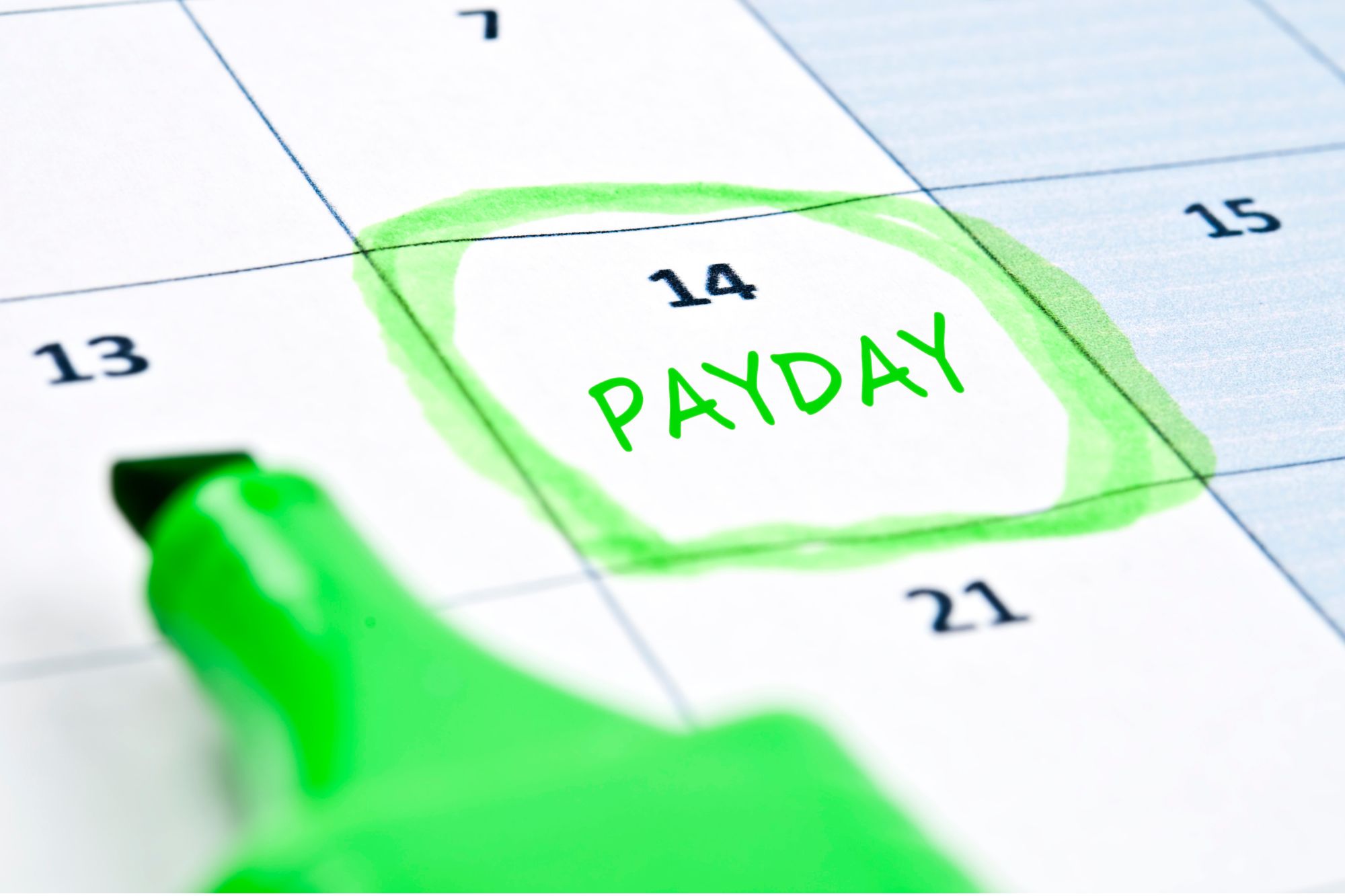
Singapore has a standard practice of paying workers a monthly salary. Singapore’s Employment Act enshrines the requirement for employers to pay their workers at least once a month, even if such a salary period is not fixed according to a contract.
While monthly salary periods are the most common pay frequency around the world, there are several countries where monthly salaries are not the norm.
Across the globe, there are four main salary periods practiced: weekly, biweekly, semi-monthly, and monthly. The difference between biweekly and semi-monthly is subtle. Biweekly results in 26 payouts a year (since there are 52 weeks and paychecks are made every two weeks), while semi-monthly results in 24 payouts a year (since there are 12 months and two paychecks are made each month, usually on fixed days).
In countries like the United States, where a biweekly salary period is most common, companies that pay employees less frequently may become less attractive to potential employees.
Read Also: What Is The Average Working Hours In Singapore For Full-Time And Part-Time Employees
#1 United States
According to the latest Current Employment Statistics survey, conducted by the U.S. Bureau of Labor Statistics, the most common salary period frequency in the United States is biweekly (43%). This means that workers are paid every two weeks. The next most common salary period frequency is weekly (27%), semi-monthly (19.8%), and only 10.3% of employers pay salary once a month.
Interestingly, the size of the company also appears to determine which frequency is more popular. The larger the company, the more likely it is to offer biweekly salary periods. This is not surprising due to the different legal requirements within each state, with some of the most populated states like California, Texas, and New York all requiring workers to be paid at least twice a month. It makes sense to standardise the salary period frequency across the entire business, which may span various states, according to the most stringent requirements of state law in the US.
Another factor that comes into play is the type of industry. A weekly salary period is preferred in construction, manufacturing, mining, and logging industries in the United States. These industries typically hire hourly workers with nonstandard schedules, often on a project basis. Weekly salary periods ensure that hourly workers are also compensated quickly when they put in overtime.
Read Also: How Much Employers Have To Pay Employees For Working On A Public Holiday?
#2 Canada
In Canada, while there is no federal law mandating a specific salary period, several provinces within the country, such as British Columbia and Quebec, do have explicit laws on the topic.
In British Columbia, for example, it is a requirement for employees to be paid at least twice per month. Specifically, the law states that “pay periods cannot be longer than 16 days”, giving companies the option of paying biweekly or semi-monthly. In Quebec, a distinction is made between managerial and non-managerial personnel. Non-managerial personnel must be paid at least twice per month, while managerial personnel can be paid monthly.
For those reasons, the Canadian government sets the standard by paying its workers biweekly, and many companies in Canada also follow their lead.
#3 Australia
While Australian government policy states that workers must be paid at least once a month, the most common pay cycle across all industries is fortnightly (53%), followed by weekly (33%). Only 12% of employees in Australia are paid monthly.
That said, there are specific industry laws that require employers to pay their workers weekly or biweekly, such as in the retail, hair and beauty and security industries. For other industries like health and food and beverage, employers must seek the agreement of a majority of employees if they want to pay monthly.
According to the data, the only industry where more employees are paid monthly than fortnightly is the mining industry, and that’s most likely due to the fly-in fly-out (FIFO) nature of the work at remote locations.
Read Also: 12 Things Employers Need To Include In An Itemised Payslip
#4 Russia
In Russia, employers are required by law to pay salaries twice a month. However, a change to the Russian Labor Code in October 2016 further established that wages must be paid no more than 15 days apart, failing which employees are within their rights to stop working till they are paid, and are entitled to receive interest on the unpaid amount daily.
#5 The Philippines
According to the Labor Code of the Philippines, wages should be paid “at least once every two weeks or twice a month at intervals not exceeding 16 days”.
Why Do These Countries Prefer Biweekly Salaries Over Monthly Salaries?
We listed 5 countries as examples where workers are paid more often than Singapore’s monthly schedule, but this is a non-exhaustive list and there may be more countries that also adopt such practices.
We can see that some of the countries mandate biweekly salaries by law, while others keep the practice going even though they are not required to.
For countries where it is no longer a law, like the United States and Australia, the cultural resistance to change to a monthly frequency is high. Workers who receive their pay every two weeks and structure their lives around that frequency will find it much harder to adjust to the need to budget over a longer period. For example, in these countries, rent and mortgage payments may also be charged twice a month, so having a biweekly salary makes both budgeting and payments more convenient.
Often, even in countries or industries in certain countries where there is no requirement to pay salaries more frequently than once per month, there may be some underlying part of the law that requires certain businesses or states to make salary payments more often than once per month. Due to this, companies may choose to standardise their practice to remain competitive against other industries or for more uniformed administrative purposes.
Read Also: Are You Earning As Much As Your Peers: How Much Is The Average Salary In Singapore For Every Age Group?
Subscribe To The DollarsAndSense Business Pass
Enjoy what you are reading and want more? Join The DollarsAndSense Business Pass and unlock access to valuable tools, exclusive networking opportunities, and tap into the wisdom of industry experts to fuel your business expansion!