President Donald Trump’s tariffs on global trading partners and allies have spooked stock markets and investors worldwide. But the reality will actually be felt on the ground much more if the proposed tariff plans go through.
That’s because global trade has taken off over the past 30 years, a process that only accelerated with the accession of China to the World Trade Organisation (WTO) in 2001.
Increasingly free trade has also greatly benefitted Singapore economy and her citizens, given the country’s reliance on the free flow of goods and capital. So, how could US President Trump’s tariffs impact Singapore’s economy and businesses?
Read Also: 6 Executive Orders Donald Trump Signed On His Inauguration Day That May Affect Businesses
Uncertainty + Deglobalisation = Less Investment
One of the key ways that these tariffs could impact Singapore is by reducing the amount of foreign direct investment (FDI) that flows into the country.
Looking at the potential global trade war that could ramp up, investors can also see it in the broader context of “deglobalisation” or the reversal of globalisation that has occurred over the past 30 years or so.
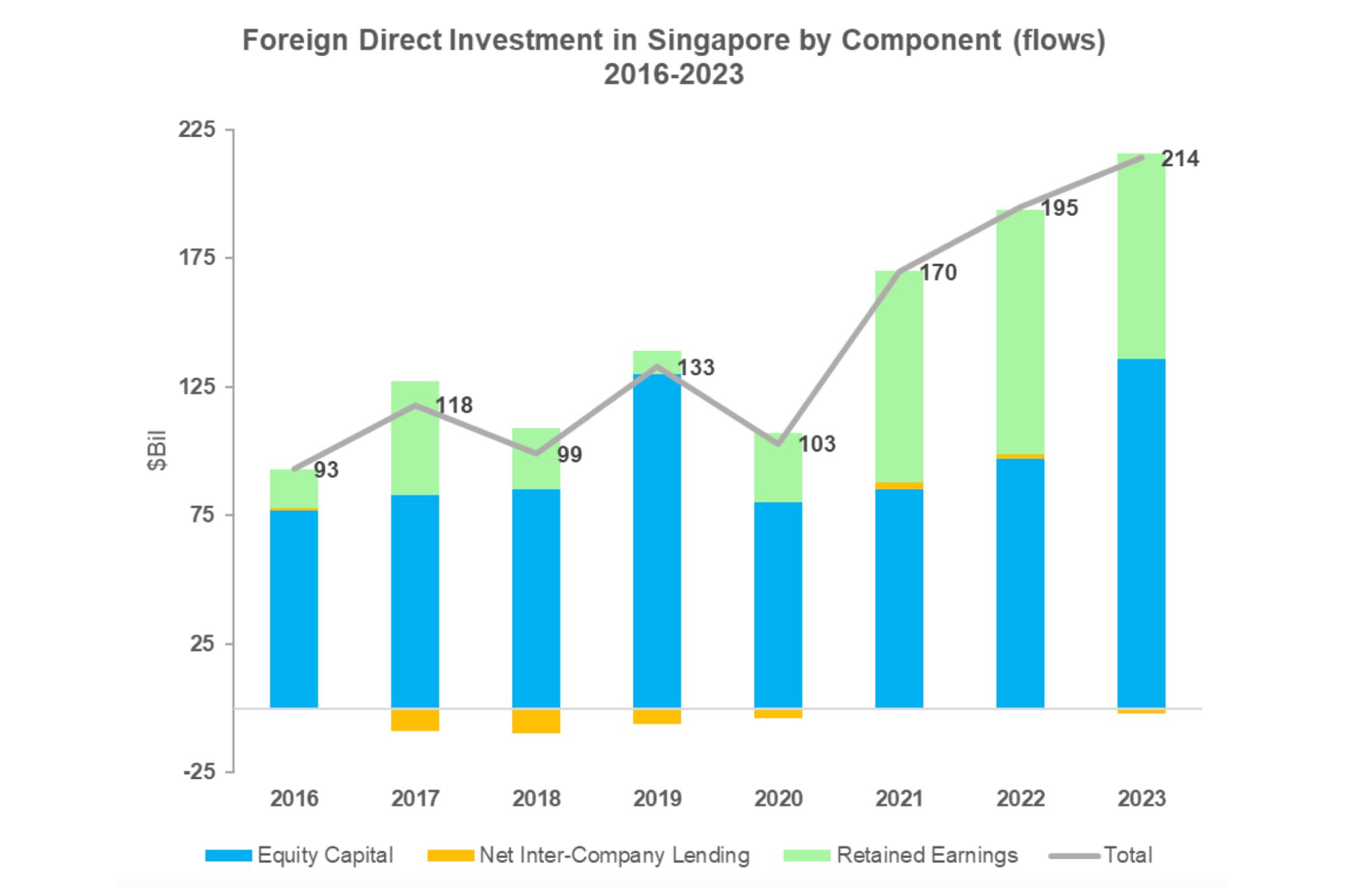
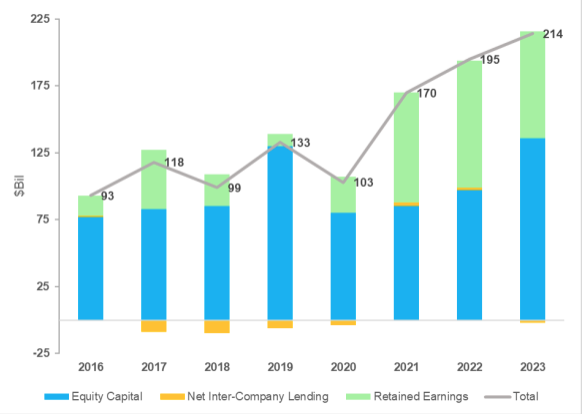
That opening up of markets and trade, also known as “globalisation”, has seen massive amounts of FDI flowing into Southeast Asia, with Singapore being one of the biggest beneficiaries of that trend. Indeed, in the whole of 2023, Singapore’s FDI flows hit $214 billion – up 9% from 2022.
It’s no coincidence that 2018 – the year that President Trump started to initiated serious trade tariffs against China – has been the only year (outside of Covid-19’s 2020) that Singapore has seen a drop in FDI flows in seven-year stretch from 2016 to 2023.
Foreign Direct Investment in Singapore 2016-2023 by Component (flows in S$ billions)
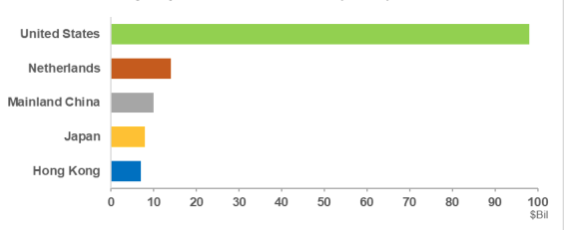
In other words, uncertainty in the global business environment is “bad for business” when it comes to investment into Singapore and its economy. Even worse, the US actually made up nearly half of Singapore’s FDI in 2023 and is by far the largest source of FDI into the Singapore economy.
If Singapore businesses receive less investment from abroad and American companies decide to retreat to investing more at home, this could damage Singapore’s overall jobs market. Like stock markets, companies hate uncertainty and will be much less willing to invest if global rules can change in an instant.
Reductions in investment in Singapore could translate into cuts in corporate budgets for hiring or expanding in the Asian market, including in Singapore.
Foreign Direct Investment in Singapore for 2023 by top source economies (flows in S$ billions)
Worries Around Recession May Stem Foreign Direct Investment Flows
The big worry that has everyone on edge right now is the possibility of a recession, both in the US but also in economies around the world.
With trade wars potentially igniting higher inflation and lower growth, Singapore – with its open and trade-dependent economy – could feel its most severe effects first.
Singapore’s Deputy Prime Minister Gan Kim Yong said as much in a recent speech about the potential impact of Trump’s tariffs on key trading partners. He mentioned that even if the whole of Asia is not directly impacted, the impact of rising tariffs and trade wars could “cause major disruptions to supply chains and slow trade and investment flows”.
If a global recession was to come about in the next 12 to 18 months then Singapore’s economy would likely see job losses and a slowdown in growth on the back of uncertainty. However, those results are typical of any recession and wouldn’t be unique to Singapore’s economy.
Given the US is Singapore’s second-largest trading partner (behind China), the potential of any further trade tariffs that upset global supply chains and business will certainly impact Singapore.
The key consequences will be a reduction in investment into the economy – on the back of uncertainty – both from local and international companies as well as concerns that a ratcheting up of the trade war will plunge the global economy into recession.
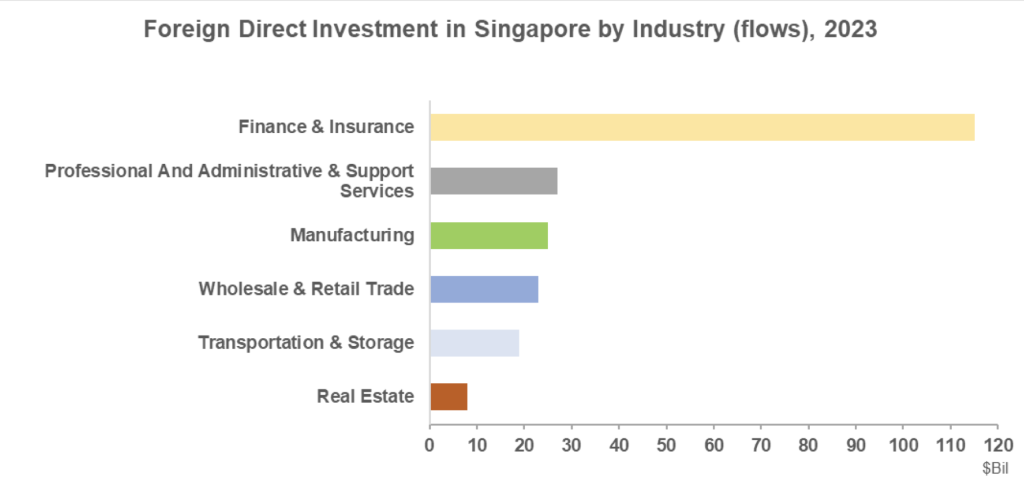
For Singapore, there may be a silver lining, with Finance & Insurance accounting for the lion’s share of FDI flows. In fact, the sectors targeted by the tariffs, mainly manufacturing and potentially trade, make up smaller components of the overall FDI flows into Singapore. Nevertheless, a slowdown would likely have widespread impact on the overall economy and FDI flows.
Subscribe To The DollarsAndSense Business Pass
Enjoy what you are reading and want more? Join The DollarsAndSense Business Pass and unlock access to valuable tools, exclusive networking opportunities, and tap into the wisdom of industry experts to fuel your business expansion!