One statistic that caught my attention while reading the MOM Labour Market Report 4Q2022 was that the likelihood of Singapore residents getting retrenched had fallen to an all-time low.
Just reading the news and discussing the jobs market during our DollarsAndSense editorial meeting, this was not a statement I was expecting to see.
What Is The Retrenchment Rate In Singapore?
There were 4,580 residents retrenched in 2022. Retrenchment statistics among non-residents also looked buoyant – even though there was a slight uptick from 2021, it was still lower than any other period since at least 2007.

Read Also: Retrenchment Benefits: Do Employees Have To Pay Tax And CPF On Them
Looking At The Data Closer: Retrenchments 4Q2022 VS Full Year 2022
We can see that in the data sets broken with quarterly breakdowns, the 4Q2022 data was slightly poorer than the full year data set. This could be pointing to a deterioration of the labour market in Singapore.
While the full-year 2022 data was rosy, we can see that broken down on a quarterly basis, retrenchments have been on the rise for the past 2 quarters. Rising to 1,300 in 3Q and 2,990 in 4Q 2022. This could paint a different picture – that the labour market was already showing signs of weakness since 3Q 2022.

Understanding Employers’ Sentiments: Businesses Were Not As Keen To Continue Hiring Since 4Q2022
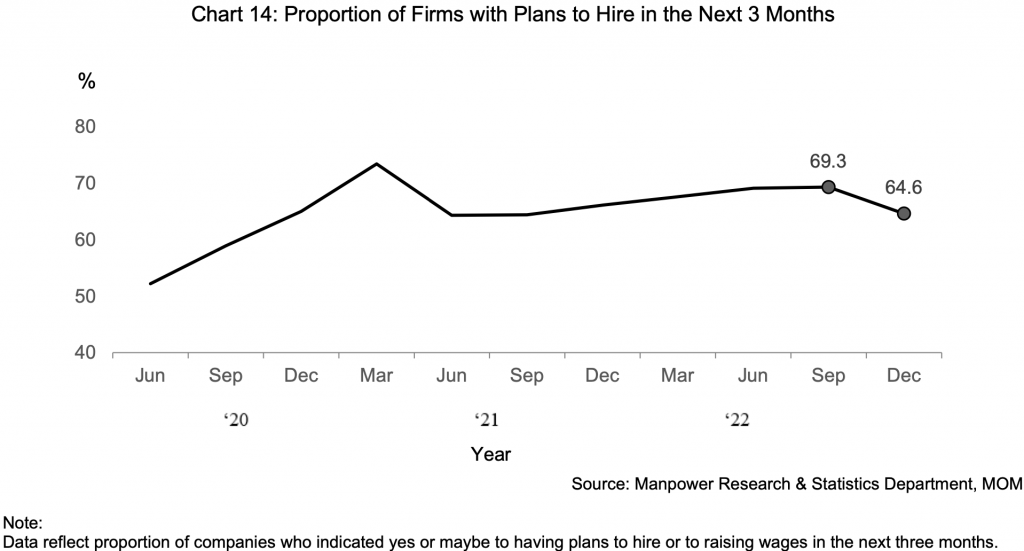
Also detailed in the Labour Market Report 4Q2022 was a slowdown in hiring sentiments since September 2022. Less employers had any plans to hire after September 2022, let alone actually hired someone.
We can also reflect on the job vacancy rate. Post-COVID-19, the number of job openings soared to record levels. While the number of job openings today remains at elevated levels, there has also been a tapering off since reaching a peak in March 2022.

Read Also: MOM Responsible Retrenchments – Guideline For Companies To Be Fair And Decent
Read Statistics With A Pinch Of Salt: The Latest Labour Market Report Is Still Based On “Outdated” Information
Despite being released on 15 March 2023, the Labour Market Report 4Q2022 is (as stated in its title) based on statistics collected for the fourth quarter and full year 2022. At best, we are reading about a jobs market that is nearly 3 months outdated.
This is why, besides reading deeper into the report, we also have to understand its shortcomings – it tells us what has happened, rather than what is currently happening or what is going to happen.
This is why it can (and rightly so) feel like there is a disconnect between the deep uncertainties in jobs-related news we are reading today compared to the somewhat upbeat labour market statistics.
If we browse the internet and news pages today, we can see that layoffs dominate the labour market news. Tech companies are leading the retrenchments globally, and the banking and crypto industries have also been roiled by massive collapses.
Looking At The Trends: Those Retrenched Have Been Able To Find A Job Relatively Quickly
In such reports, long-term trends can be most useful to someone who is retrenched or who fears being retrenched today.
In the chart below, we can see that in 4Q 2022, 73.1% of those retrenched were about to find a job within 6 months. Apart from this, we can also see a trend of a high proportion of those retrenched being able to find a job within 6 months.

Read Also: The Twitter Retrenchment: Why Labour Unions Are Still Relevant Today
Subscribe To The DollarsAndSense Business Pass
Enjoy what you are reading and want more? Join The DollarsAndSense Business Pass and unlock access to valuable tools, exclusive networking opportunities, and tap into the wisdom of industry experts to fuel your business expansion!