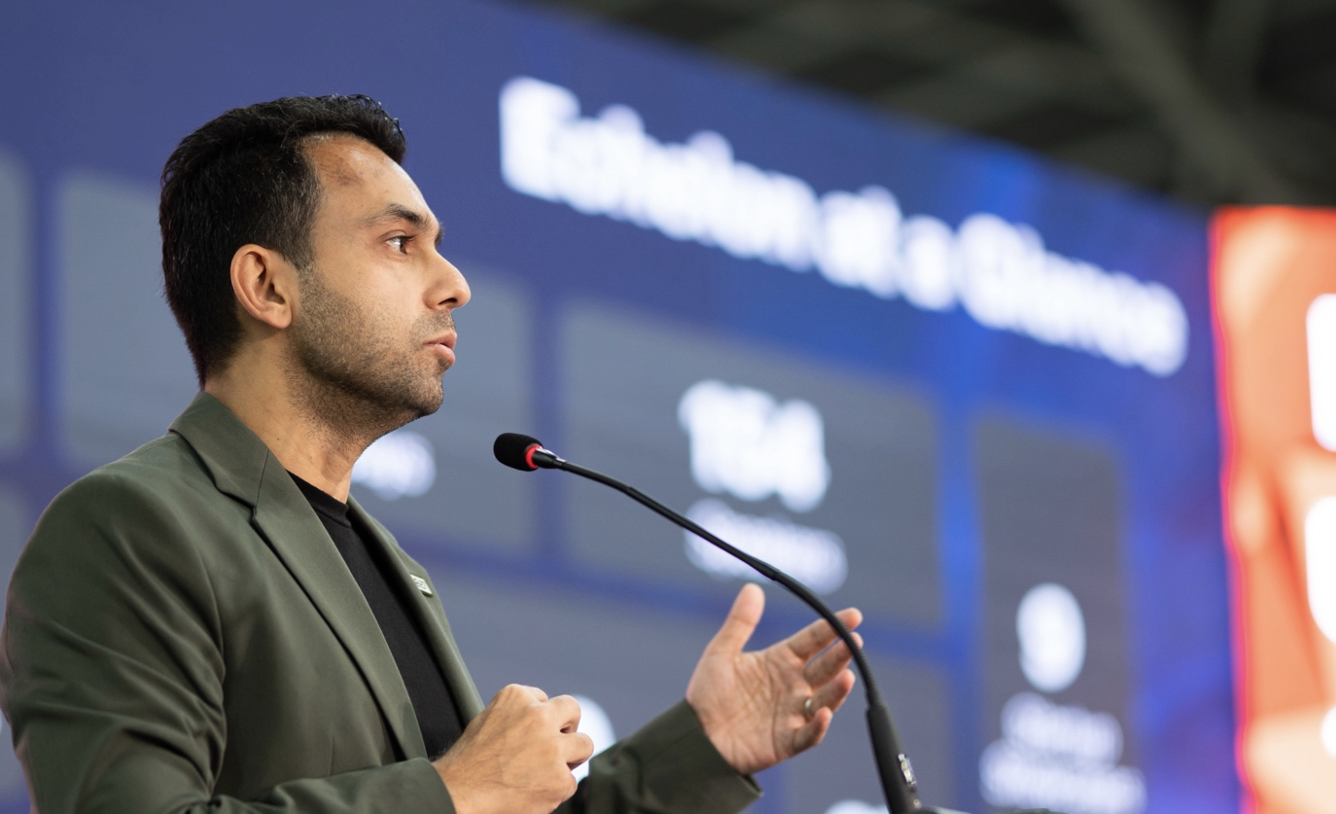
For anyone in Singapore’s startup ecosystem, e27 needs no introduction. What began as a student tech blog at NUS has since grown into one of Southeast Asia’s leading startup and tech ecosystem platforms. Today, e27 connects founders, investors and corporates through content, events and business matching programs.
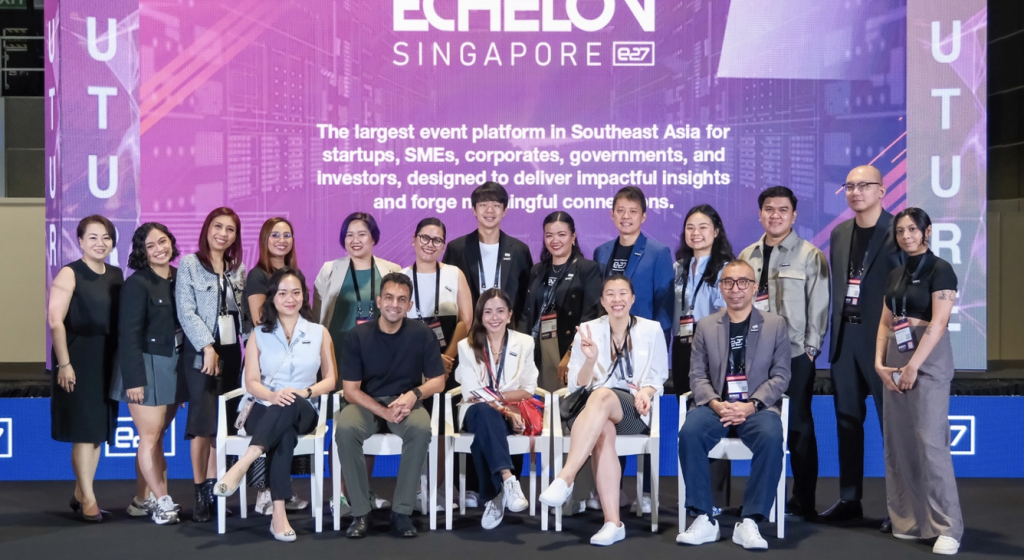
Earlier this year, we sat down with Mohan Belani, co-founder and CEO of e27, at Echelon Singapore 2025 to learn about his journey, his approach to angel investing, and his vision for the region’s startup future.
Deanna Lim (Deanna): Mohan, you’ve been in the startup scene since your NUS days in 2007. How has that journey shaped you?
Mohan Belani (Mohan): I started my career on the tech side as a hardcore coder who loved programming. However, through my stint at NUS NOC in Silicon Valley, I discovered that I also enjoyed marketing and business development. That led me to roles at LittleLives, where I worked on bringing technology into kindergartens and training teachers to better use tech to manage preschools, and later at Mig33, a then pre-public mobile social networking platform, where I gained experience in project management and business development. I even co-founded Gokil Games, building mobile social games in markets like Indonesia and the Philippines. These experiences gave me a front-row seat to how products scale across different industries.
Over time, I realised my true passion was not just building products, but building the ecosystem itself. In 2012, together with my co-founder, Thaddeus Koh, we restructured e27 into a profit-centric enterprise that could support startups at scale.
Deanna: How did you first get into angel investing, and what do you look for in founders today?
Mohan: I figured that if I wanted to play an active role in the ecosystem, I should invest my own capital in it as well. I first invested in Golden Gate Venture’s Fund 1, and then later started backing founders directly. In the early days, I focused on verticals I was passionate about, and healthcare was one area that really deserved more support. Over time, my thesis evolved. I started investing a little later stage, and even created SPVs to bring other entrepreneurs along with me.
Across all these investments, I’ve realised a few common traits matter. First, I enjoy working with founders who have a deep-rooted passion for the problem they’re solving. They’re not just doing it because it’s trendy or because they want to make money. One founder I really like is Ram Kumar from India. He built an ayurvedic healthcare platform called NirogStreet because of his own personal experiences with traditional medicine, and that gave him the drive to impact this sector through the use of technology.
Second, founders need at least a basic sense of how they want to scale their companies. You can build a really good product, but if you don’t have a clear enough pathway of how you plan to grow it and can’t communicate that logically, I’d find it hard to invest. On the flip side, you can have a bad product, but a great founder can turn that around. Like Reid Hoffman said, if you’re not embarrassed by your first product launch, you’ve launched too late. Most products at the early stage start quite badly, but good founders, with the right team and capital, can turn a bad product into a good one.
Deanna: e27 has grown far beyond media. How did that evolution happen?
Mohan: In the early days, job postings were literally just articles on our site. Founders would email us saying, “Can you help us hire a CTO?” Over time, those needs grew into actual product verticals on our platform. It includes Startup databases, investor databases, job boards and fundraising tools. When COVID-19 hit and we couldn’t run physical events, we added business-matching features so startups could connect with investors online. We recently even launched a Milestones feature, to be better highlight the small milestones each startup achieves such as getting their first paid customer or making a key hire. Today, everything we do is centred around solving four key pain points for startups: information, talent, funding, and customers.
Deanna: What were some of the biggest challenges you faced in building e27?
Mohan: In the early years, the biggest challenge was simply that the ecosystem was still very small. There weren’t that many startups or investors in Southeast Asia back then, so while we wanted to drive the ecosystem forward, the market itself also needed time to mature. Getting the right quality of companies matched with the right quality of investors wasn’t always possible — so market timing was definitely a hurdle.
The second challenge was resources. Running events like Echelon is capital-intensive, but in our early years we didn’t raise much money. Access to working capital or bank loans wasn’t really available to us either. So we had to be extremely smart with how we structured vendor agreements, how we chased sponsorship payments, and how we managed cash flow just to keep things going.
Talent was another challenge. Because e27 serves a regional community, we needed people who understood the local nuances in different markets but hiring the right talent wasn’t always straightforward. Sometimes we had to hire locally in places like Indonesia or Thailand, which brought its own set of management challenges. In many ways, we were a remote company before remote work was a trend.
Even today, the challenges haven’t gone away; they’ve just evolved. Currently, we’re exploring how to integrate AI into our operations, retrain and upskill our workforce, and remain competitive in a highly competitive ecosystem. Governments are running programmes, corporates and investors are launching their own initiatives, which is great for the ecosystem overall, but it means we need to constantly ask ourselves: how do we stay relevant, and how do we make sure we’re ready to support startups six to twelve months from now.
Deanna: Looking ahead, what’s your vision for e27 and the region’s startup ecosystem?
Mohan: For Southeast Asia to remain globally competitive, we need to build our own enterprises. The region has unique problems — in sectors like agriculture, healthcare, and waste management — that global companies won’t always prioritise. Solving them requires homegrown founders who can scale solutions beyond their own backyard.
That’s where I see e27’s role. If the future of Southeast Asia’s economy is going to be driven by startups that become tomorrow’s enterprises, then our job is to help them survive those early years and cross into Series A or B successfully. We’ve been fortunate to work with companies like Grab, Carousell, and PatSnap at the very beginning of their journeys. Today, they’re global players.
The big question now is: how do we find the next 100 Grabs, the next 100 PatSnaps? How do we make sure they don’t fall through the cracks in their most fragile years? That’s what drives me and the team every day.
Subscribe To The DollarsAndSense Business Pass
Enjoy what you are reading and want more? Join The DollarsAndSense Business Pass and unlock access to valuable tools, exclusive networking opportunities, and tap into the wisdom of industry experts to fuel your business expansion!


