Sustainability has become a central focus of corporate strategies in recent years, driven by increased awareness of both broad corporate governance practices and pressing global issues like climate change and its impact on rising temperatures.
As a result, consumers are adjusting their habits, and businesses are reshaping their operations to align with more sustainable practices. This shift reflects a growing commitment to reducing environmental footprints and addressing long-term ecological challenges.
Measuring sustainability efforts is critical. It allows both public and private shareholders to assess whether companies are meeting their sustainability goals, such as achieving “Net Zero by 2050” in carbon emissions. By holding businesses accountable, stakeholders can ensure that companies are on track with their commitments.
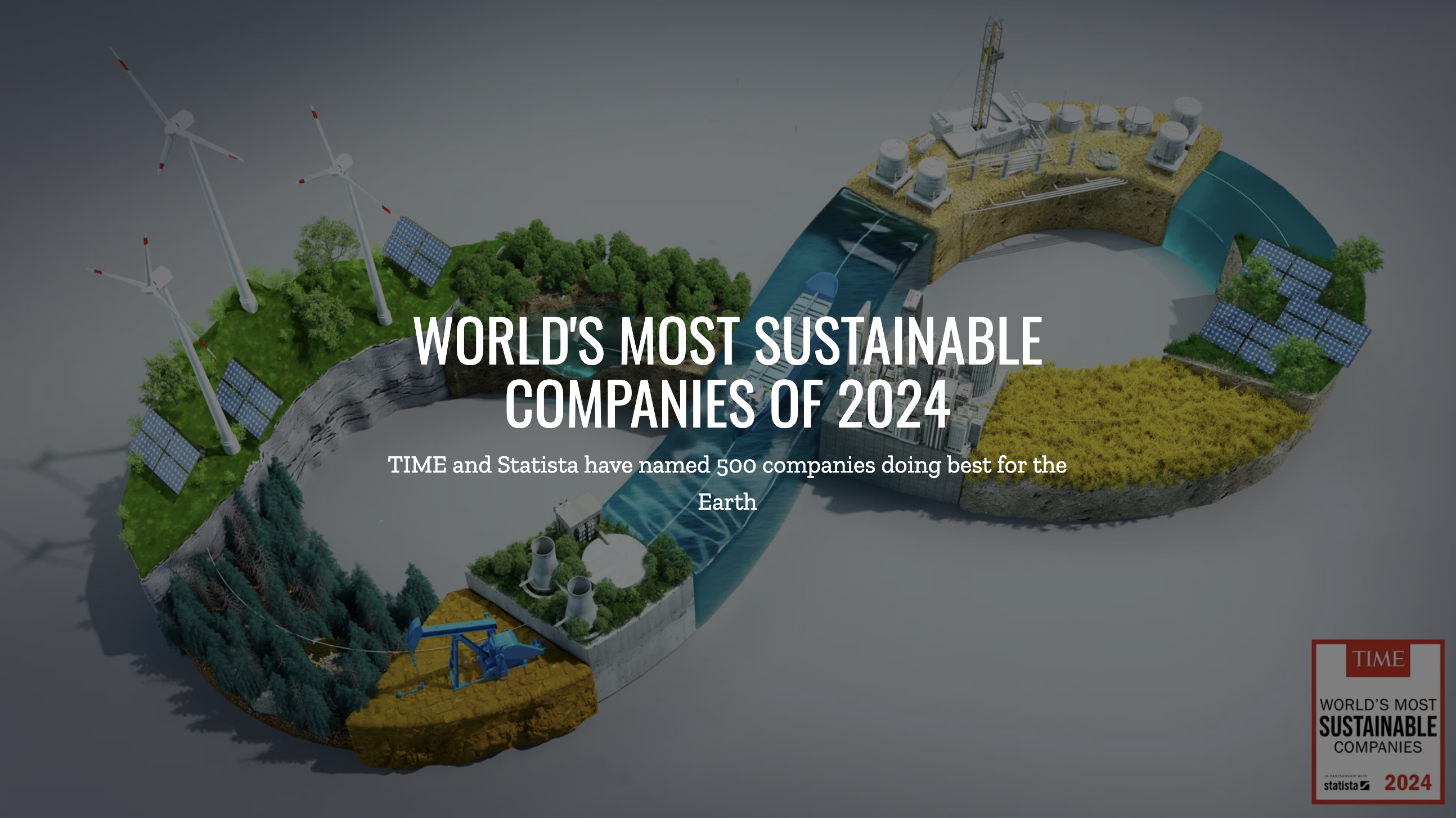
One of the most recent corporate sustainability assessments is the “World’s Most Sustainable Companies of 2024,” published by Time Magazine in partnership with data firm Statista. Together, they developed a comprehensive methodology to evaluate and rank the world’s most sustainable companies.
Six Singaporean firms earned a place among the 500 companies included in the final list. Here’s a closer look at who they are, and why they were recognised for their sustainability efforts.
#1 City Developments (46th place)
Most of us are probably familiar with one of Singapore’s largest real estate developers, City Developments Ltd. Also known as “CDL,” the company operates in 163 locations in 29 countries and regions.
Besides developing residential property, CDL also owns and operates various real estate types, including offices, hotels, serviced apartments, student accommodation, and retail malls. Developing and maintaining property can have many unintended (i.e. negative) consequences, and CDL is taking proactive steps to mitigate this impact where possible.
For example, since 2014, the company has implemented a Green Lease Partnership Programme to support its commercial tenants’ efforts to lower their carbon footprint. Since the end of 2019, 100% of its tenants have committed to reducing their carbon footprint by signing a Green Lease.
More broadly, CDL’s sustainability approach considers three separate components and how they work together towards building a more sustainable future. These components are named Planet (decarbonisation), People (digitalisation), and Performance & Profit (disclosure). Tapping into the “circular economy” and its benefits, CDL dubs it the “SDG Value-Add Circle”, in reference to the United Nation’s Sustainable Development Goals (SDGs).
As buildings and construction contribute 40% to global emissions, the sector is a key player in helping reduce carbon emissions – something CDL recognises and attempts to address proactively.
#2 Keppel Corp (187th place)
Keppel Corp is one of Singapore’s largest conglomerates, with interests in businesses ranging from power generation and waste water treatment to data centres and office real estate.
Given its presence across multiple sectors and industries, the company is focused on creating a sustainable business and engaging with its key stakeholders.
Keppel’s approach to sustainability is driven by three core pillars; Environmental Stewardship, Responsible Business, and People & Community. Each one represents a dedicated commitment to various goals.
Within Environmental Stewardship, Keppel has set quantitative targets to reduce its Scope 1 and Scope 2 emissions while also growing its renewable energy assets. With Responsible Business, the company seeks to drive more effective management through best-in-class corporate governance and leveraging technology to remain as asset-light as possible.
Finally, in People & Community, Keppel strives to ensure the well-being, health, and safety of its many employees. It also aims to contribute to and support initiatives that serve the underprivileged or protect the environment.
#3 CapitaLand (223rd place)
CapitaLand is a giant in the Singapore real estate industry. It owns multiple listed REITs and is a global real estate asset manager.
Indeed, CapitaLand has its own CapitaLand Investment 2030 Sustainability Master Plan. While CapitaLand Investment Limited (CLI) is a listed real estate management business that underwent a restructuring a few years ago, the CLI plan continues to serve as a strategic blueprint for its sustainability development.
The plan was reviewed in 2022 by CLI to strengthen its Environmental, Social, and Governance (ESG) pillars. In short, CapitaLand outlines the plan as striving to:
“Build a resilient and resource-efficient real estate portfolio, Enable thriving and future-adaptive communities, and Steward responsible business conduct and governance”.
CLI has committed to Net Zero carbon emissions for Scope 1 and Scope 2 by 2050 while also trying to promote a circular economy.
#4 ComfortDelGro (238th place)
ComfortDelGro (CDG) is part of Singapore’s DNA, given the ubiquity of its blue and yellow taxicabs around the island. The company also runs a bus business in Singapore and overseas.
CDG’s sustainability framework is aligned with the UN’s SDGs. The company’s approach to sustainability focuses on three areas: enabling a climate-friendly transport system, safeguarding well-being and safety, and promoting strong governance and innovation.
One of CDG’s key sustainability-related achievements is that it’s the first Southeast Asian transport operator with carbon emissions targets approved by the Science Based Targets initiative (SBTi).
#5 Singtel (282nd place)
Singtel is Singapore’s largest telecommunications and broadband operator and is expanding its business to compete in the new AI-focused economy.
The company states that it has four core sustainability pillars: Climate Change and Environment, People and Future of Work, Community Impact, and Sustainable Value Creation.
As a nationally recognised brand and one of Singapore’s largest companies, it’s no surprise that Singtel is also very much involved in community-based initiatives. These include the Singtel Touching Lives Fund (STLF), which was launched in 2002 and is the company’s flagship corporate philanthropy programme. It aims to help underprivileged children and young people in Singapore.
Since its inception, the STLF has raised S$57 million for charities under the umbrellas of the National Council of Social Service. Singtel has also been proactive in attempting to reduce its environmental impact. For example, its new set-top box is 60% smaller and 100% recyclable.
#6 Flex (454th place)
Flex is a Singapore-headquartered advanced electronics manufacturing company with a global footprint.
The company is involved in many segments of the global supply chain, and its stated vision is to become “the most trusted global technology, supply chain, and manufacturing solutions partner to improve the world.”
Flex tries to integrate sustainability into its manufacturing processes. The company has its own “2030 Sustainability Strategy” that focuses on various goals, including a commitment to Net Zero emissions by 2040.
The company characterises its sustainability strategy as having three components at its heart: our world, our people, and our approach.
By focusing on everything from diversity, equity and inclusion (DEI) and labour practices through to the environment and suppliers, Flex attempts to build a more sustainable business that is aligned with the UN’s SDGs.
Read Also: 7 Female CEO Leading Fortune Southeast Asia 500 Companies Based In Singapore
Subscribe To The DollarsAndSense Business Pass
Enjoy what you are reading and want more? Join The DollarsAndSense Business Pass and unlock access to valuable tools, exclusive networking opportunities, and tap into the wisdom of industry experts to fuel your business expansion!