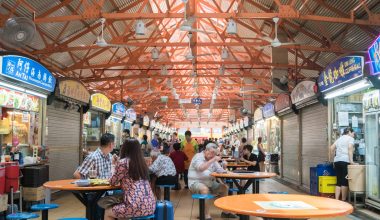
Pasar malams, or night markets, have withstood the changing times over the last few decades to still stay relevant, especially during festive periods. Typically occupied by vendors selling street food, small household items, handphone accessories, toys, and clothing, they bring a festive mood and sense of excitement whenever they pop up around our neighbourhoods.
But past these charms, the pasar malams and trade bazaars have also ingrained an image of affordability since their beginnings. After all, vendors used to hawk their goods by shouting “lelong, lelong” (which means “sale,” “sale” in Malay), targeting the everyday man in the heartlands. However, this image of catering to the “everyday man” has been threatened in recent years as the price of the goods sold at these trade fairs soars.
At this rate, trade bazaars may slowly lose their appeal to e-commerce sites and other trendy food establishments that may offer better price competitiveness and dining experiences, respectively.
#1 Rising Rental And Operation Cost
One of the oft-quoted reasons for the rising prices at trade fairs like the Geylang Serai Ramadan Bazaar is the rising rental costs. For instance, it’s well documented that the tender for the 36-day bazaar was awarded to event organiser, S-Lite Event Support Pte Ltd for $2.26 million.
However, what is not as well publicised is that on top of the venue costs, the event organiser also has to bear the costs of setting up the trade fair, which came up to nearly $2.5 million. This includes complying with all legal and regulatory requirements, engaging waste management and pest control services, providing 24-hour electrical support to food stalls, installing sufficient CCTVs, and hiring security patrol officers, among others.
As a business, the event organiser would then factor in all the costs incurred plus a profit margin for taking on the risk of organising the event when renting out its 700-stalls. In turn, the vendors would then mark up their goods accordingly in order to turn a profit after accounting for their rental and operational costs.
While it is reasonable to expect rental costs to rise over the years due to inflation and competition from other vendors, trade fairs have a bigger disadvantage over permanent stalls in this regard. Unlike permanent stalls, where the infrastructure costs are calculated as part of the building costs, trade fairs have to deal with the ever-rising costs of land (venue costs) and manpower (setting up of infrastructure) each time – which ultimately is passed on to consumers.
#2 Shrinking Venues
Pasar malams and trade bazaars operate at large open spaces, in fact, the bigger the better.
One reason is that a large venue creates more hype and attraction for visitors as it can cater to a wider audience group, giving more reason to patronise the trade fair.
Second reason is that there are greater economies of scale with a bigger venue, allowing for better margins for event organisers, who would then be willing to bid for such tenders.
As Singapore develops, large open areas like the Woodlands bazaar venue are becoming a rare commodity. Currently, the Woodlands site is earmarked as a white zone – which means it can be used for any of the approved uses. But as the Woodlands Regional Centre gets further developed, the site won’t be kept as state land and instead could be converted into a development of commercial value. When that happens, it would be a blow to trade organisers as they won’t be easily able to find another venue of equal size.
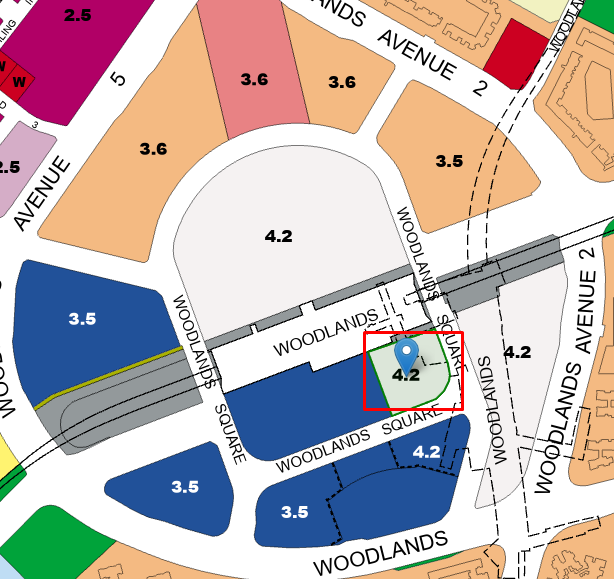
A similar situation could happen with other traditional trade bazaar sites, which may either temporarily or permanently be taken out the list.
#3 Unpredictable Sales
Vendors at trade fairs rely on the seasonal crowd for their sales. But unfortunately for them, no single trade fair is the same. In other words, they might see good sales at one venue, but suffer poor sales at a following location.
For businesses that solely rely on trade fairs as their main modus operandi, they might be aware of the fluctuations in sales and make contingency plans for their cashflow needs. However, new businesses may struggle to stay afloat under the banner of a trade fair, especially if they choose the wrong venue successively.
Furthermore, weather conditions (e.g. a rainy day) may also affect sales for businesses at trade fairs as they may not have shelter links for visitors. These unpredictability in sales may discourage both existing and new vendors from taking up future stalls at trade fairs as they also have to grapple with rising costs.
#4 High Regulatory Compliance Costs
Pasar malams are usually held near residential enclaves. As such, trade organisers would be held to a higher level of responsibility to ensure the cleanliness of the area, including food hygiene, manage noise levels, and implement crowd control measures.
For small pasar malam operators, these additional regulatory compliance costs may lower their profitability. Hence, they would be less keen to operate such small fairs regularly and instead may favour holding them during major festive periods or at larger sites.
Subscribe To The DollarsAndSense Business Pass
Enjoy what you are reading and want more? Join The DollarsAndSense Business Pass and unlock access to valuable tools, exclusive networking opportunities, and tap into the wisdom of industry experts to fuel your business expansion!