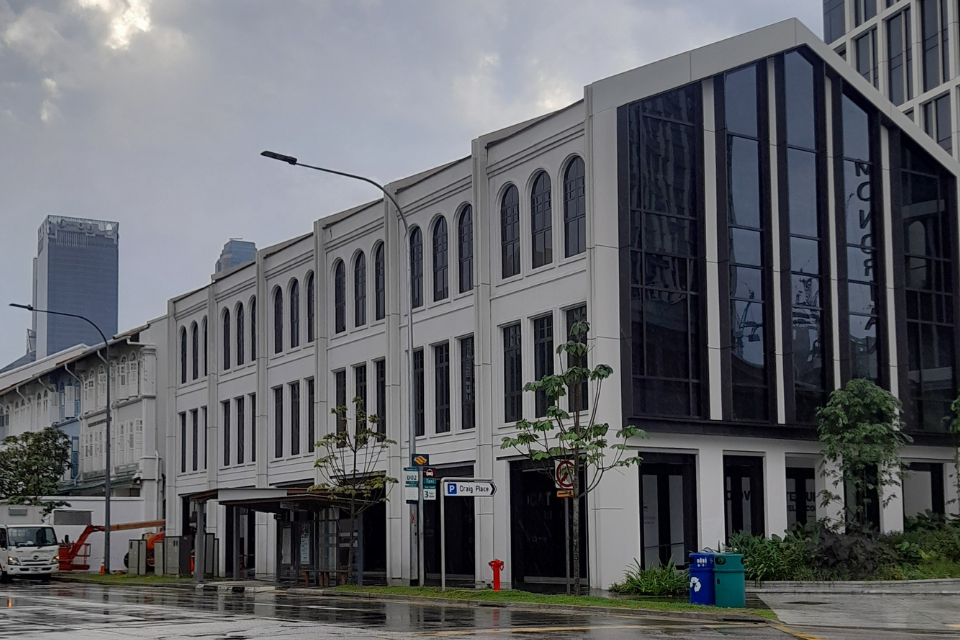
Businesses can either rent or buy a property that they want to work out of. For most, the answer will be to rent – as it offers less financial commitment and more flexibility to relocate. For some businesses, though, buying a commercial property can make sense – you effectively pay yourself the rent and own the property after some years.
If you are considering a commercial property investment, you should also understand the inner workings of taking a commercial property loan in Singapore. Here are 8 things you should know before taking a commercial property loan, t.
#1 Which Bank To Take Your Commercial Property Loan With?
Most businesses would already have an existing business banking relationship with at least one bank in Singapore. Taking your commercial property loan with the same bank can make it more convenient.
This will likely reduce your documentation requirements, as the bank would have access to your business banking details – and by extension, your cashflow and financing situation.
If you have a good standing with the bank, i.e. you have strong cash flow, a track record of paying existing loan facilities on time and already communicating with a relationship manager, you may get a preferential rate with the bank.
Nevertheless, checking with another bank could be useful as well. The bank may see the commercial property loan as an entry point to building a relationship with a new customer (i.e. you) and also offer a good rate.
Read Also: [2024 Edition] 5 Best Business Bank Accounts In Singapore For New Business Owners
#2 Are You Eligible For A Commercial Property Loan In Singapore
To be eligible for a commercial property loan, many banks may require your business to be incorporated locally and have been in operation for around 12 to 24 months. Businesses may also need to have local shareholdings, such as at least 30% being owned by Singaporeans or PRs.
If your business has a smaller local ownership structure or turnover of more than $20 million a year, you can still take out a loan with the bank, but your commercial property loan may not classified under SME banking anymore.
#3 How Much Can You Borrow When Buying A Commercial Property (Loan-to-Value (LTV) Ratio)
Most banks in Singapore will extend 80% to 90% of your property purchase price or valuation.
You can technically lower your out-of-pocket (and finance the entire commercial property purchase) with a term loan, overdraft facility or other loan facilities that the bank can offer you. Of course, interest rates will vary (read this as being higher) from the main commercial property loan.
In addition, you can also use trade facilities such as Invoice Financing (Sales) or Accounts Receivables Purchase to raise cash by turning your receivables into upfront cash. This can help form all or part of your downpayment on the commercial property.
Unlike taking a commercial property loan as an individual, your business is not restricted to any Total Debt Servicing Ratio (TDSR) requirements or even ABSD if you buy more than one commercial property. However, your credit standing can affect how much loan banks may be willing to extend to you.
Read Also: [2024 Edition] Complete Guide To SME Business Loans In Singapore
#4 What Is Your Loan Tenure?
Many banks in Singapore offer a repayment period of between 25 to 30 years for your commercial property loan.
However, you need to consider whether you want to take such a long-term commercial property loan. The longer your loan tenure, the more you will ultimately fork out in interest charges.
You can also stretch out your repayment period beyond 30 years by subsequently taking cash out refinancing loans after accumulating sufficient principal repayment (equity) in your commercial property.
#5 Floating Rate Commercial Property Loan
While most business loans are fixed, a commercial property loan is one of the few variable-rate loans you can take. Of course, this is because it can extend over such a long timeframe.
Currently, many commercial property loans in Singapore offer a flexible SORA-pegged package. As its name describes, a flexible rate package can vary according to market interest rates fluctuations.
While fixed rate packages tend to offer more certainty for businesses, many have been phased out due to the rapid increase in interest rates over the past 2 years. You should also be prepared to pay a higher interest rate than flexible rate package to mitigate the risk of interest rate fluctuations for the bank.
If you choose to prepay or sell your property within this timeframe, penalties may be involved.
Besides SORA, flexible rate commercial property loans can also be pegged to other interest rate benchmarks such as internal board rates. You need to speak to the individual banks to learn more.
The interest rates offered by banks in Singapore are also not transparent and openly provided on their websites. Unfortunately, you will have to contact the banks separately for a quote.
#6 Additional Costs You Need To Be Aware Of
When buying a commercial property, there’s going to be costs involved – beyond just the downpayment and monthly instalments. This may include agent commissions, legal fees, valuation fees, as well as your time and effort to find the right commercial property to buy.
Depending on the bank you take your commercial property loan with, you may get a subsidy on your legal fees and valuation fees.
You should also note that most commercial property loans are slightly more expensive than comparable residential property loans. When taking a commercial property loan, you may be locked-in for 2 to 3 years. If you choose to prepay or sell the property within this time, you will likely incur a penalty fee of around 1.5%.
After buying your commercial property, you may not have to pay rent or you may be collecting rent, however, there will be ongoing costs. This includes income tax if the property is rented out or partially rented out. You will also have to pay 10% of your property’s annual value in property tax each year. Typically, there is also going to be a maintenance fee you have to pay for your property. If you are renting out the property or part of the property, you also have to account for property agent fees, which may depend on the duration of the rent.
Read Also: Guide To Buying A Commercial Property For Your Business In Singapore
#7 Sign-Up Perks For Commercial Property Loan
From time to time, certain banks may also offer additional perks when you sign up for a commercial property loan with them. You should speak to your bank relationship manager or get in touch with a bank to learn more.
Many banks also offer subsidies on your legal and valuation fees.
Taking A Commercial Property Loan In Singapore
For most banks, you can simply submit your application for a commercial property loan online. When signing up for the loan, if you have your ACRA or MyInfo Business login details, it should smoothen the process.
Typically, you should have shortlisted the property you want to purchase when submitting your application. To speed up the provision of the conditional offer, have the information for the property your want to buy on hand:
- Address
- Floor size
- Valuation/Property price
When applying for the commercial property loan, you should also have the following documents (especially if you are applying with a different bank from your business banking) for the last 2 years:
- Your financial statements
- Business bank statements
- Income tax Notices of Assessment of guarantor(s)
- NRIC of guarantor(s)
This article was originally published on 2 August 2021 and has been updated with new information.
Subscribe To The DollarsAndSense Business Pass
Enjoy what you are reading and want more? Join The DollarsAndSense Business Pass and unlock access to valuable tools, exclusive networking opportunities, and tap into the wisdom of industry experts to fuel your business expansion!


