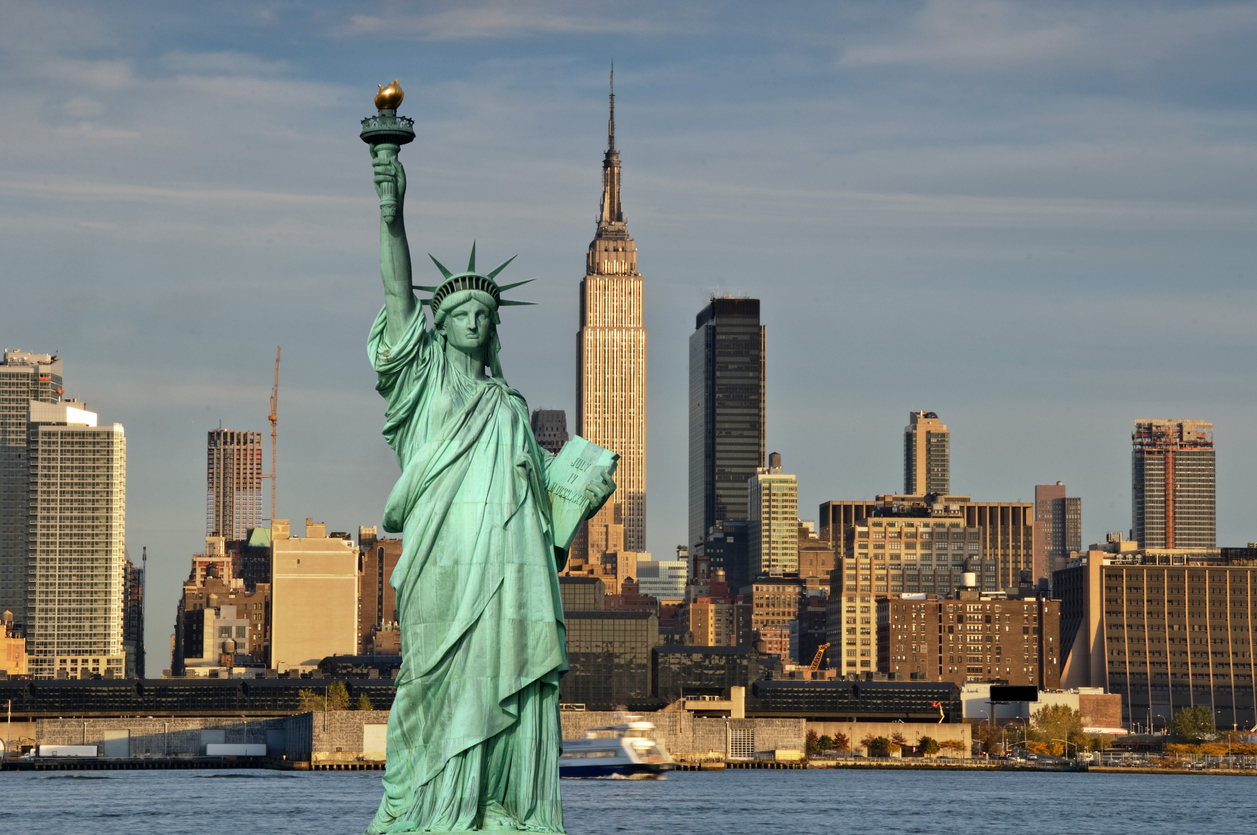
The whole “American Dream” is the stuff of folklore in movies and in terms of making it to the US to better your life. While it may not be that extreme – given how comfortable and affluent Singapore is – there are still some Singaporeans who want to live and work in the US.
If you do, then it’s nearly certain that any conversation focused on moving will revolve around how you can get a hold of the H-1B1 visa – a little-known carve-out alternative that’s specific to only Singapore (and Chile). This is in contrast to applying for the more famous broader work visa, the H-1B, that every other non-US resident/citizen has to apply for.
So, with all the news about how President Trump is hiking the cost of a H-1B visa to US$100,000 per application, will Singaporeans ability to work in the US be impacted?
First, let’s explore how the H-1B1 visa works for Singaporeans.
What Is The H-1B1 Visa?
The H-1B1 visa was born out of trade deals, not immigration law reform. When Singapore signed a free trade agreement (FTA) with the US in 2003, one of the unique perks was the creation of a special work visa allocation: 5,400 slots each year for Singaporean professionals.
Chile also received a similar carve-out, though it was much smaller. These quotas exist independently from the much larger H-1B system, which by law is capped at 85,000 new visas per year.
Unlike the H-1B, the H-1B1 is not distributed by lottery. If demand remains under the quota, Singaporean applicants can apply directly. In fact, in many years, the 5,400 slots have not even been fully used up. That makes the H-1B1 one of the few visa routes where a Singaporean candidate does not have to compete against tens of thousands of global applicants.
In terms of eligibility, the H-1B1 shares the same underlying principle as the H-1B: the job must be in a “specialty occupation,” generally requiring a bachelor’s degree or equivalent experience. However, the H1-B1 visa is granted in one-year increments (versus three years for H1-B) but it can be renewed indefinitely.
One of the significant differences, though, is that while you are on an H-1B1, you are expected to show that you plan to return home after your employment ends. That’s different from an H-1B visa holder, who can more easily transition to a green card (basically becoming a legal resident of the US).
Trump’s US$100,000 Fee For H-1B1
Earlier this month, President Trump announced one of the most sweeping visa fee increases in decades: a new US$100,000 surcharge on H-1B visa applications. The measure is framed as an effort to protect local jobs by discouraging employers from relying too heavily on foreign labour, and ensuring that only “the highest-value” hires are worth the cost.
To put the change in perspective, current H-1B filing fees range from about US$1,500 to US$6,000, depending on the employer and case details. The proposed surcharge would eclipse those amounts.
The group most affected will be Indian professionals, who account for the vast majority (71%) of H-1B approved beneficiaries while China was a distant second (11.7%).
The recent announcement from the Trump administration focused squarely on the H-1B. At this point, the announcement has not explicitly mentioned the H-1B1 visa. Legally, the visa exists under a different section of US law and is tied to trade agreements. That provides some breathing room for Singaporeans eyeing the H-1B1 route but, of course, that could always change.
What This Means For Singaporeans Trying To Work In The US?
For Singaporeans considering a move to work in the United States, the proposed fee hike adds a new layer of uncertainty. On paper, the H-1B1 visa remains unaffected: Singaporeans can still tap into the 5,400 annual quota, apply directly without going through a lottery and pay the same fees as before—a relative advantage at a time when H-1B costs are set to skyrocket.
However, the broader landscape is shifting, and employers will inevitably weigh the economics. Faced with the choice of sponsoring a Singaporean on an H-1B1 or an Indian national on an H-1B, the financial incentive is clear: the H-1B1 route is suddenly far cheaper. That could tilt opportunities in favour of Singaporeans in specific industries. To illustrate, the median salary for new H-1B employees in 2023 was approximately US$94,000, which is less than the proposed US$100,000 fee itself, rendering many applications uneconomical for companies.
At the same time, caution may prevail. Employers might respond not by shifting towards H-1B1 hires but by scaling back foreign recruitment altogether. A reluctance to navigate visa sponsorship processes for H-1Bs could spill over into other categories, including the H-1B1.
Finally, long-term stability remains a key limitation. While the H-1B1 is cheaper and easier to obtain, it is granted in one-year increments, renewable but without a direct path to permanent residency. For Singaporeans hoping to build a lasting future in the US, transitioning to an H-1B or another visa category would still be necessary.
H-1B1 Policy Remains Unchanged For Now
The H-1B1 visa has long been a subtle advantage for Singaporeans seeking to work in the US in a professional capacity. Trump’s US$100,000 fee for H-1B visas does not, at least for now, directly apply to H-1B1, although there’s no guarantee it will stay that way.
Read Also: Skills Development Levy: What Is It And How Much Do Companies Need To Pay?
Photo Credit: iStock/upthebanner
Subscribe To The DollarsAndSense Business Pass
Enjoy what you are reading and want more? Join The DollarsAndSense Business Pass and unlock access to valuable tools, exclusive networking opportunities, and tap into the wisdom of industry experts to fuel your business expansion!


