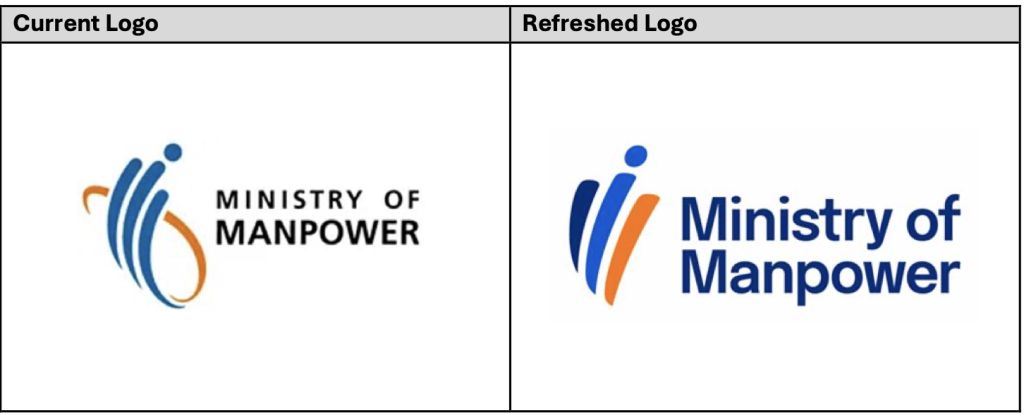
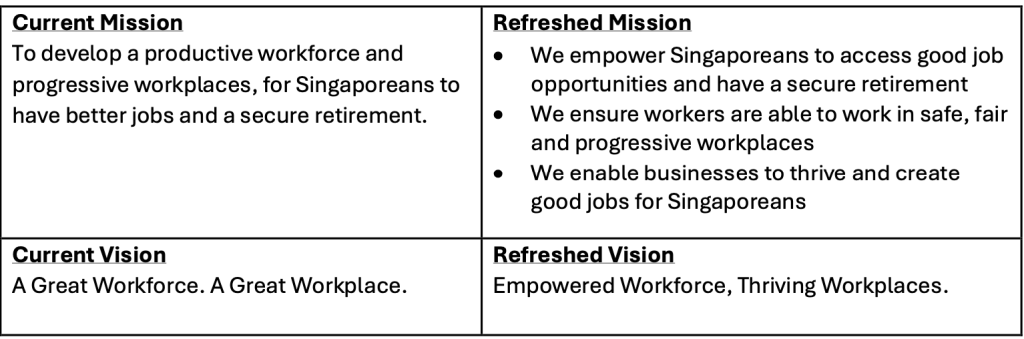
Tracing its roots to 1955, the Ministry of Manpower is older than Singapore. On 5 April 2025, MOM turned 70, and the ministry issued a refreshed logo and renewed Vision and Mission.
Along with its 70th anniversary celebration, MOM also launched a commemorative book, that we read online.
We did not read all 385 pages, but, in celebration of MOM, looked at 7 interesting things about MOM that some of us may not have known.
#1 MOM Was Actually “MOLW” – Founded As Ministry of Labour and Welfare In 1955
When the ministry was first founded in 1955, it was named the Ministry of Labour and Welfare – and we could have had a very different acronym representing our labour ministry today.
In June 1959, the MOLW changed its name to Ministry of Labour and Law, and in 1961, changed again to just Ministry of Labour.
The ministry was renamed the Ministry of Manpower (MOM) in 1998 to reflect its expanded role in developing Singapore’s only resource, our people.
#2 Singapore’s Population Exploded From 938,100 In 1947 To 1.4 Million By 1957
In the aftermath of World War II, Singapore’s population grew rapidly from 938,100 people in 1947 to over 1.4 million in 1957. This created growing unemployment as there were insufficient jobs created in the economy.
With this, labour strife became an increasing occurrence, supported by other factors in Singapore post-World War II.
#3 MOM Was Borne From The Hock Lee Bus Riot In 1955
While few of us have ever witnessed a labour strike in our lifetime, it was quite common in the 1950s. 1955 marked a peak in strikes in Singapore with 275 reported incidents and over 940,000 man-days lost.
The Ministry of Labour and Welfare was created in the same year that the Hock Lee Bus riot happened – when some 2,000 workers and students swarmed the Hock Lee Bus Company at Alexandra Road.
The Hock Lee Amalgamated Bus Company had fired the union organisers and hired replacement workers. The infuriated workers’ numbers were bolstered by students. The affair turned into a riot, and after six hours later, there were 31 people injured and four dead.
#4 1955 Marked A Landmark For Singapore’s Legislative Assembly – Where Most Were Elected Rather Than Appointed By The British
MOM’s predecessor, MOLW, was one of six ministries created in an interim step towards self-government in 1955. As we know, Singapore only became independent in 1965.
Interestingly, David Marshall of the Labour Front party was the Chief Minister of Singapore after winning the most seats in the 1955 Singapore General Elections.
The six ministries that were established in 1955 were the Ministry of Health, Ministry of Communications and Works, Ministry of Education, Ministry of Local Government, Lands and Housing, Ministry of Commerce and Industry and Ministry of Labour and Welfare.
#5 Lim Yew Hock Was Singapore’s First Minister For Labour and Welfare
Lim Yew Hock founded the Labour Party with David Marshall, who became Singapore’s first Chief Minister after winning the Legislative Assembly election. Lim Yew Hock became the Minister for Labour and Welfare.
Lim Yew Hock became Singapore’s Chief Minister after David Marshall resigned, after discussions for self-rule with the Government in London failed. Lim Yew Hock’s party was defeated by the PAP in the 1959 General Election – when Lee Kuan Yew became Prime Minister.
#6 Lee Kuan Yew Promised A Government On Workers’ Side Months Before Winning 1959 General Elections
A few months before winning the 1959 General Elections, then-PAP Secretary-General Lee Kuan Yew unveiled a vision for “industrial peace with justice”.
At a mass rally in Geylang Serai on March 1, he promised that an elected PAP would be “a government on the workers’ side”.
It’s hard to believe PAP was once an opposition, but it’s interesting to note that labour-related conditions was one of the biggest issue that perhaps made a difference in their election campaign in 1959.
#7 Incidents of Strikes Fell To Just 38 By 1964, And Zero By The 80s
To quell labour unrest, the Ministry negotiated with trade unions and introduced new legislation that provided for dispute resolution and regulated union activities. This created a more favourable investment condition in Singapore.
Read Also: Platform Workers To Get CPF; WICA-Like Protection; And Union-Like Representation From 1 Jan 2025
Subscribe To The DollarsAndSense Business Pass
Enjoy what you are reading and want more? Join The DollarsAndSense Business Pass and unlock access to valuable tools, exclusive networking opportunities, and tap into the wisdom of industry experts to fuel your business expansion!