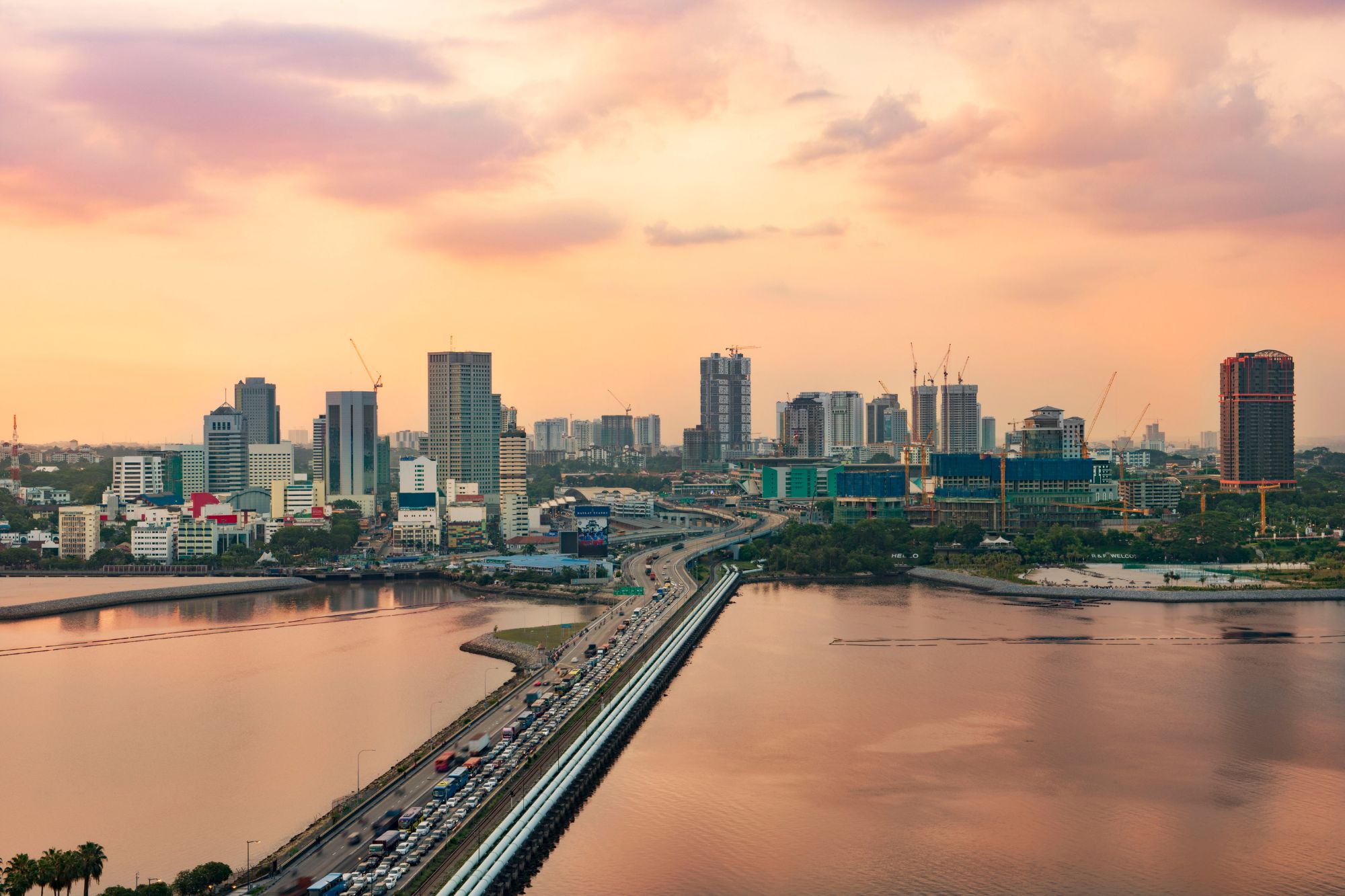
Sharing historical roots and as neighbouring countries, Singapore and Malaysia have close business ties. In 2023, Malaysia was the third largest trading partner for Singapore – with $123.6 billion in total import and export value.
The fortunes of Singapore and Johor in particular are set to be further interweaved with the Johor-Singapore Special Economic Zone (JS-SEZ).
First mooted in May 2023, an MOU was signed in January 2024 between the two countries to study the feasibility of the JS-SEZ and outline the target growth sectors. Businesses, investors and individuals are now awaiting further details, with the signing of a joint agreement expected to be in January 2025.
Read Also: Singapore & Malaysia: 4 Key Statistics That Showcase Our Economic Partnership
What Is The Johor-Singapore Special Economic Zone (JS-SEZ)?
Singapore and Malaysia are partnering to form a special economic zone called the JS-SEZ in the Johor state, adjacent to Singapore’s border.
Slated to cover over 3,505sq km across 6 districts including Iskandar Puteri, Johor Bahru, Pasir Gudang, Kulai, Pengerang and part of Pontian, the JS-SEZ will be 4x the size of Singapore.
One of the main objectives of establishing the JS-SEZ is to tap into the complementary strengths of Singapore and Johor to boost economic connectivity for both businesses and people in the two cities. According to OCBC Research, targeted sectors will cover electronics & Electrical (E&E), Construction, Property, Data Centres and possibly fold the Special Financial Zone (SFZ) in Forest City to be part of the JS-SEZ.
The aim to enhance the flow of goods and people, will improve the ease of doing business and supporting talent development. Besides strengthening trade and connectivity, another goal will be is to mutually attract more investments and stimulate growth in various sectors.
JS-SEZ: Potentially The Shenzhen Of Southeast Asia
Chief Minister of Johor, Onn Hafiz Ghazi, takes inspiration of Shenzhen Special Economic Zone – claiming that JS-SEZ can replicate its success. From a backwater fishing village, Shenzhen has transformed into a metropolis over the last 40 years, becoming the third most populous Chinese city, only behind Shanghai and Beijing, and producing a GDP per capita that ranks among the highest in the country.
In Johor, as competition for foreign investment grows, the JS-SEZ will offer a unique blend of dual benefits from the two countries. International companies can enjoy Singapore’s business-friendly status with a stable regulatory framework and strong financial hub, and at the same time, benefit from natural resources, land space and lower operational costs in Johor.
Two Countries; Potentially A Single Streamlined Process
According to a report released by the Singapore Business Federation (SBF), around 90% of businesses in Singapore believe that Johor is an attractive investment destination, with improvements to be made on labour availability and ease of doing business.
During the initial phase of working towards the JS-SEZ, several promising areas for collaboration were highlighted including enhancement of cross-border flows of goods and people, particularly in sectors such as electrical and electronics, pharmaceuticals, manufacturing, aviation, digital economy and tourism.
To facilitate more expeditious clearance at the land checkpoints, initiatives such as digitised processes for cargo clearance may be introduced, as well as a passport-free QR code clearance system on both sides (which is already in the works).
A proposed one-stop service centre in Johor for various approvals and licences required for Singapore businesses to set up operations in Johor will also facilitate the application process.
To increase talent and close skills gaps in relevant industries, both governments will work on curating training and work-based learning initiatives.
Win-Win Outcomes For Singapore And Johor
Due to our proximity, shared history and business ties, Singapore and Johor already enjoy close bilateral relations. Working more closely will only bring even more win-win outcomes for the two economies.
The JS-SEZ takes advantage of the strong growth in the Johor state, driven by investments from Singapore. Malaysia and Singapore are already each other’s top 3 trading partners, with bilateral trade into the hundreds of billions and still growing each year.
The economy of Johor state is largely driven by foreign investments, with Singapore being recorded as Johor’s second largest foreign investor from January to June 2022, having contributed to around 70% of the state’s foreign investments in manufacturing.
In 2022, Johor attracted the most foreign investments in the country worth RM70.6 billion, from economic sectors such as electrical and electronics, medical equipment, food manufacturing and data centres.
With aims to emulate the successes of existing special economic zones in Shenzhen and the Hainan Province, which have played important roles in attracting foreign investment to China, the JS-SEZ has a blueprint for success.
Traditionally, special economic zones are geographic specific areas with special streamlined policies and regulations, outside of the standard ones in the country, that promote trade and business activities.
With the JS-SEZ, businesses from both countries may be able to collaborate more cohesively and look forward to introductions of relevant policies and streamlined regulations.
Already, the Johor government has started to adopt new policies, including setting a higher starting salary ranging from RM4,000 to RM5,000 for skilled workers with a Malaysian Skills Certificate equivalent to a degree to retain talents.
The Johor state will also revert its weekends from Friday and Saturday to Saturday and Sunday starting from 1 January 2025, to streamline operation days for cross-border businesses.
To boost connectivity, work on the Johor Bahru-Singapore Rapid Transit System (RTS) Link has also been slated for 2025. The 4km-long RTS will connect to the Thomson East-Coast Line (TEL) and Woodlands – and is expected to be operational by 2026. This should ease traffic congestion at the Causeway.
To attract investors and businesses to the JS-SEZ, incentivised corporate and personal tax rates and customs duty may be rolled out.Typically, investment incentives may include grants, subsidies, or financial assistance for capital investments, research and development activities, or training programs.
Read Also: Guide To Understanding Free Trade Agreements (FTAs) – And How It Helps Companies And Businesses
Subscribe To The DollarsAndSense Business Pass
Enjoy what you are reading and want more? Join The DollarsAndSense Business Pass and unlock access to valuable tools, exclusive networking opportunities, and tap into the wisdom of industry experts to fuel your business expansion!


