If you were moving through Singapore’s Central Business District (CBD) or Marina Bay area this week, you might have noticed traffic slower than usual and assumed it was due to Formula One. While that’s likely true, F1 isn’t the only reason for the larger-than-usual crowds. Token 2049, the world’s largest crypto event, was also held on 18–19 September at Marina Bay Sands, drawing significant attention and attendees to the city.
In addition to featuring cryptocurrency legends like Ethereum founder Vitalik Buterin and Solana co-founder Anatoly Yakovenko, Token 2049 also attracted sports superstars. Football World Cup winner Fabio Cannavaro was in attendance, along with a trio of Formula One drivers, including Max Verstappen, Lando Norris, and Sergio Perez.
Understanding The Eco-System Of Crypto
While many people may think of cryptocurrencies as simply tokens like Bitcoin and Ethereum, which some individuals have invested in or speculated in, we should not overlook the broader crypto ecosystem being built.
For instance, in the decentralised finance (DeFi) space, numerous companies are focused on creating a financial system based on blockchain technology. This system operates without traditional intermediaries such as banks and centralized exchanges. Instead, it relies on smart contracts on decentralised networks (primarily blockchains like Ethereum) to facilitate peer-to-peer financial transactions and services.
This innovation may reach consumers sooner than expected. For example, on 18 September, a significant partnership was announced between dtcpay, a digital payments solutions provider, and Visa. This collaboration aims to integrate dtcpay’s digital payment capabilities with Visa’s global payments network, providing access to 130 million merchants across over 200 countries and territories worldwide.
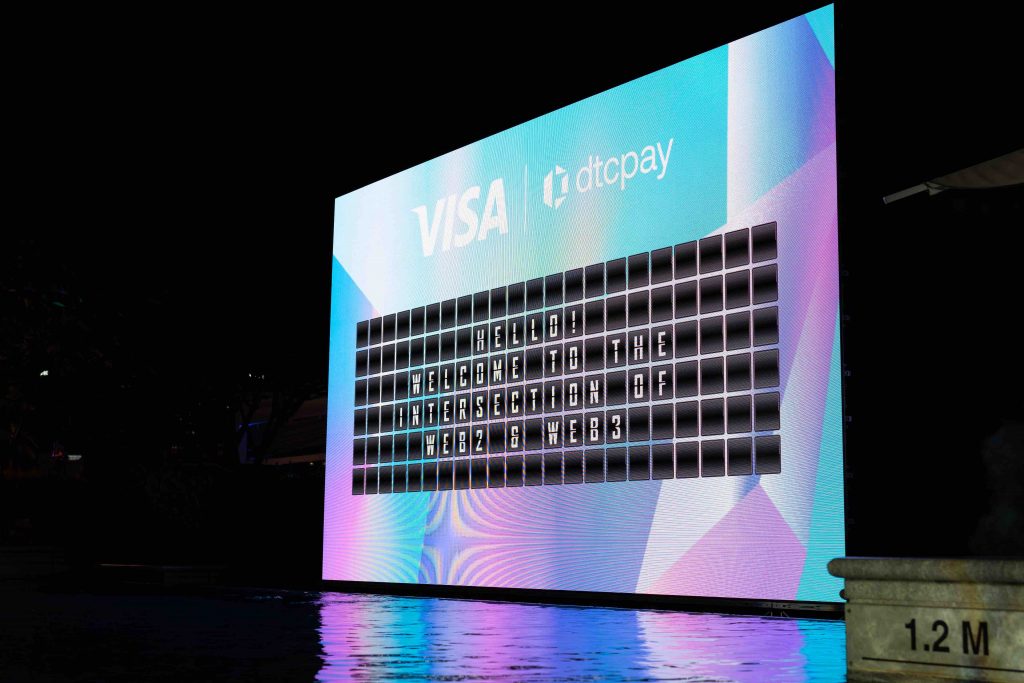
The dtcpay and Visa partnership seeks to bridge the gap between traditional payments and digital currencies, enabling merchants to accept payments from a growing segment of ultra-high-net-worth (UHNW) customers. By leveraging blockchain and multi-currency swap capabilities, dtcpay allows its customers to instantly convert their digital currencies into fiat currency, enabling them to use their dtcpay Visa Infinite card to transact at merchants. This opens up opportunities for businesses that previously couldn’t accept digital currencies to cater to this new group of consumers.
The idea here is simple. Currently, there exist two types of financial ecosystems: the centralised one, driven by fiat currency, and decentralised finance (DeFi), which is based on cryptocurrencies or tokens. By integrating the two, the goal is to create a seamless bridge between traditional financial systems and the growing digital currency space.
This would allow users to move effortlessly between fiat and crypto assets, enabling more inclusive financial services, broader payment options, and increased accessibility of digital currencies for everyday use while maintaining the security and trust of established financial institutions.
Subscribe To The DollarsAndSense Business Pass
Enjoy what you are reading and want more? Join The DollarsAndSense Business Pass and unlock access to valuable tools, exclusive networking opportunities, and tap into the wisdom of industry experts to fuel your business expansion!