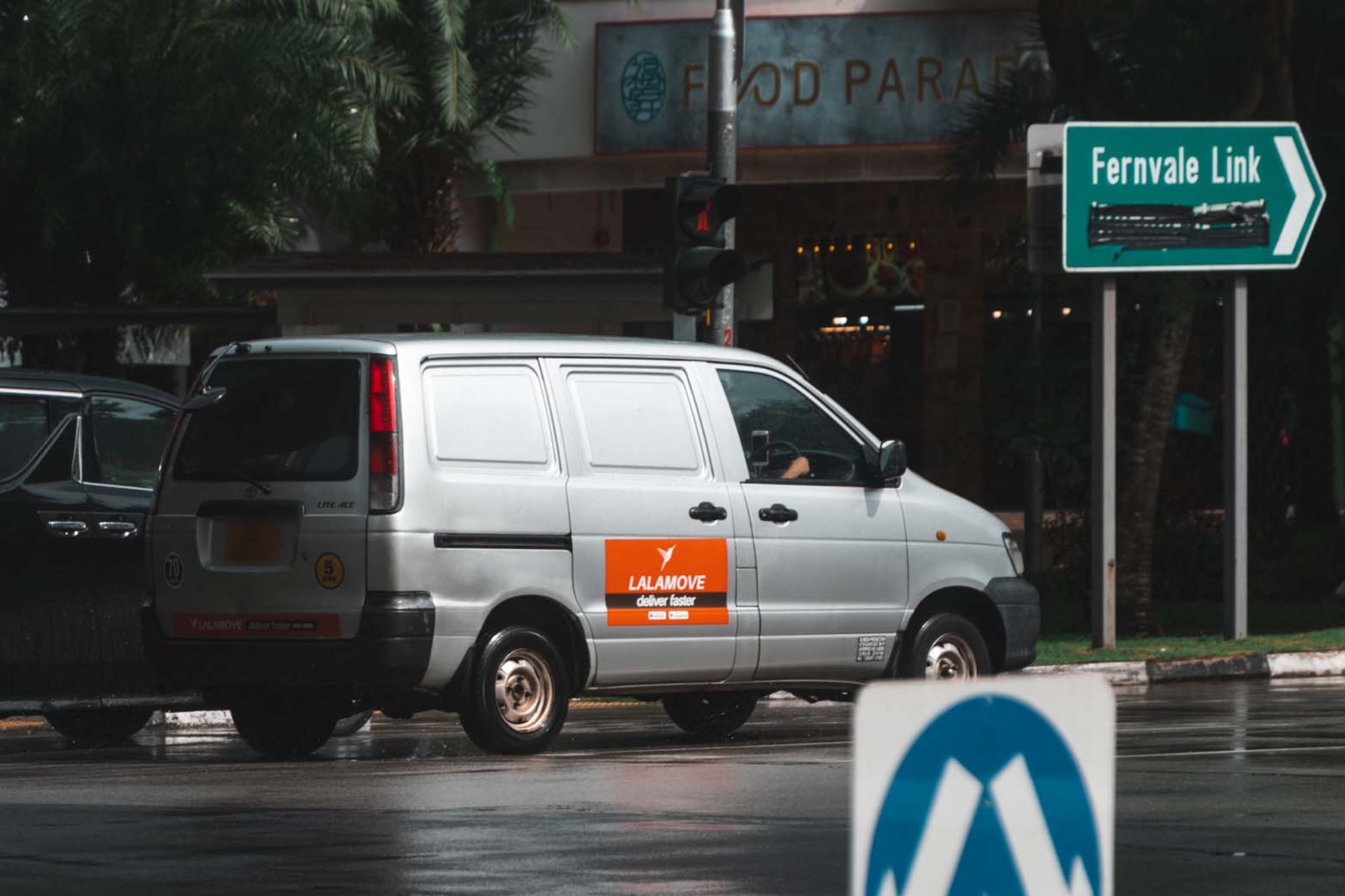
Consumers in Singapore should be quite familiar with the various Platform Companies that we rely on – for ride hailing, food delivery and courier services.
While we may think that we are interacting with the platform that we use, including Grab, Gojek, TADA and RYDE as well as Foodpanda, Deliveroo and Lalamove, there is a Platform Worker completing each job.
In Singapore there are approximately 67,600 Platform Workers – making up majority of Own Account Workers in Singapore in 2024 and comprising about quarter of all self-employed residents.
While the exact numbers aren’t available for 2024, based on 2023 figures, we can also see that other common Own Account Workers in Singapore work as Real Estate Agents, Insurance Sales Agents/Brokers, Media-Related Workers, Hawkers/Stall Holders, Private Tutors and Consultants.

Read Also: Complete Guide To CPF Contribution For Platform Workers
Fewer Platform Workers In 2023 Compared To 2022
As we can see in the chart above, there were fewer Platform Workers in 2023 compared to 2022. This was again true in 2024, as the number of Platform Workers fell around 4% to 67,600, from 70,500.
The biggest drop in 2024 came from taxi drivers (from 22,200 in 2023 to 20,800 in 2024) and private-hire car drivers (from 33,600 to 31,800).
Coincidently, this is the first time in five years, where the number of Own Account Workers is lower than it was in 2019 – before the COVID-19 pandemic struck.

Unsurprisingly, with the number of Platform Workers declining in 2024, the proportion who continued to earn primarily from platform work on a non-preferred basis also fell from 10.6% in 2023 to 10.1% in 2024.
Some of the flexibility and freedom of choice of work enjoyed by other Own Account Workers, such as real estate agents, insurance sales agents/brokers or private tutors, may be less evident for those who rely on Platform Companies for the work they do.
More Seniors Drawn To Platform Work In 2024
In 2024, the number of Platform Workers aged below 30 and those aged 30–39 declined more sharply, while the proportion aged 60 & above saw a significant increase.
As own account work accords more flexibility that full-time employment – and it is no surprise that seniors formed a larger and growing share of primary own account workers. This trend may also be driven by the lower barriers to entry compared to traditional salaried jobs for older workers.

Overall, nearly 80% of Platform Workers did not hold a Tertiary level education. This is somewhat a good thing, as those with Tertiary level education may have spent years upgrading their skills and may be able to contribute to other types of work more effectively.
Platform Workers Earned $2,000 On Average
While there’s little information on Platform Workers’ earnings in 2024, the median income of full-time platform-related workers was $2,000 in 2023. This was the same median income they earned in 2022.

From the chart, we can also see that the median income for Private-Hire Car Drivers was $2,500 in 2023 – higher than Delivery Workers and Taxi Drivers. However, there are perhaps more opportunities for these workers to earn outside the Online Matching Platforms compared to Private-Hire Car Drivers.
Platform Workers Start Receiving CPF Contributions In 2025
Starting in 2025, mandatory CPF contributions will start for younger Platform Workers. This means Platform Workers will start receiving Employer CPF contributions, but it also means they will have to start making their Employee share of CPF contributions.
While Platform Workers should earn a higher salary overall, they may see their take-home pay diminished due to their Employee CPF Contributions – which can be as much as 20% for those 55 and below, and 5% for those above 70.
The government has stepped in to provide a Platform Workers CPF Transition Support (PCTS). This will fully offset eligible workers’ share of the increased CPF contributions – to their OA and SA (OSA) – in 2025. Beyond that, the PCTS will provide monthly cash support and will slowly tail off support into 2028.

This will help them save for important expenses in their lives, including affording a home and building a retirement pot. Platform Workers already had to set aside funds for their healthcare via mandatory MediSave Account contributions that are required for self-employed persons.
Read Also: Guide To Platform Workers CPF Contributions (And The Platform Workers CPF Transition Support Scheme)
Subscribe To The DollarsAndSense Business Pass
Enjoy what you are reading and want more? Join The DollarsAndSense Business Pass and unlock access to valuable tools, exclusive networking opportunities, and tap into the wisdom of industry experts to fuel your business expansion!


